
The most famous Tufa Rock is found around Mono Lake in California. It is a popular destination for photographers. I have not made my way down there yet though I may soon as this type of landscape photography is of interest to me. We have the same type of Tufa rock formations in and around Pyramid Lake. When we have cloudy days, and I have time I try to get out there to photograph the rocks. Last week the clouds and my schedule aligned so I was able to get a few shots that I liked.
Tag: photography

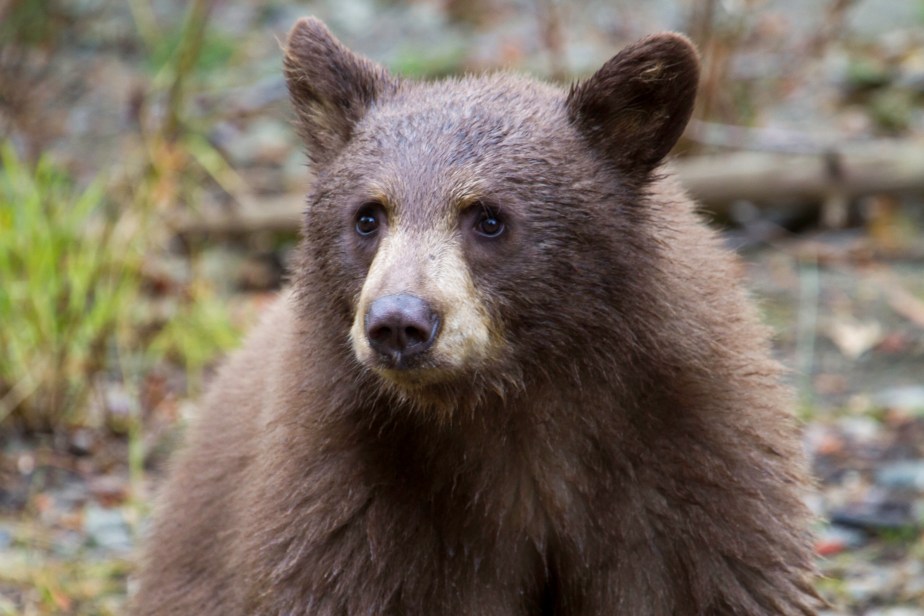
Taylor Creek Bears
Every October a little bit of Alaska can be found at Taylor Creek. Taylor creek is a small creek on the south end of Lake Tahoe. It only runs a few miles between Fallen Leaf Lake and Tahoe but this time of year you can find a lot of action there.
Back in the 1940’s the non native Kokanee Salmon were introduced to Lake Tahoe and they thrived. Each autumn thousands of the bright red fish make their way up Taylor Creek to spawn and die. The native black bears, always a resourceful animal, have made eating the fish an important part of their preparation for their long winter sleep.
The bears are concentrating on fattening up and pay little attention to the people that gather to watch them. I made my first trip up there today and was lucky to have the opportunity to photograph this big mama bear and her cub.
I am aware of bear safety. These photos were taken with a telephoto lens from a safe distance. It was amazing to watch the bears fishing, foraging and going about their day as if they had the forest to themselves.
I think I will go back up next week. I heard that as the fish start to die in large numbers even more bears are apt to show up.
Share this:


Feeling Abandoned?
I know it has been a long time since my last post. I had a lot going on with family visiting and traveling to visit family. In addition to that, we suffered for weeks here with the smoke from the Yosemite fires. For a month it was impossible and considered very unhealthy to go outside. The ugly smoke hung on our side of the Sierra’s like a dirty blanket for a month. I escaped for a week to visit my sister in Alaska and hoped to get photos up there but it rained everyday I was there. I hope this does not sound too whiney. 🙂 Anyway, I traveled back to Ash Creek this week and the animals were not cooperating. The deer and antelope were playing but way too far away for good photographs. I took landscape shots of the old barns and an abandoned homestead I saw on the drive up. I caught a glimpse of this house through the trees and hiked quite a ways from the road to photograph it. I think these places are a little spooky. While walking around the house a breeze kicked up and a door creaked on it’s hinges loudly in the house and banged against something inside. I would have liked to look around inside but frankly I got the willies. There was a small band of wild horses hanging in the meadow close to the house. I found their presence calming. They would not have been there if a monster was in the house right? 😉
Share this:


Ash Creek Wildlife Area


What a wonderful place Ash Creek turned out to be! There were deer everywhere. I think they are Columbia Blacktail. I did find Pronghorn and managed to get some photos of them. I was amazed to surprise a family of River Otters who actually were quite curious about me and followed me as I walked down the road beside the canal. They did not seem to be alarmed at my presence and they sounded like they were scolding me as I walked along. When I got home and started editing the photos I saw that the male otter is missing an eye. This is only the second time I have ever seen River Otters and it was quite a treat to be able to observe them for so long.
In addition to the wildlife, the Refuge has several large old barns dotting the landscape. I am looking forward to returning to try to take some better landscape photos of those this fall. The trip was well worth the drive.
Share this:


Wetlands
I have been trying to get more walking in and there are a lot of good paths through protected Wetlands around here. Of course in the desert, any area with water attracts concentrations of wildlife so the photo opportunities abound.
The birdsong is almost deafening this time of year in the mornings as mating and defending territories is in full swing right now. I was able to finally get some good photos of a Marsh Wren which is what I think this little brown bird singing so loudly is. They are tiny birds that flit through the reeds never allowing me to get a photo until today. This little bird was intent on singing and stayed still in plain site long enough to be photographed.
I was also able to observe this common tern fishing over one of the ponds and see him catch a fish.
Share this:


Stallions
This time of year the foals are the show stealers for sure but the stallions always command my attention. The herd stallions have a presence that is captivating and for photographers trying to get close they must be watched carefully. You could put yourself in real danger if you did not pay close attention to what they are doing, their body language and their mood. Sometimes they graze quietly not at all alarmed as you come close, at other times they are in a definitely protective mode and then you had better watch out if they are showing you that they consider you a threat.
Each band of horses has a social structure that includes a stallion, a lead mare, a few mares with foals and half-grown offspring of varying ages that have not left the band yet or been driven off by the Stallion. These bands come fairly close to one another at times and that is when the fighting between the stallions breaks out. They seem to have a tolerance level of about 50 to a hundred yards. Within that zone one of the stallions will feel threatened and charges out to challenge. Sometimes nothing happens, the other stallion will round-up his band and move off, at other times a battle will ensue with roaring and squealing, biting and kicking. These types of photos are exciting to capture but the photographer has to be extremely careful to stay well out-of-the-way. I have been watching some of these stallions for years now and while they are familiar to me I don’t take it for granted that they are truly a wild animal.
Horses seem to me to be special in the animal world in that they know they are beautiful. If ordinary horses know that they are beautiful, then wild stallions know this tenfold. I have included some photos here of herd stallions and one young appaloosa stallion that I saw for the first time a couple of days ago hanging out with his bachelor friend. He is the first appaloosa I have seen in the wild bands. I hope to see him gather some mares in the next few years and pass on his genes. He certainly knows he is beautiful and he is.
Share this:


More Babies
The hills have greened up and the horses look good. Most of the horses appear to be well fed and sleek. Each day more and more little ones show up shyly peeking out from behind their protective mothers.
I don’t know where the horses go in the winter, but in the places I am used to seeing them there are a few small bands around during the winter months. This time of year the rest of the horses reappear. Now there are hundreds and everywhere you look they are dotting the landscape.
I have been fortunate to get quite a few photos of new foals. Is there anything cuter?
Share this:

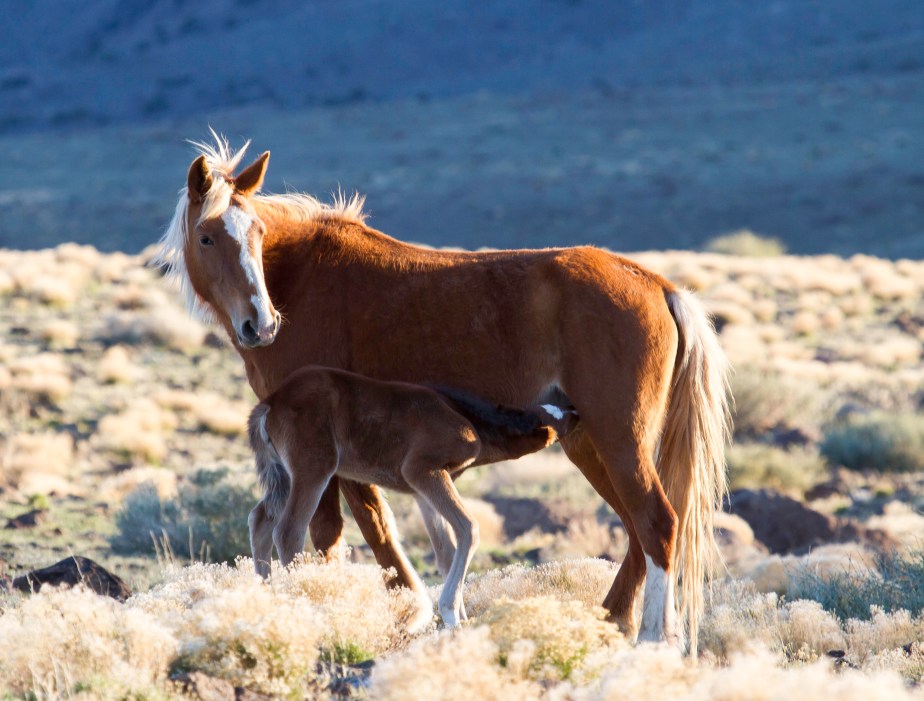
It’s That Time of Year
It is the time of year that spring surprises pop up all around us. Trees and flowers blooming, grass greening and leaves starting faintly to show in the cottonwoods along the river. It is also the time of year that the wild horse bands start showing up with new members. I took my camera out yesterday and was fortunate to find several mares who were amiable to having a family photo taken.
The big seal brown horse with the large white star is a stallion that I have been photographing for 5 years. His band of mares changes membership from time to time but he has always had the same red roan mare alongside him. He passes that big white star on to many of his offspring. I have included a couple of photos of his foals with the distinctive white mark on their face.
The stallions are constantly fighting over mares and stealing them when they can. I caught a couple having a bit of a scuffle on their way to water. I liked the way the dust in the evening light softened the look of the battle.
Share this:

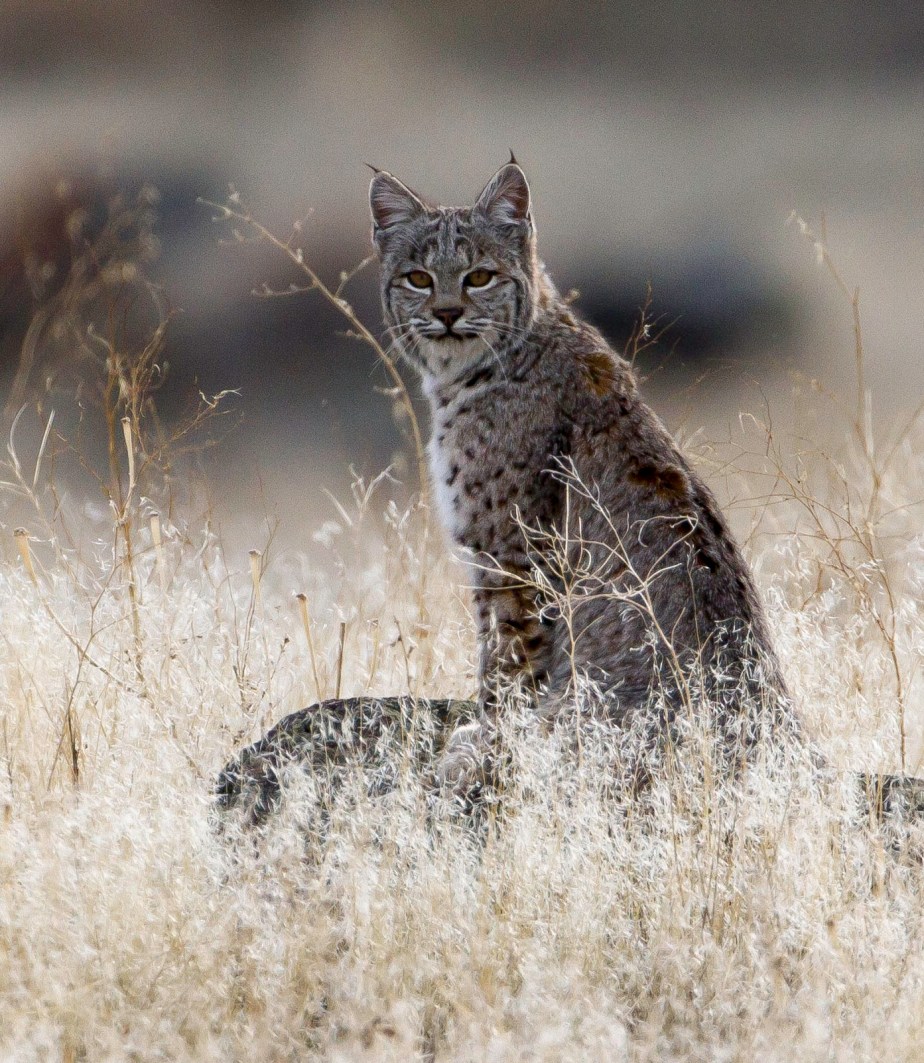
Random Wildlife Photos From My Last Trip to Klamath
A couple of weeks ago I traveled back to Klamath to photograph snow geese. With some luck and good timing I was able to accomplish that goal. As I have discovered on both trips to the Lower Klamath Wildlife Refuge, it is an amazing place for wildlife in general. I wanted to share a few more photos from the trip.
Over my lifetime, I have spent a lot of time outdoors hunting, fishing, horseback riding, and hiking and now with my hobby of photography. I have seen most of the animals that live in the western United States at one time or another. I have even been lucky enough to see a mountain lion. I had never seen a bobcat in the wild before this trip. Imagine my surprise when I saw two in one day. I was driving slowly down one of the dirt roads of the refuge around lunch time when a bobcat ran right in front of my car. It was too fast for me to get my camera out. I just had to be grateful I had caught a fleeting glimpse. Later as the sun was setting I saw what at first I thought was a stump rising out of the dead grass in an old burn area. As I got closer I could see that it was a cat. It was sitting on a table shaped rock. It did not seem too concerned about me and let me take quite a few pics of it. Unfortunately the grass partially covered its face in many of the photos but I was able to get one good pose.
I always see Mule Deer on the refuge. The bucks have dropped their horns so I am including a photo of a nice one I saw in January as well as several deer I saw on this most recent trip and more Bald Eagles. The Eagles were still around in large numbers. I have included more snow geese in flight and some Greater White Fronted Geese that are mostly brown colored in this collection.
I have had such wonderful experiences visiting the Klamath Basin. I plan on trying to visit at least twice a year from now on as long as I am able. If you can make the trip yourself you won’t be disappointed.
Share this:


Sandhill Cranes
Last week when I drove home from the Klamath Basin I took a slight detour to visit the Modoc Wildlife Refuge just outside Alturas California. I was hoping that I would see Sandhill Cranes and I was not disappointed. There were quite a few feeding on farm fields surrounding the Refuge along with Snow and Canada geese. I hope to go back next week and see and photograph some of the cranes courtship displays.

 Northern Desert Photography