Winter Bobcats

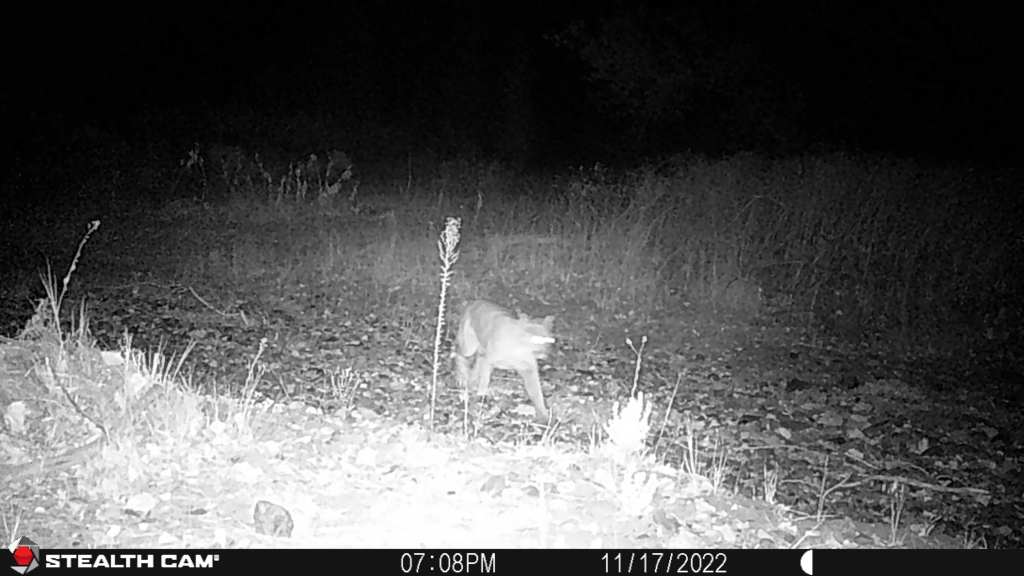
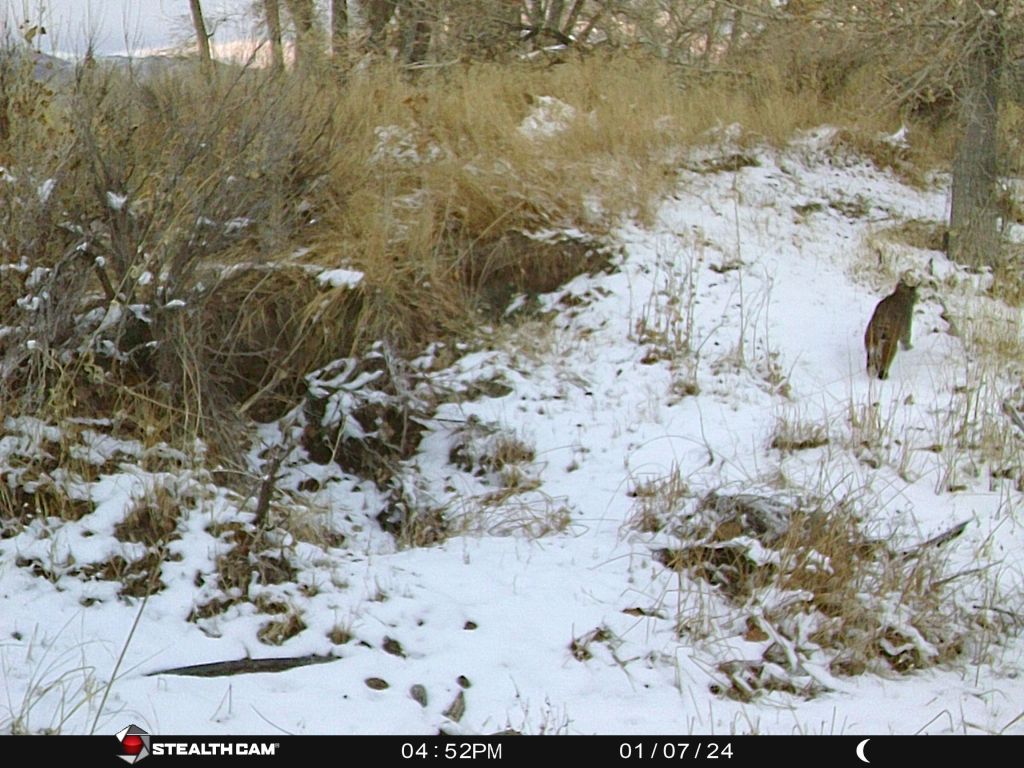
My trail camera sets picked up quite a few photos of Bobcats over the winter. The nice thing about the smaller cats is that they often show up during the daylight hours affording better pictures.
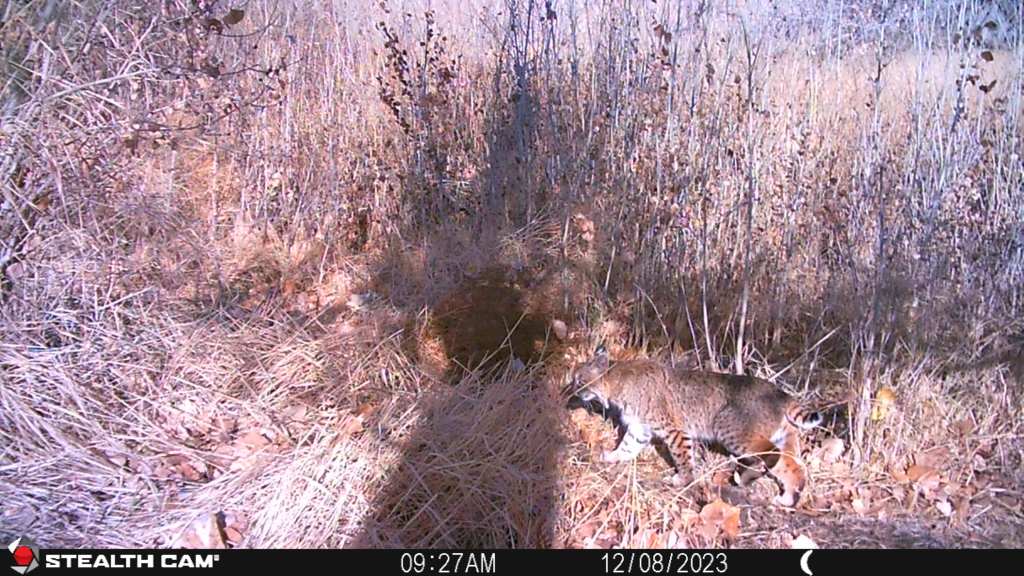
Checking the time stamp shows that these animals are not averse to wandering around in the middle of the day. I have sat out on some of their more traveled trails in camouflage as I would so like to capture them with my real camera. They are so beautiful! No luck so far. I’ll keep trying.

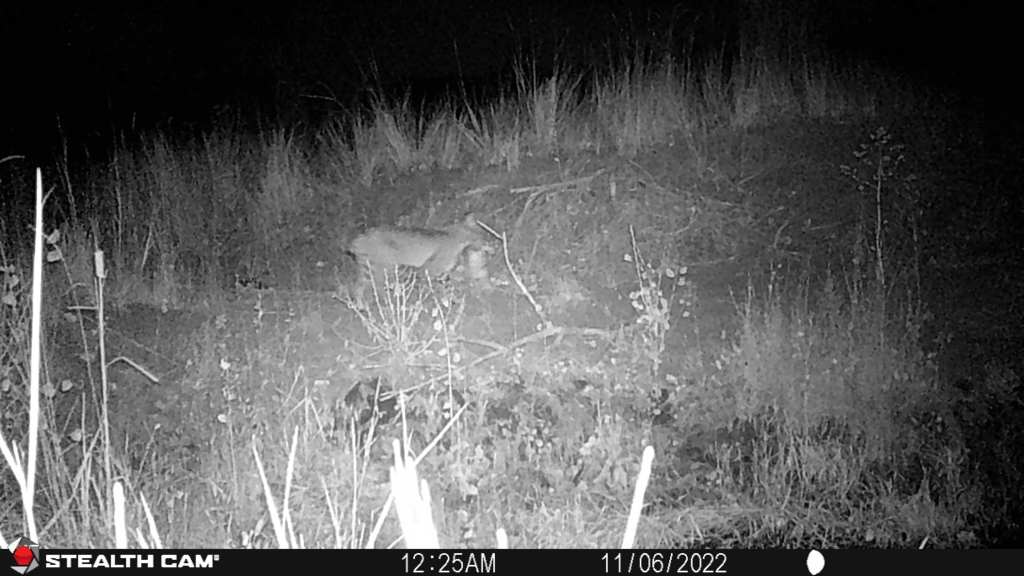
It’s always an extra bonus to get a photo of a predator with prey. The photo below shows a Bobcat with a cottontail rabbit in its mouth. This area has abundance of rabbits, both cottontails and jackrabbits. Bobcats also prey on birds, mice, voles and human’s small pets.
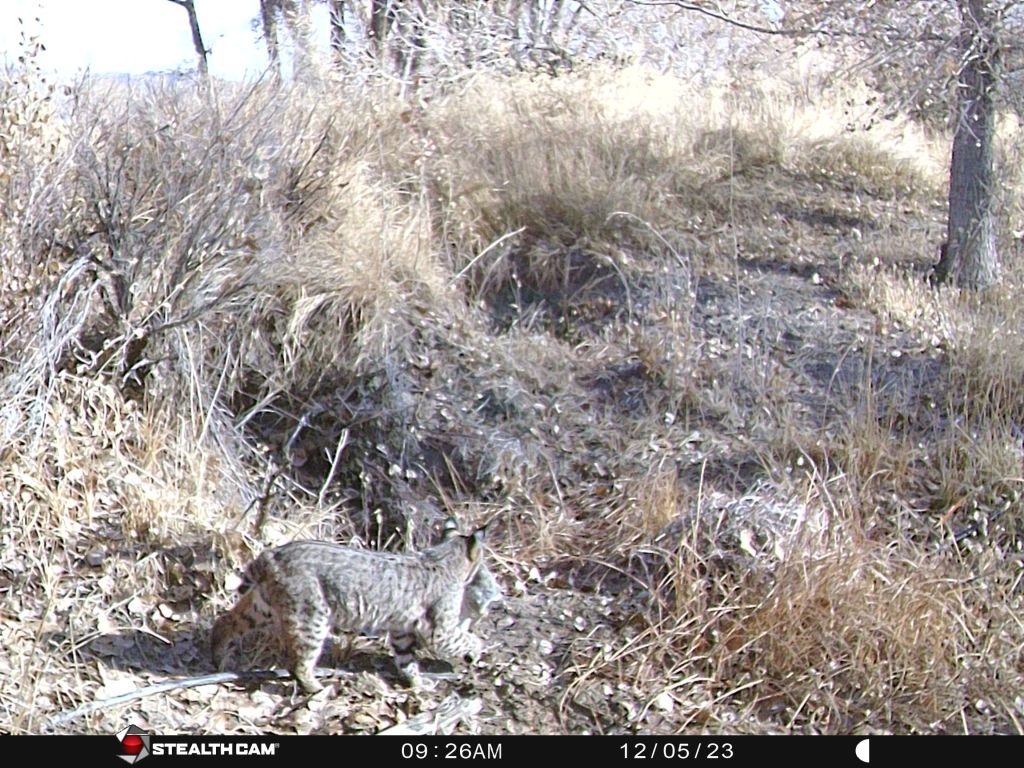
Lots of folks have told me that Bobcats will move out if Mountain Lions are in the area. I think the photos show that isn’t always true. The fact that the Lions seem to be primarily or possibly exclusively nocturnal may be why the smaller Bobcats are choosing to hunt during the day.

I’m most likely capturing the same Bobcat. I have no way of knowing or telling them apart. The one I’m seeing looks very healthy and well fed. Just like with the Mountain Lions I am looking forward to seeing and chronicling their summertime activities this year. Hopefully kittens will show up following mama Bobcat soon.
Desert Bighorn Sheep

Desert Bighorn’s are a conservation success story in Nevada. From a low population estimate in 1960 of 1500 to 2000 animals they are estimated to be at 12,000 as of the summer of 2023. This is the direct result of careful management by the Nevada Department of Wildlife and the hard work of sportsman and sportswoman in organizations such as the Wild Sheep Foundation and Nevada Bighorns Unlimited. In the last 4 years populations have suffered from severe drought and disease but are still at healthy levels.

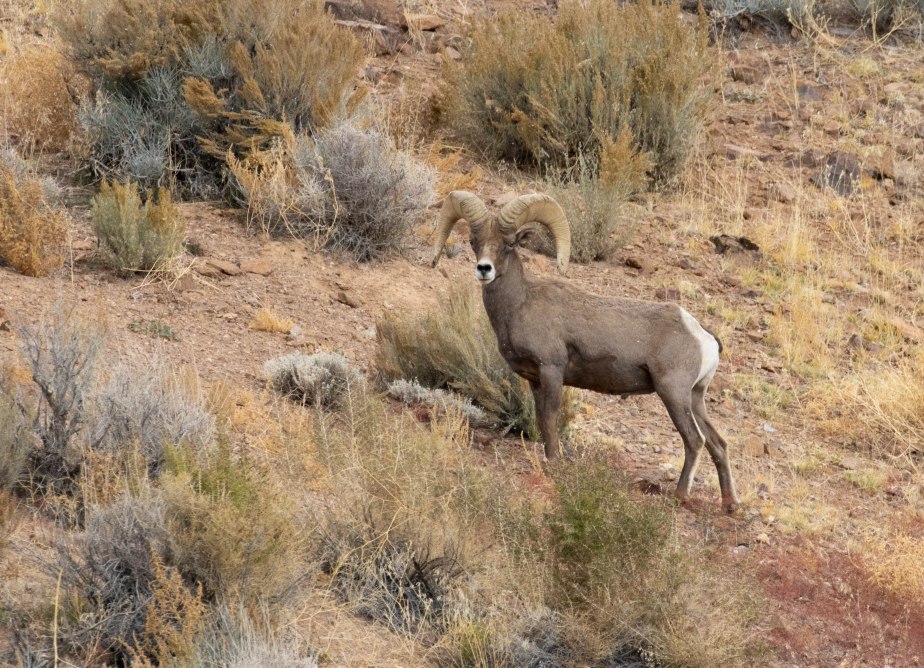
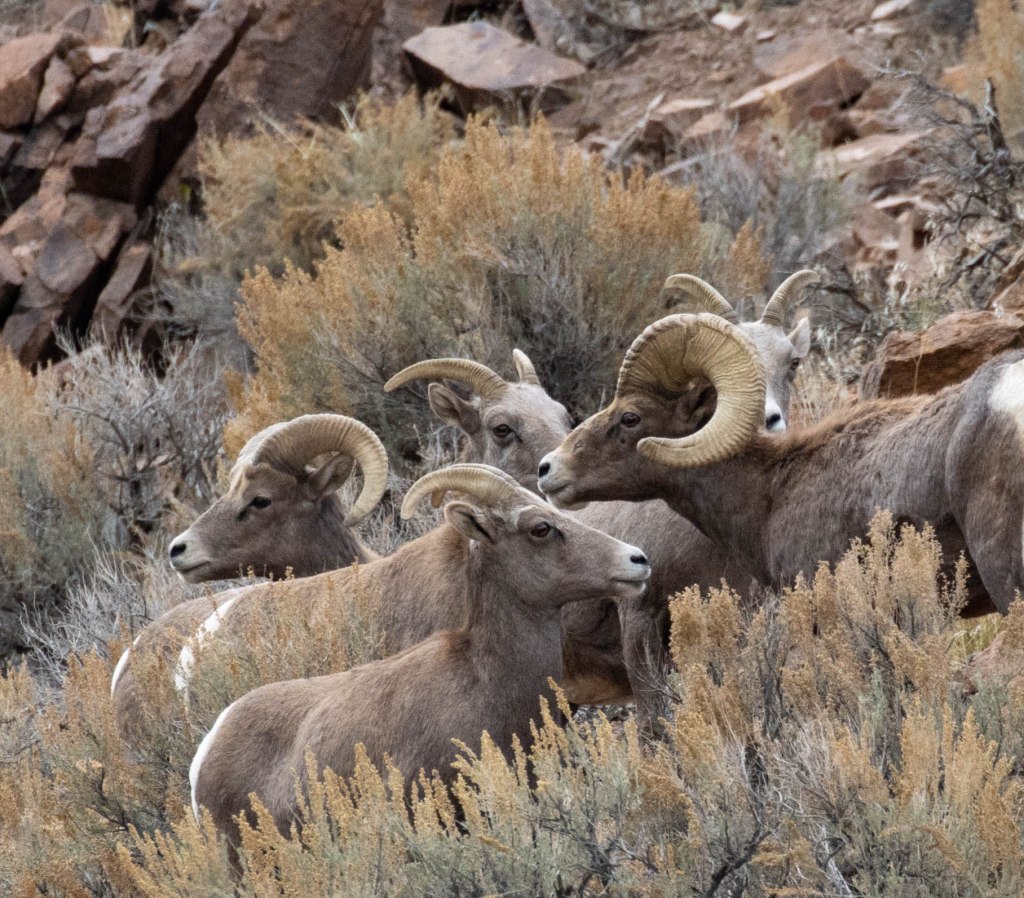
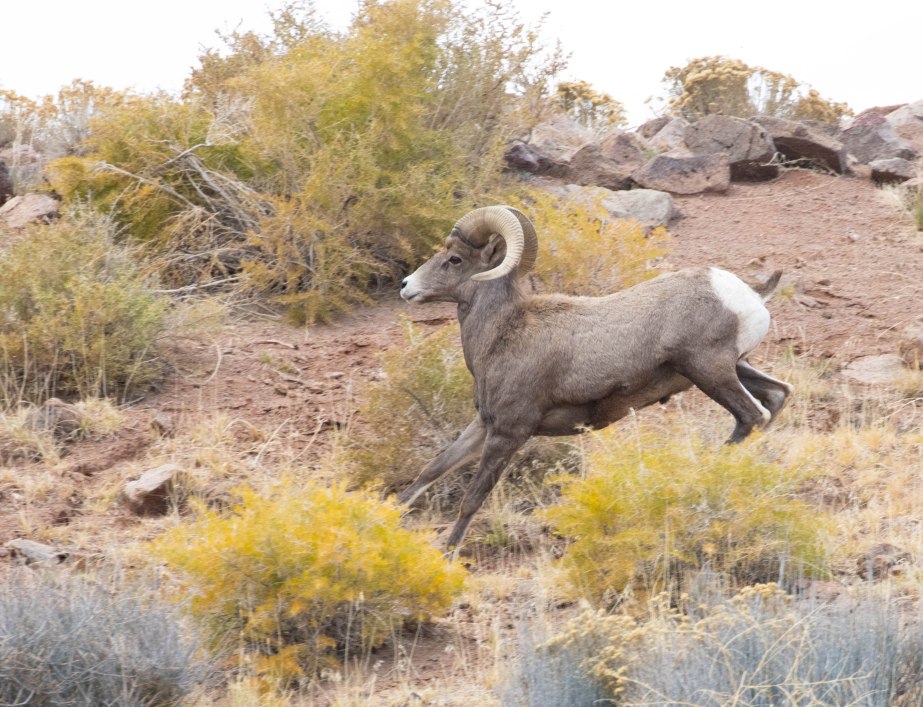
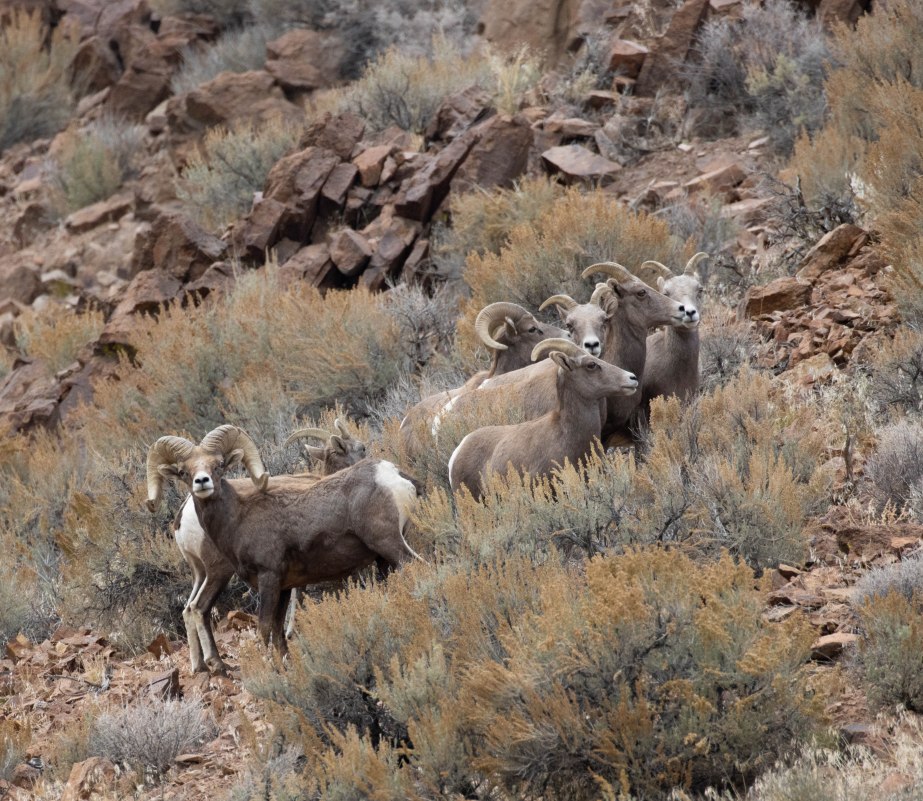
I took these photos in Central Nevada last November. Desert Bighorns have become a photographic obsession for me. They are majestic animals, marvelously adapted to their harsh environment. They can go for long periods of time without water, and they thrive in the steep, rocky mountains of the high desert. They blend into their surroundings quite well with their light gray coats. Even their white rumps, which most often give them away, are easily mistaken for rocks until they move.

Lack of water sources and diseases, most often passed on to them from domestic sheep, are limiting factors in the growth of Bighorn Sheep populations. The installation of guzzlers across the Sheep’s current and former ranges have been life saving for current bands and allowed for the expansion and maintenance of Sheep. Guzzlers are water collecting and storage devices of various designs that allow large and small animals and birds to have access to water across Nevada and other arid states. These guzzlers store rainwater and snow melt in cisterns so that during the dryer part of the year there is water available for animals and birds. Some of the larger guzzlers can be filled by helicopter drops of water in dire circumstances. Most of these are installed by volunteers from several sportsman, sportswomen groups in cooperation with the Nevada Department of Wildlife. All desert life benefits.

Hunting has little impact on the population as only around 180 tags are issued each year. These are highly coveted tags as it is a once in a lifetime opportunity for most hunters. I did receive a tag for the 2023 season and harvested a beautiful mature ram. I will tell that story another time.

The Lions of Winter

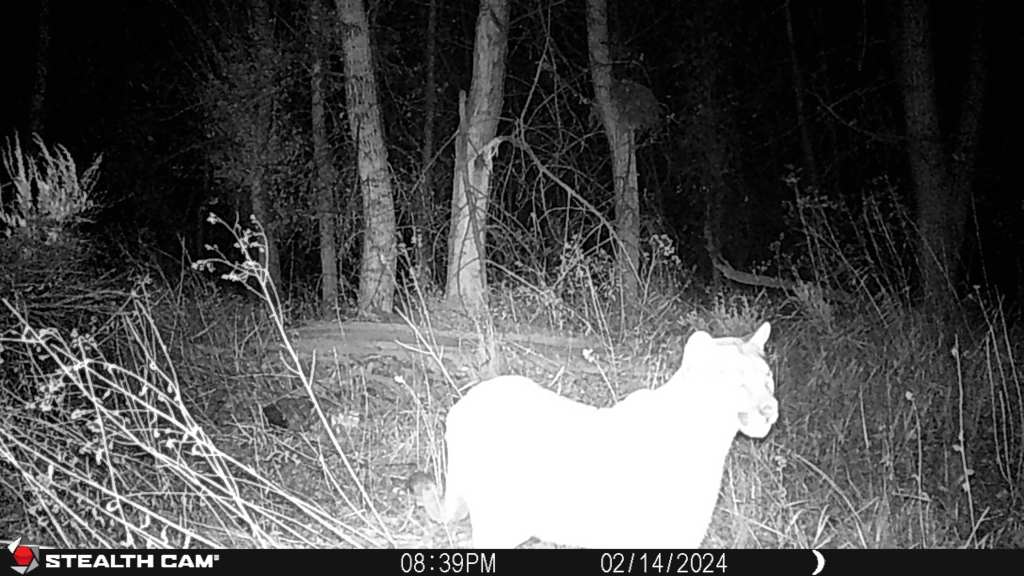
For the last few years, I have set up my trail cameras in late August and collected them at the end of March. This year I’ve decided to leave them out and track animal activity all year. Usually, Mountain Lions make their first appearance in November. I’m not sure if they are around much in the summer which is one of the reasons I’ll leave the cameras out. One year I had cameras placed from July until the end of March and stopped getting pictures of Lions in February. Based on incomplete data I’ve concluded they frequent this area mostly in winter and head to higher ground in the summer. We’ll see.

I have been seeing two lions this winter. Most likely this is an adult female with one of last year’s cubs. Lions need a large territory and with the exception of mating season won’t tolerate another adult lion in their area.

Mountain Lions main prey are deer. There are lots of deer in this area, but I have not found any kills. In the mountains immediately above, there is a healthy population of Desert Bighorn Sheep. Bighorn Sheep are also favorite prey for Lions. I wonder if that is what they are hunting primarily? I may hike up there later this spring and look for evidence.

I hope to see kittens this year following this large healthy lion sometime soon.

Autumn Romance

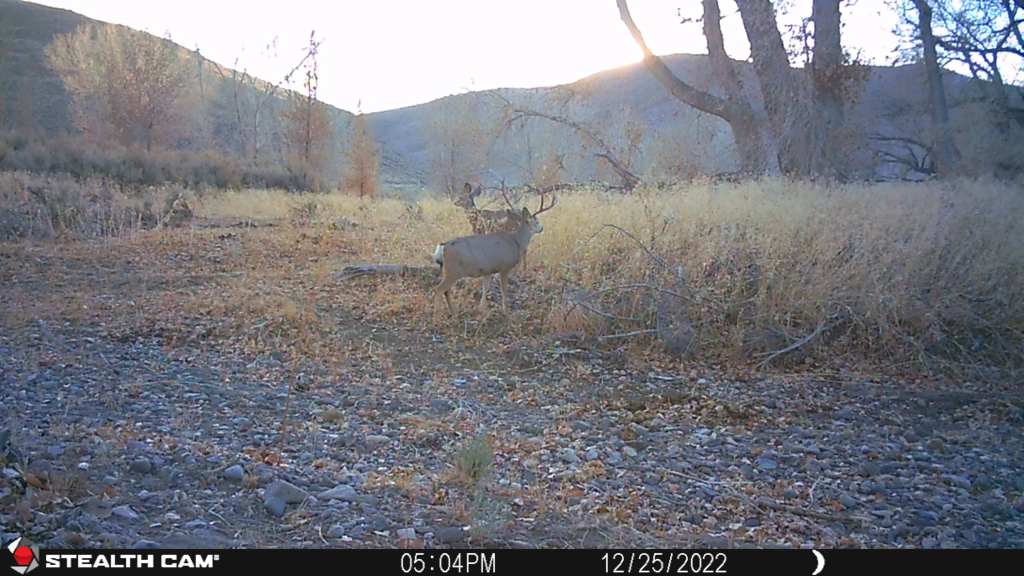
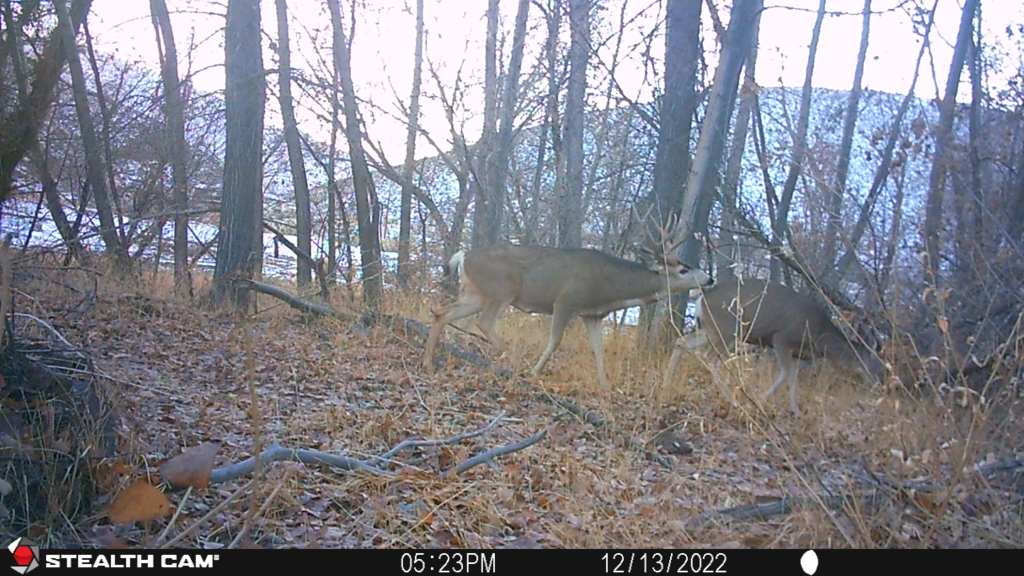
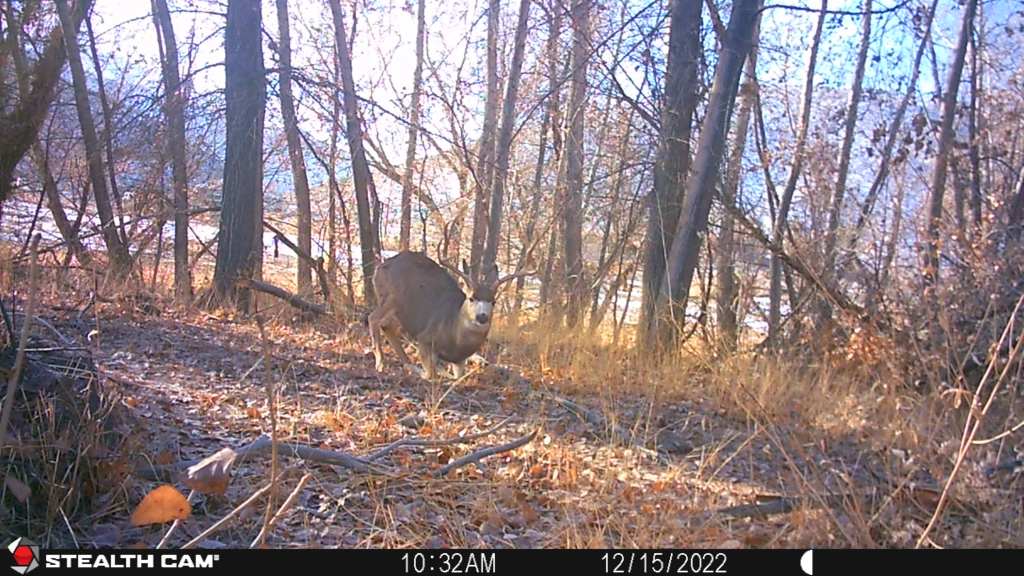
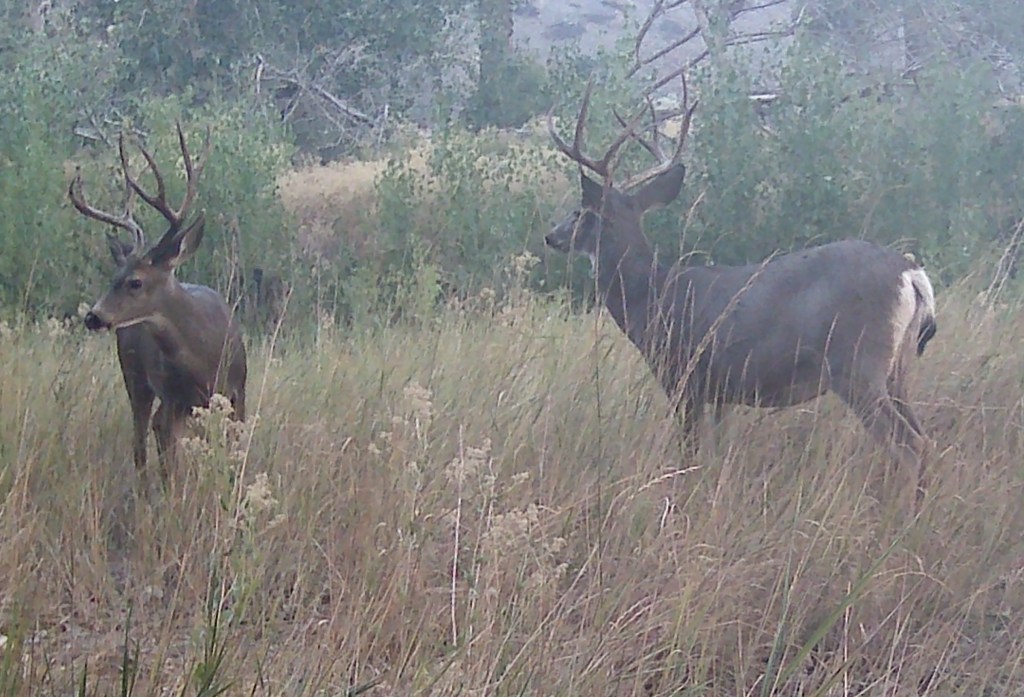
Late Autumn is when the rut occurs for Mule Deer in the west. Mid November to mid-December seems to be the peak time based on my yearly observations. At this time the male deer are not very cautious and rampage around even in mid-day looking for does to breed. I was pleasantly surprised to see that the trail cams were placed to advantageously capture some of this behavior.

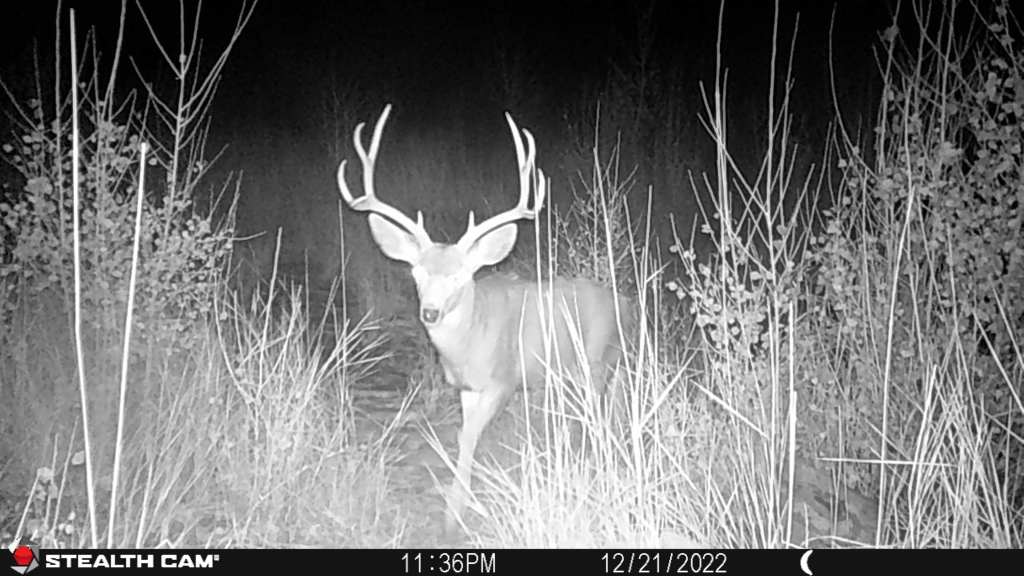
My Favorite Buck of 2022

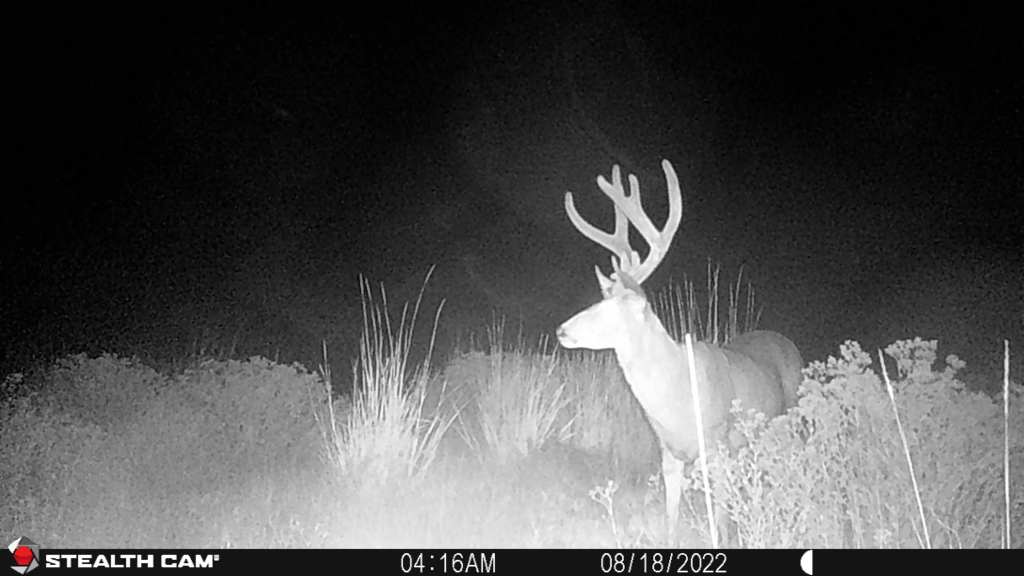
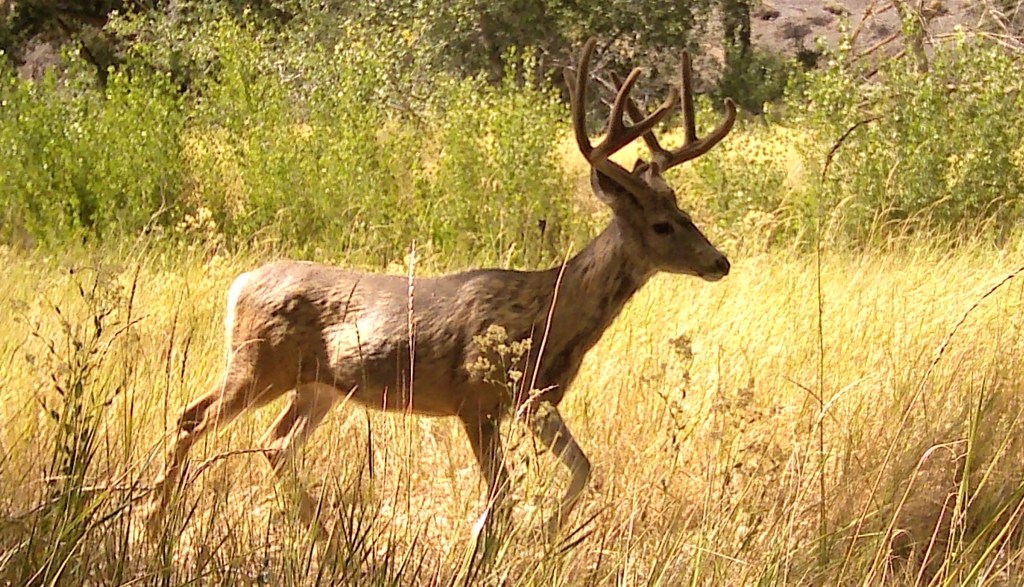
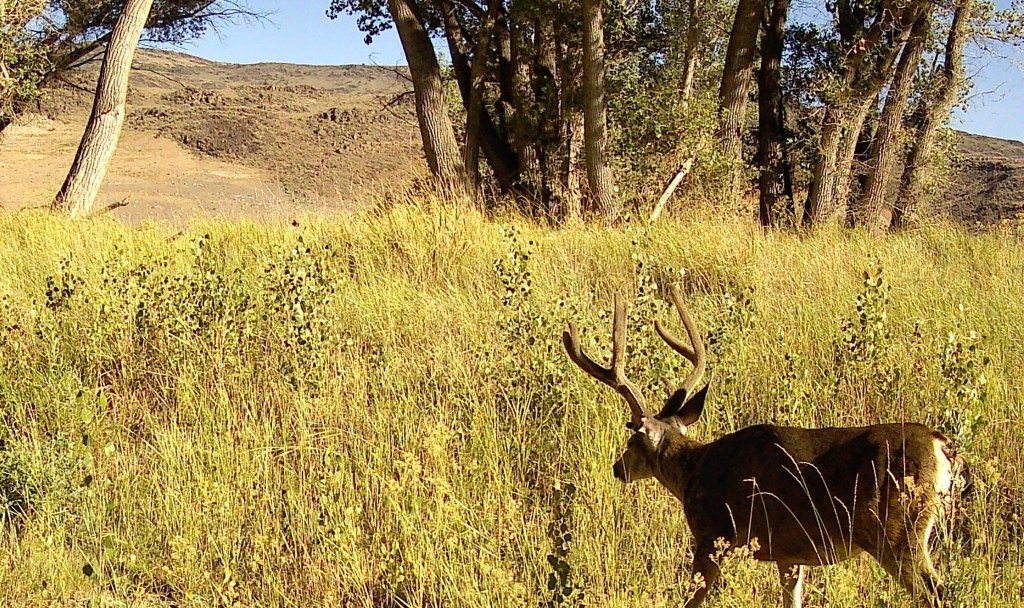
I have lots of photos of Mule Deer bucks from July through December of 2022. I feel like I got to know them well through the photos taken of them on my Trail cameras. It was interesting to watch them the last 6 months. They changed their behavior through the observation time. In the summer they were solitary or hung out with one other buck. I saw some sparring through summer and early fall and then the very serious business of competing for does in November and December. My favorite buck of the year is a classic 4 point western count. He has a large, very symmetrical rack and is in my opinion the handsomest of all the bucks in that area this year. He posed nicely for several photos and I enjoyed going through all his photos to choose a few I’ll show here.

Changing Landscape

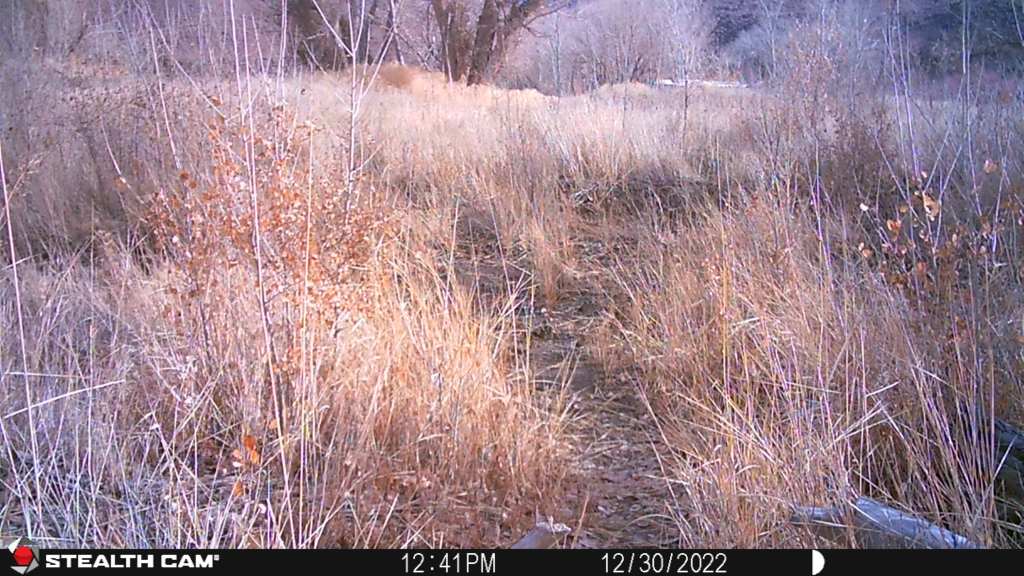
We are in the rain shadow of the Sierra Nevada mountains but this past New Year’s we were not shielded from the exceptional amount of moisture that hit California. We had wet heavy snow for hours on New Year’s Eve that caused widespread power outages. I waited a week to venture out to grab my memory cards out of the trail cameras. It was still a pretty muddy slog to get to them. Sadly, there were several ancient cottonwood trees that did not survive the storm and many downed branches blocking trails. I noticed wash outs in areas that surprised me. When I got home to review my cards I was shocked to see how far the river had invaded. I almost lost one of my cameras judging by the photos.

I placed this camera at the intersection of several trails and have captured lots of deer, coyotes and feral horses on it. It is several hundred yards from the river. There are not any animals in this photo but it is time stamped a couple of hours before the wet snow and rain started. I need to reset the date recorder on the camera as it one day off on the date.

Exactly 24 hours later the river is flowing right in front of the camera. Note the swimming beaver passing by. That is what triggered the camera. No wonder it was muddy even a full week later. All of the water had receded, and I would have had no idea of the extent of the flooding without these photos.

Mountain Lion

Right on cue, after a bobcat appearance, a lion shows itself. I thought if I saw one this would be the camera that picked one up. It is on a well-traveled route to water. The deer and horses are frequently using this trail so why not a lion? It’s a rocky route without low weeds and brush so the lion is highlighted quite well. Unfortunately, again these photos are at night so not the great photo quality. Still, it is nice to see that they are out there keeping the wild places wild. Thie appears to be a young lion. It looks on the smaller side. I hope to see it again but not in person!

Finally a Bobcat!

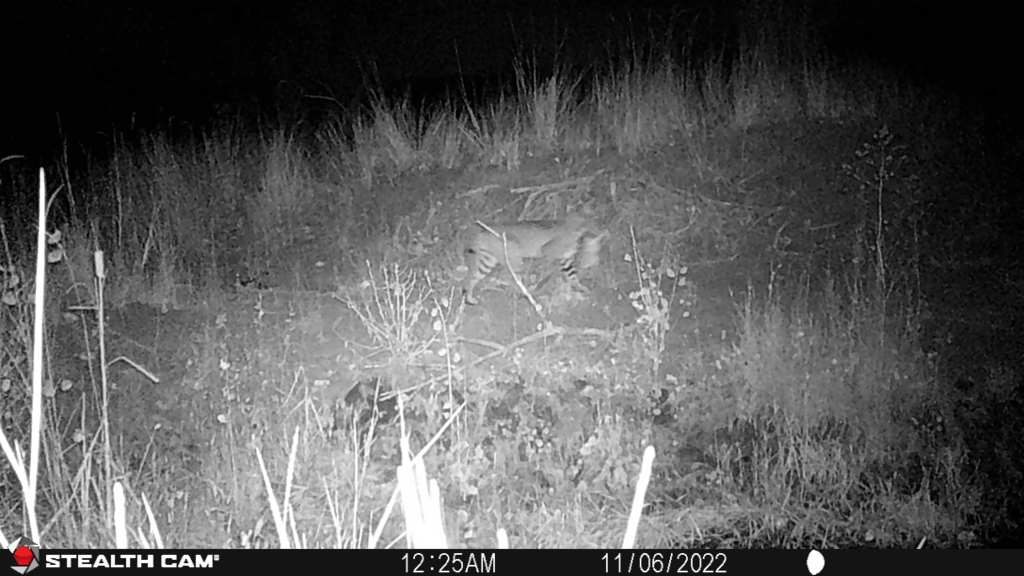
While I am enjoying all the images and information that I have been able to gather on deer and coyote movements, I will admit that I have been eagerly anticipating getting images of Bobcats and Mountain Lions. I have been assured that both frequent the property. As such, I am carrying bear spray on my belt when I wander the around just in case of an encounter. A reminder of the need to be aware and vigilante came this week when it was reported that a young girl out walking her dog was attacked by a mountain lion south of this area. Fortunately, both girl and dog were not seriously injured but it is cause for concern. These are not great pictures. Trail cams don’t take the quality of images a DSLR camera takes but I am thrilled to see the bobcat showing up on two different nights on my camera. In a couple of the photos it shows the bobcat carrying a rabbit in it’s mouth after a successful hunt. Now on to capturing a Lion.

Ghostly Trail Cam Photos for Halloween

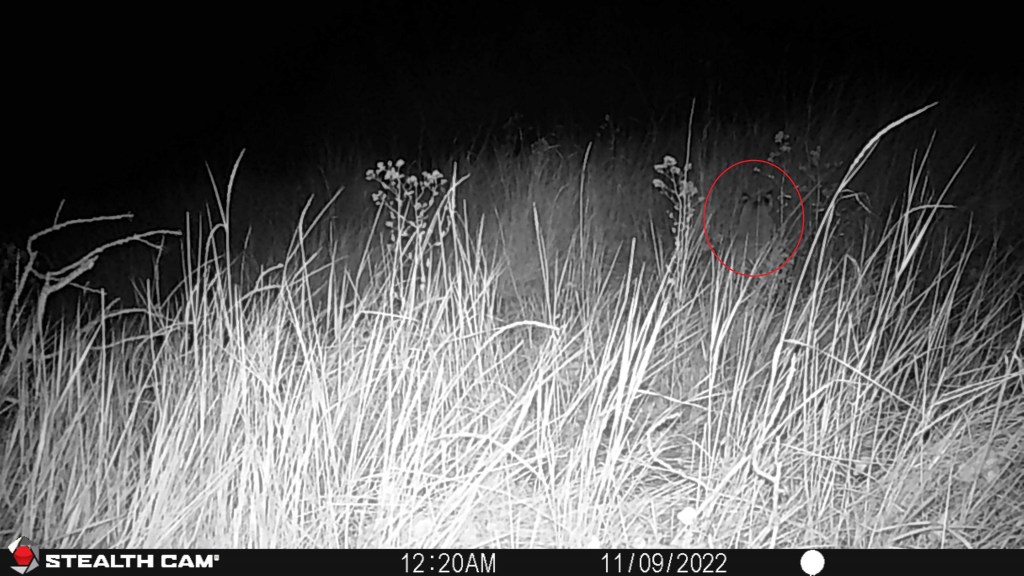
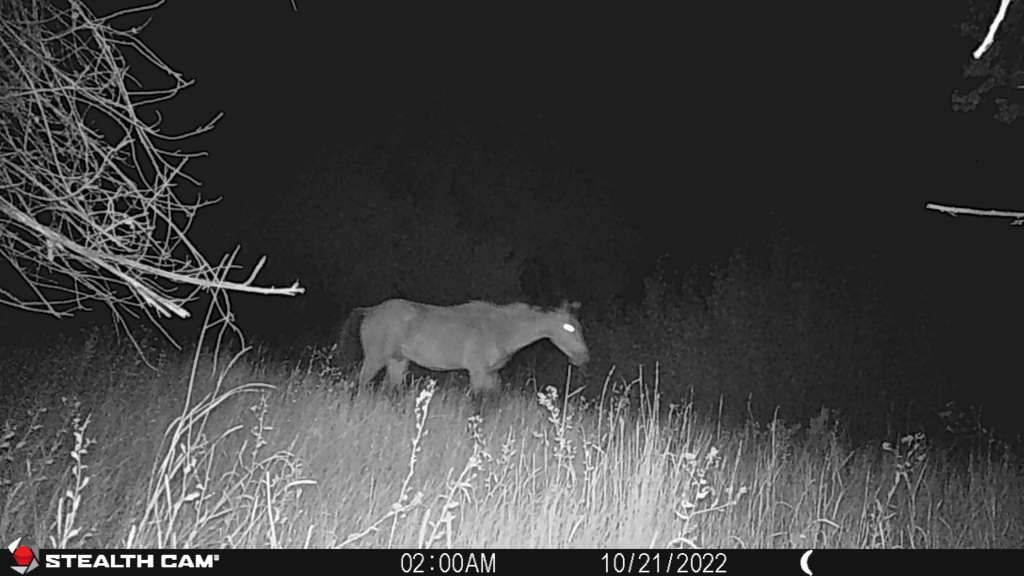
I have always been afraid of the dark. This fear has not gone away even at my advanced age. I just have far too much imagination and can conjure frightening images from the slightest noise or unexplained movement out there in the scary dark. I laugh at myself as even when reviewing trail cam photos that are taken in the dark I can get creeped out. It is disconcerting to stare at a photo that was taken at 2:00 AM and there is nothing obviously in the photo that triggered the flash. Another eerie sight are eyes glowing out of the dark with no hint at what animal or other being is behind the eyes. In these photos the animals are easy to identify, deer, feral horses, coyotes and a raccoon.

If not Spiders, then What?

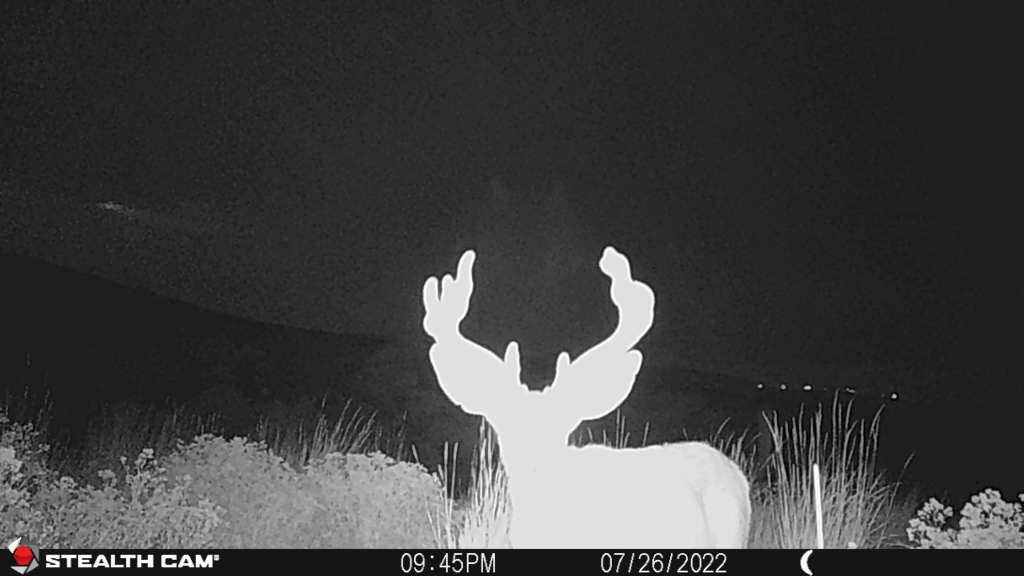
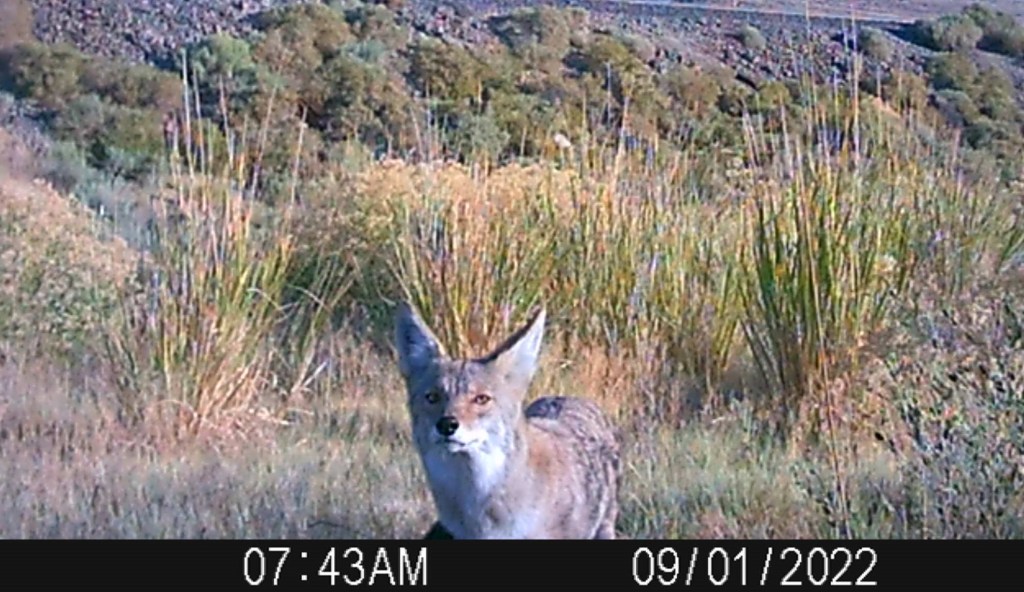
Last post was an example of the unexpected when it comes to photos captured on Trail-cameras. What is the desired objective? …beautiful animals of course. I started placing a series of cameras out in July in two main areas that are full of wildlife. Nevada State Game Laws makes the placement of Trail-cameras illegal after August 1 of each year until January 1 of the following year in the interest of fair chase. My goal is photographing animals not hunting them in this application, but I am still subject to the law. I obtained permission to place these cameras on private property which is legal. I am seeing lots of large Mule Deer bucks along with does and fawns. The cameras have also captured a skunk, coyotes and feral horses. While Trail-cameras don’t take high quality photos the pictures are hopefully going to increase my odds of getting good pictures with my real camera. Here are some examples from the last few months.

Mule Deer Buck
Business End of a Skunk
Coyote
Heavy Horned Mule Deer
Two Mule Deer Bucks