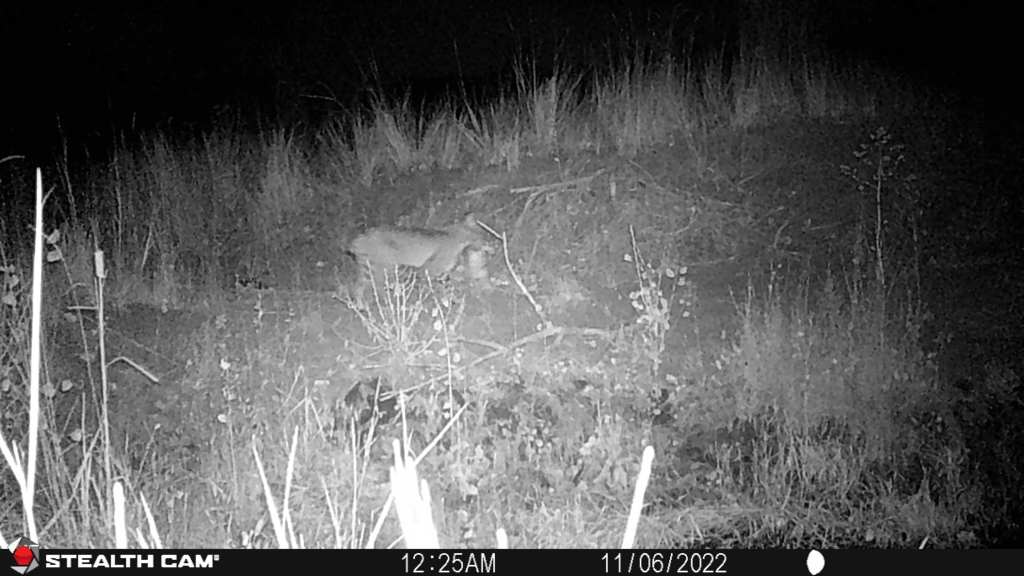
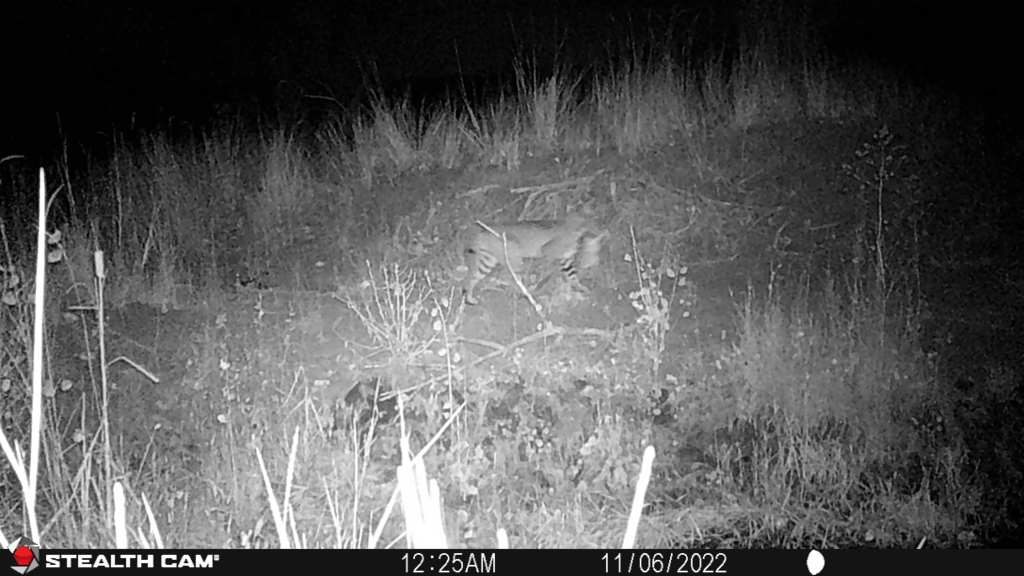
Finally a Bobcat!

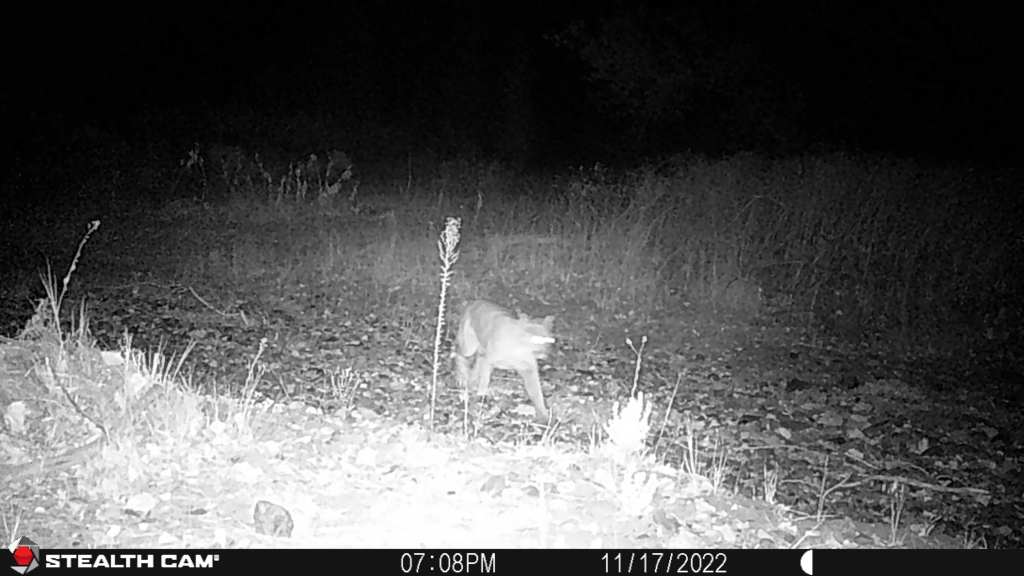
While I am enjoying all the images and information that I have been able to gather on deer and coyote movements, I will admit that I have been eagerly anticipating getting images of Bobcats and Mountain Lions. I have been assured that both frequent the property. As such, I am carrying bear spray on my belt when I wander the around just in case of an encounter. A reminder of the need to be aware and vigilante came this week when it was reported that a young girl out walking her dog was attacked by a mountain lion south of this area. Fortunately, both girl and dog were not seriously injured but it is cause for concern. These are not great pictures. Trail cams don’t take the quality of images a DSLR camera takes but I am thrilled to see the bobcat showing up on two different nights on my camera. In a couple of the photos it shows the bobcat carrying a rabbit in it’s mouth after a successful hunt. Now on to capturing a Lion.

Ghostly Trail Cam Photos for Halloween

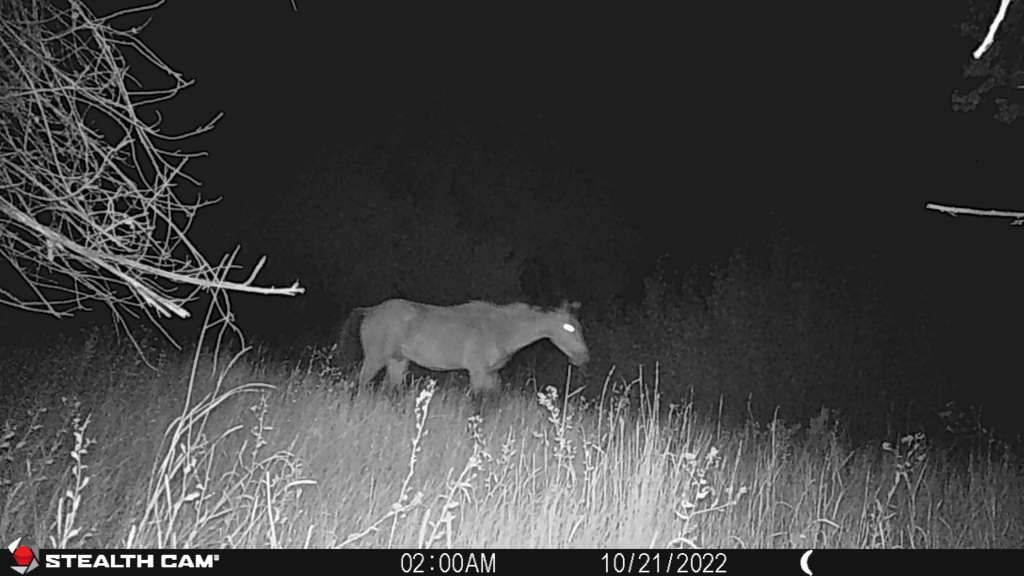
I have always been afraid of the dark. This fear has not gone away even at my advanced age. I just have far too much imagination and can conjure frightening images from the slightest noise or unexplained movement out there in the scary dark. I laugh at myself as even when reviewing trail cam photos that are taken in the dark I can get creeped out. It is disconcerting to stare at a photo that was taken at 2:00 AM and there is nothing obviously in the photo that triggered the flash. Another eerie sight are eyes glowing out of the dark with no hint at what animal or other being is behind the eyes. In these photos the animals are easy to identify, deer, feral horses, coyotes and a raccoon.

If not Spiders, then What?

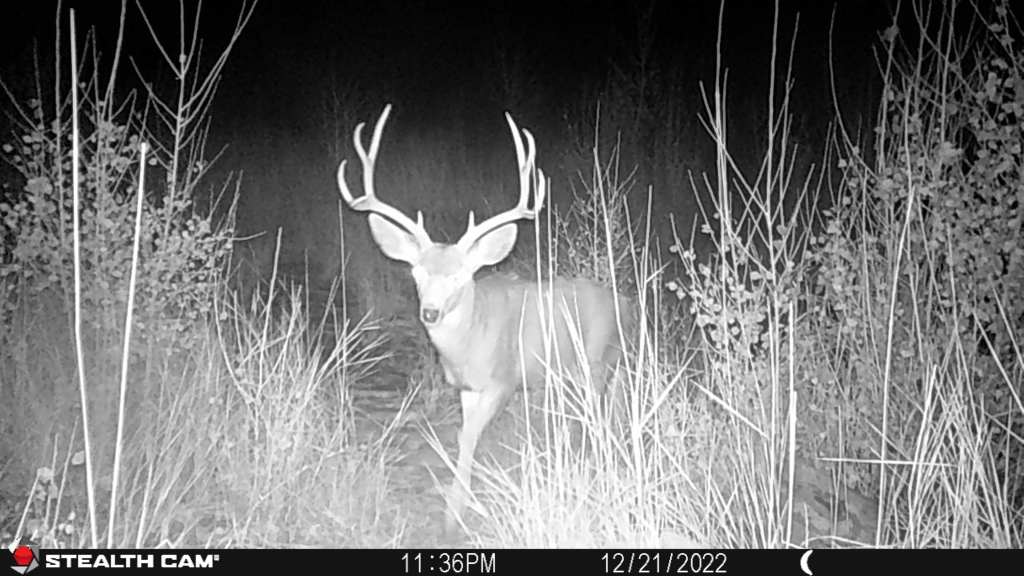
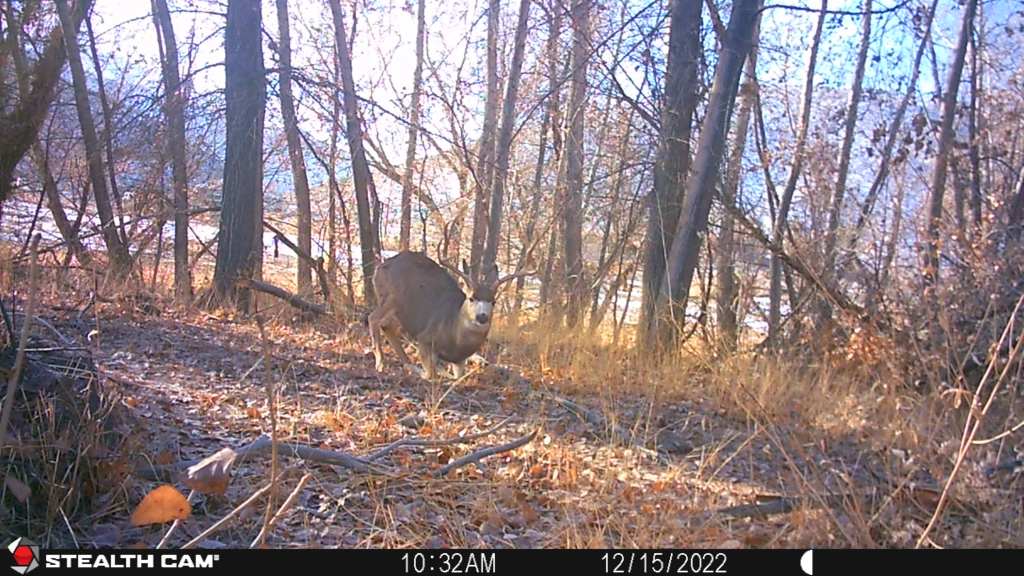
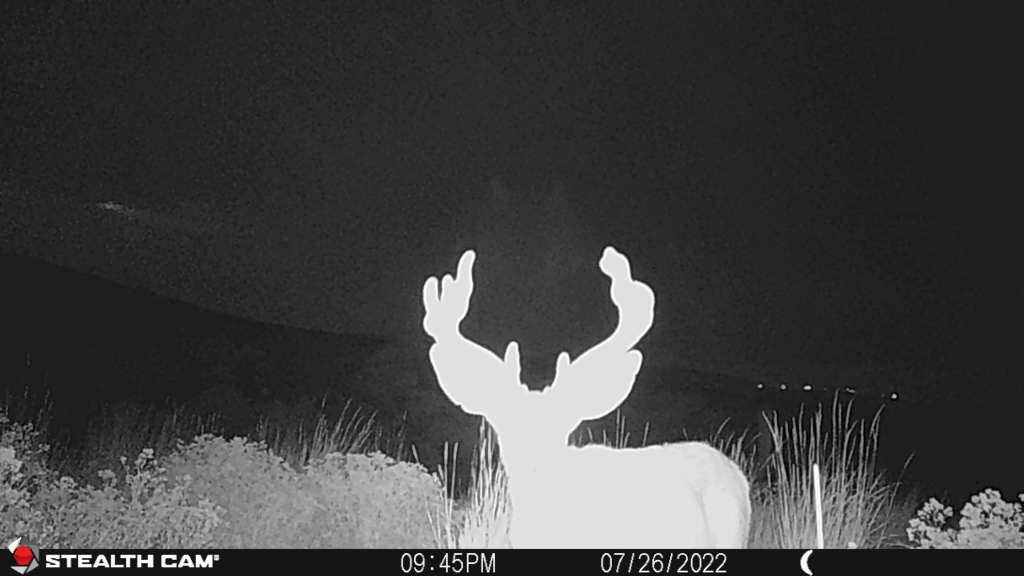
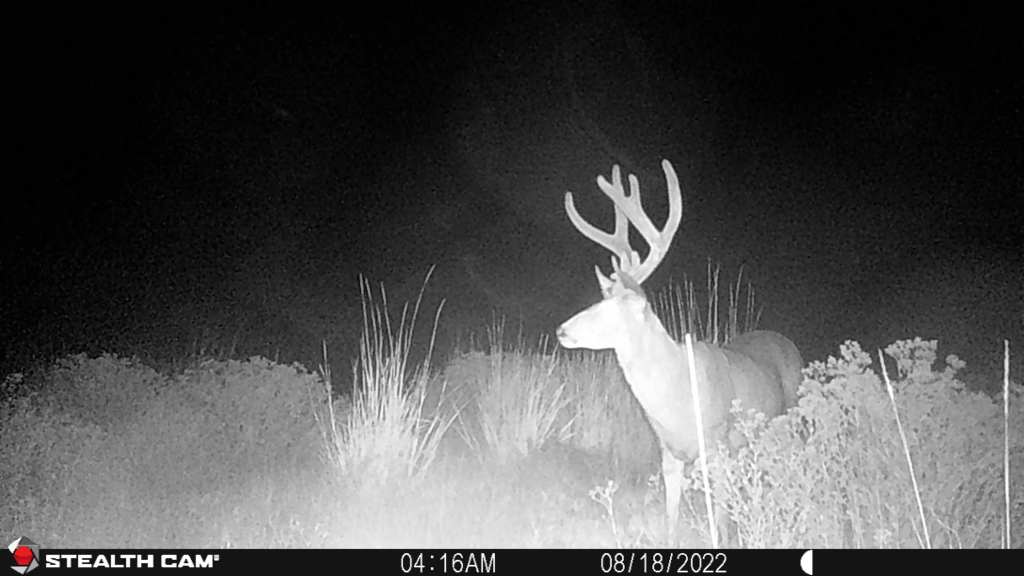
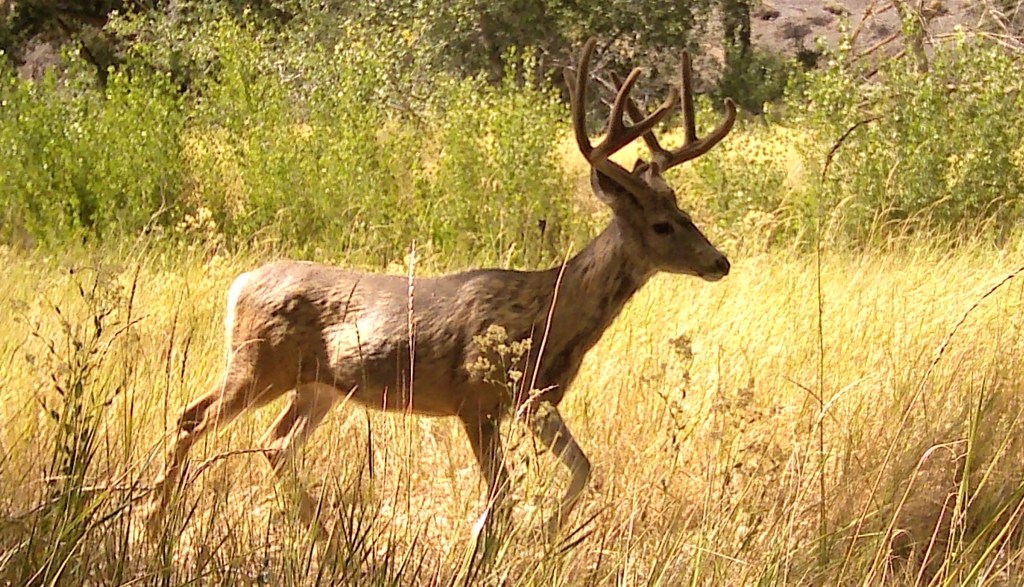
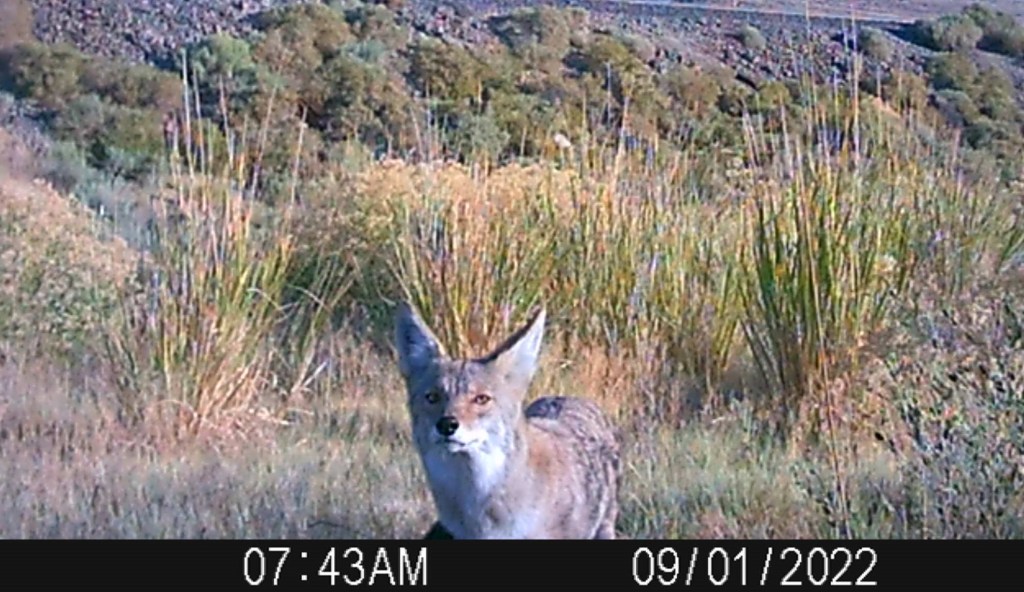
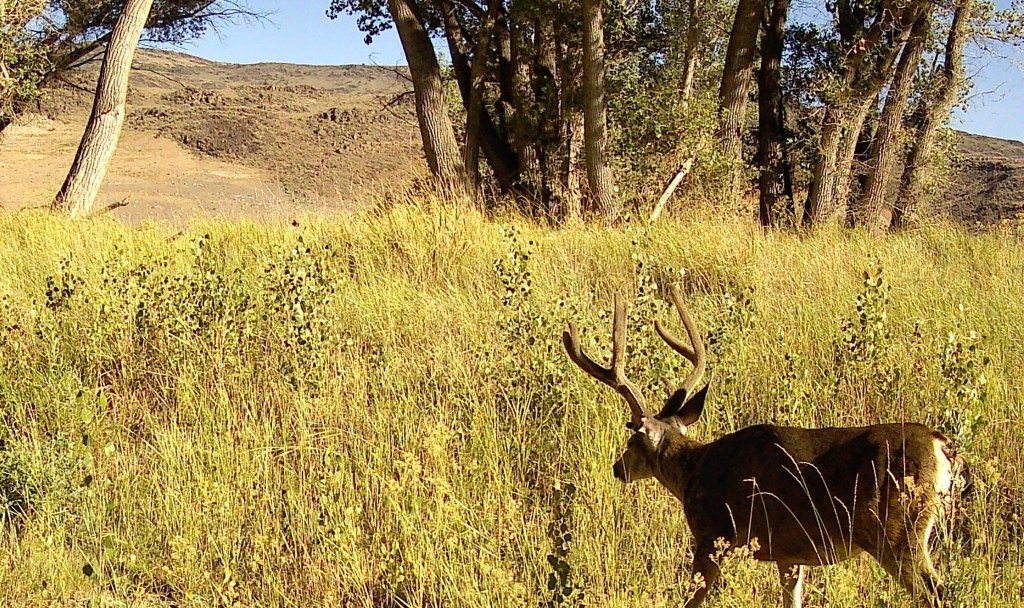
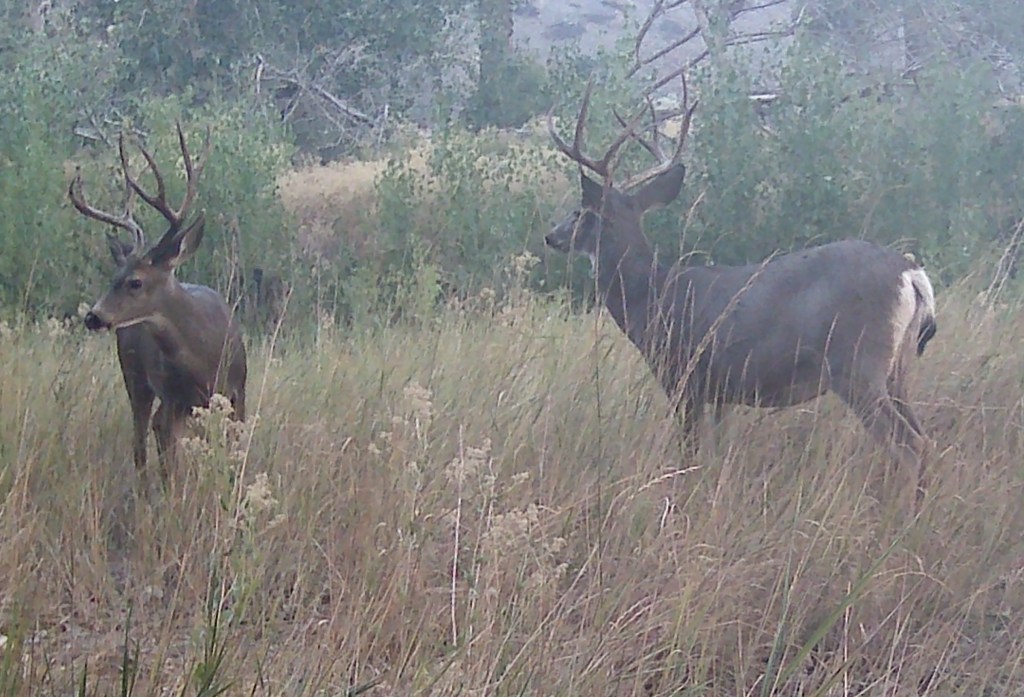
Last post was an example of the unexpected when it comes to photos captured on Trail-cameras. What is the desired objective? …beautiful animals of course. I started placing a series of cameras out in July in two main areas that are full of wildlife. Nevada State Game Laws makes the placement of Trail-cameras illegal after August 1 of each year until January 1 of the following year in the interest of fair chase. My goal is photographing animals not hunting them in this application, but I am still subject to the law. I obtained permission to place these cameras on private property which is legal. I am seeing lots of large Mule Deer bucks along with does and fawns. The cameras have also captured a skunk, coyotes and feral horses. While Trail-cameras don’t take high quality photos the pictures are hopefully going to increase my odds of getting good pictures with my real camera. Here are some examples from the last few months.

Mule Deer Buck
Business End of a Skunk
Coyote
Heavy Horned Mule Deer
Two Mule Deer Bucks

Band of Brothers

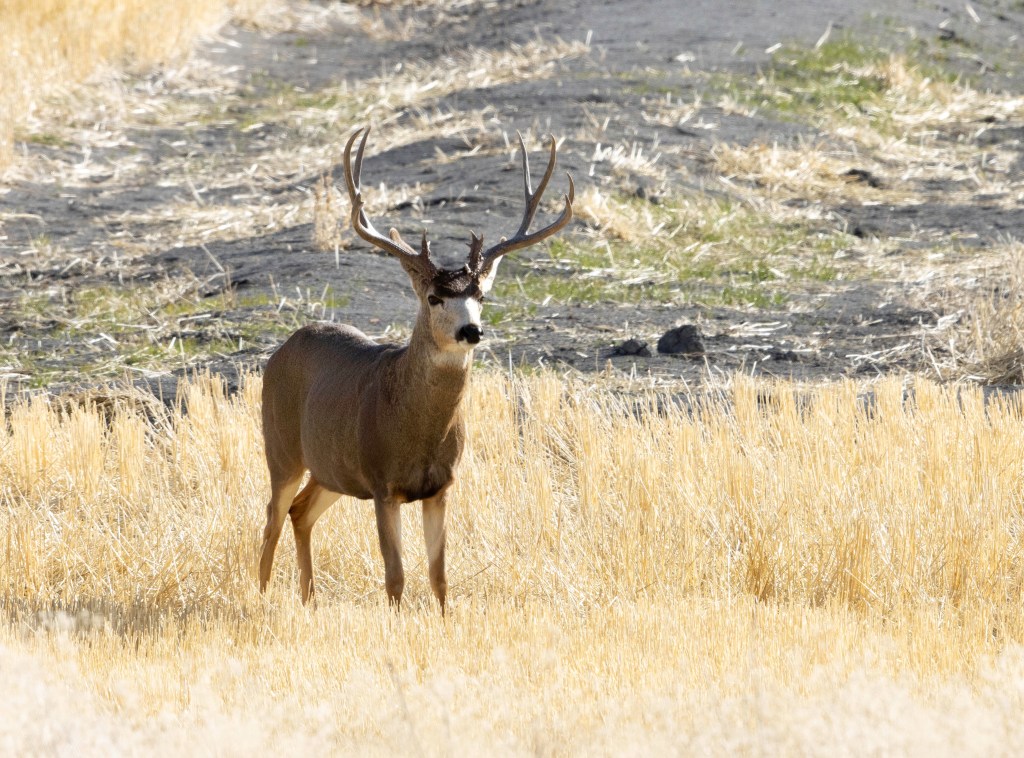
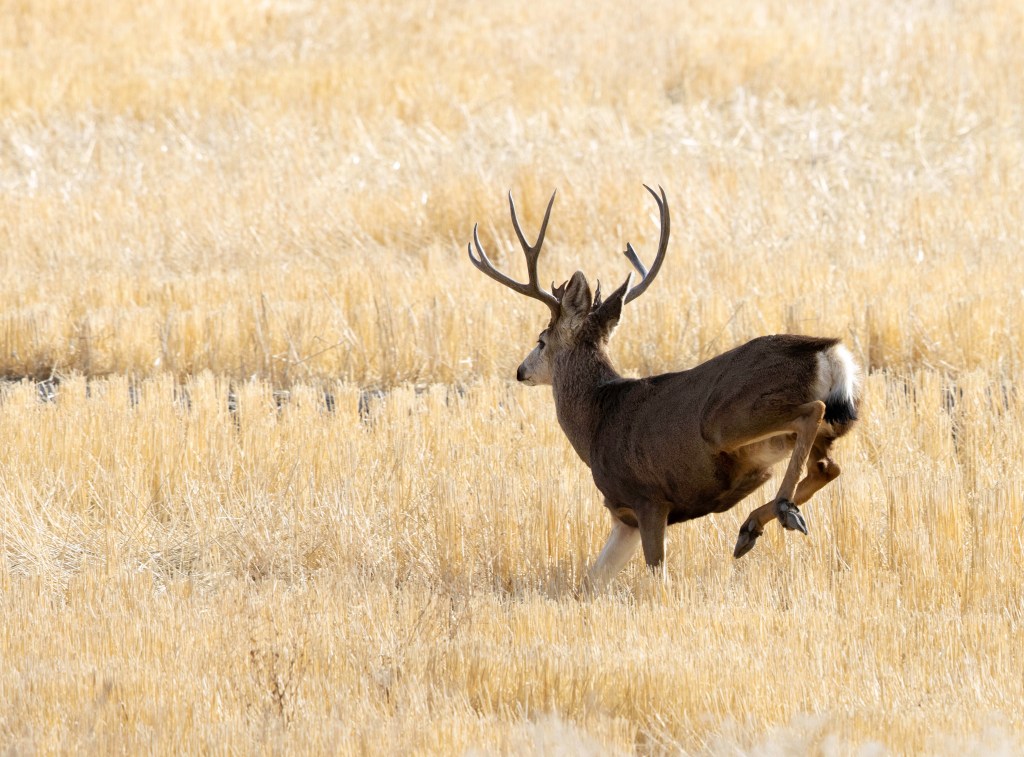
I was fortunate to run into this handsome herd of Mule Deer bucks just as they were leaving a field in the early morning. It isn’t often you see this many horned ones together and it was a joy to watch and photography them for about an hour before I had to move on.

Mule Deer

These fellows got over their alarm at my presence fairly quickly and it was interesting to watch their interactions at my leisure.

Four Point and Three Point

Western count, this is a nice four point and three point hanging out.

Alert

King Stag

This guy was definitely the biggest buck and the most wary. He dived into the tall brush and hid for a good little while until he decided I wasn’t a threat. He ran out an joined the rest of the herd and allowed me to get a few good shots. He has some pretty gnarly eye guards. Classic four point Mule Deer Buck.

Mix of Bucks and Does
In Motion
Play Fighting

These bucks did a little bit of play fighting while I watched. I was hoping they would knock their horns off it being March and time for them to be dropping their antlers. No such luck.

Bald Eagles

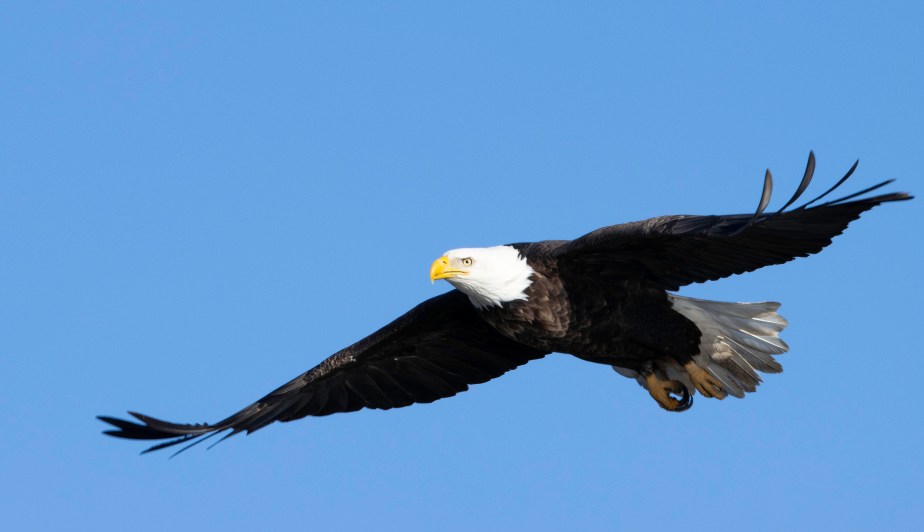
February and March are prime months for seeing Bald Eagles as they migrate through the high desert. They follow the flocks of snow geese, tundra swans and numerous ducks that fly through the area on their way back north.

Bald Eagle in Flight
Bloody Feet

I like to photograph and record nature with realism. Birds of prey have to eat and that is messy. Eagles cull the weak and sick birds from the flocks. They fly over large rafts of snow geese scaring them into panicked flight. They pick the ones off the water that are too weak to fly or are struggling. Nothing goes to waste. Ravens follow the eagles and clean up any scraps.

American Kestrels

My habit is to get obsessed with a particular species. For awhile, I chase that species in what I hope is a compulsive but healthy manner, until I have a collection of images that I like. In the pursuit I learn a lot about the animal or bird, where to find, good methods to get close to them, general habits and knowledge to aid in the quest.

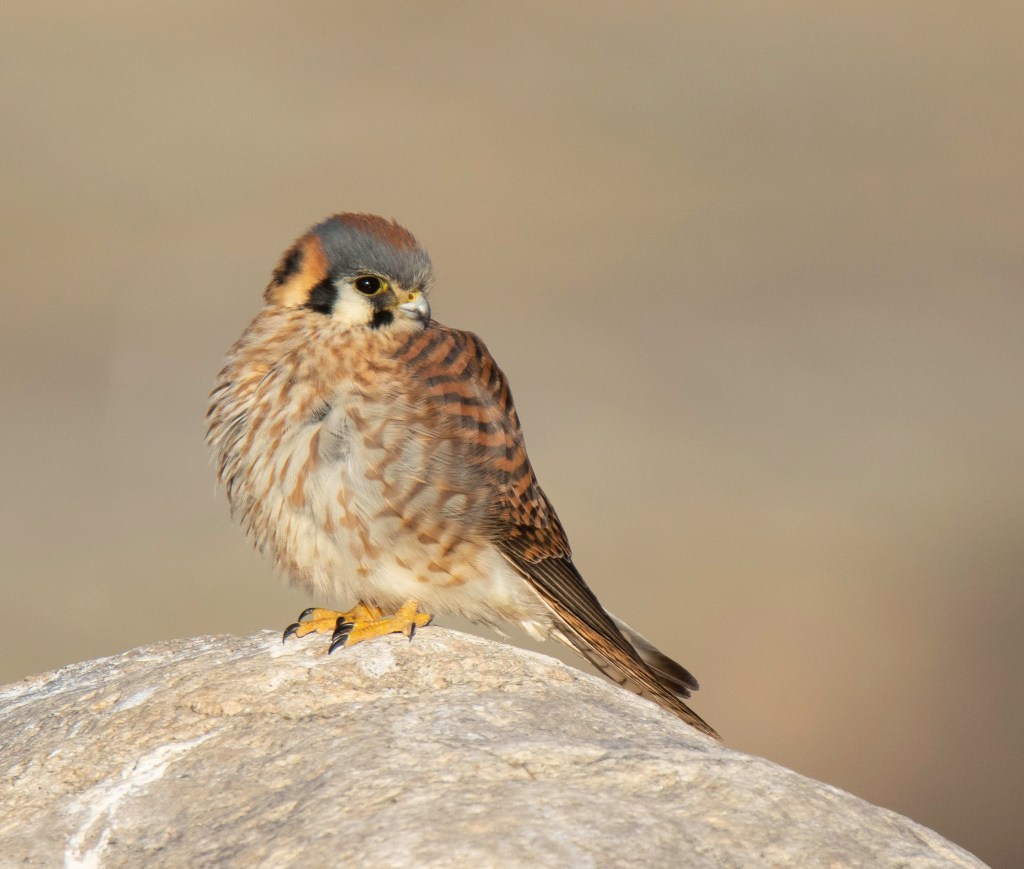
American Kestrel

A friend of mine was commenting that he wanted to get some photos of Kestrels. I told him we have many in the area and general places he could find them. He kept expressing, with some frustration, that he was not able to find them and that was all it took to awaken the species challenge in me.

American Kestrel

These are beautiful little birds that are relatively easy to find and photograph. They are widespread across North America and are doing well, not threatened or endangered and fun to watch. They like open fields and border areas. They use trees, power lines, fences and rocks to perch on. They hover over an area to hunt and then dive onto their prey. They eat insects, lizards, small birds and mammals.

Kestrel with Cricket

Kestrels are the smallest bird in the Falcon family and the only Kestrel in America. They are unusual in the Falcon family as the male and female differ subtly in colors.

Kestrel in flight

That Moment When You Realize You are a Bit Different.

I was at a cocktail party/gathering last night and was chatting with folks about my camping trip this week in the desert. The discussion turned to photography and how I had got the nice coyote shots. Without thinking I started telling about finding a dead mule deer, most likely a mountain lion kill, and dragging the carcass to a better spot in good light and hunkering down in the sagebrush to take photos of what ever showed up to eat it. I was thinking Golden Eagle as I had scared one off the deer when hiking up the canyon but this coyote showed up and I snapped away. I then realized I had lost everyone at the dragging the carcass part.

I never stopped to think that my behavior is out of the norm but the expressions on folks faces kind of told me that it is. I have to smile I guess.

Thank goodness I have people in my life who put up with my weird behavior for the sake of a photo.

This year I have started venturing further off the beaten track in search of wild places and wilder animals. I am working on overcoming a lifelong fear of the dark and have been camping out alone. So far so good but I do wish the little critters would not make so much noise at night trying to get into my food. My imagination runs a bit at 2:00 AM.

On this trip I visited Upper High Rock Canyon. Added a new bird to my life list with this Long-eared Owl. I couldn’t get a better shot of it as it was in thick trees but it was a thrill to see one. The coyote, I have mentioned. It got pretty close before the camera shutter sound scared it off. Isn’t amazing how well they blend in to their surroundings?

Back to the Sheldon

After having such an extraordinary experience last week, I just had to go back. I found that the Antelope/Pronghorn were well into their rut and small groups have formed into large herds. The action was fast paced as big bucks were chasing does around and fighting with each other for the females.

Lots of photos to edit, but here are a few of my favorites so far.

In Their World

I was able to spend a few days this past week up on the vast and lonely Sheldon National Wildlife Refuge. It is one of my favorite places on the planet. It is the fourth largest wildlife refuge in the lower 48 at 573,504-acres. You pretty much have the place to yourself on most days. In the three days I spent there I saw a total of 5 people. Two were in a car, two on touring motorcycles and Paul who is the acting camp host at Virgin Valley, distributing toilet paper to the few primitive pit toilets found at the scattered campgrounds throughout the Refuge. The brief chat Paul and I had was my only conversation.

The first day and a half I did what most people do and drove around looking for antelope and what other animals I could find to look at and take photos of. It is not my favorite way to interact with a place but the landscape can be a bit daunting as you look out as far as the eye can see across windswept sagebrush steppe. I had limited success and more importantly was not enjoying the lack of intimacy with my surroundings so I decided to try my luck with my blind.

I set up as it was getting light near a water source in the shadow of an old round rock corner post. Out here, where the ground is rocky, hard and wood hard to come by, they use horse fence shaped into a barrel filled with rock to build stability into fences. Cattle were removed from the Refuge in the early 1990s and all the wire removed in the last decade, but some of these relics of ranching are still around.

I barely got the blind draped around me and the action started hot and heavy. There were about 25 sage-grouse across the small water hole from me. Then almost immediately the antelope started coming in for their morning drink in singles, doubles and larger groups. Most did not even glance my way. One or two can be seen looking at the camera as the clicks alerted them that something was not quite right but even those who were suspicious took their drink. While I did not see them, I was serenaded by coyotes fairly close several times that morning.

Deer came to drink in several groups. The females with fawns in one group and big bucks hanging out like frat boys in another. One bachelor bunch made up of three big guys, big three and 4 points; had a small two point tagging along with them. I am sure this was his first year away from mom. As they finished drinking and made their way back up the slope the big boys all took turns poking two point in the butt as if to say, “hurry along there son.”

It is breeding time for antelope so it was fun to watch the big bucks chase off the youngsters. They would spot each other from quite a distance and charge off at great speed.

As the morning wore on, Northern Harriers started dive bombing the sage-grouse. They do kill and eat sage-grouse but I think mostly younger birds. I did not see them take a grouse in this instance. I have some photos of the harassment I will share in another post.

At times I hardly knew where to point the camera there was so much going on! It was amazing to watch animals behaving naturally and feeling like I was truly getting a peak into their lives.