Tufa Rock Formations

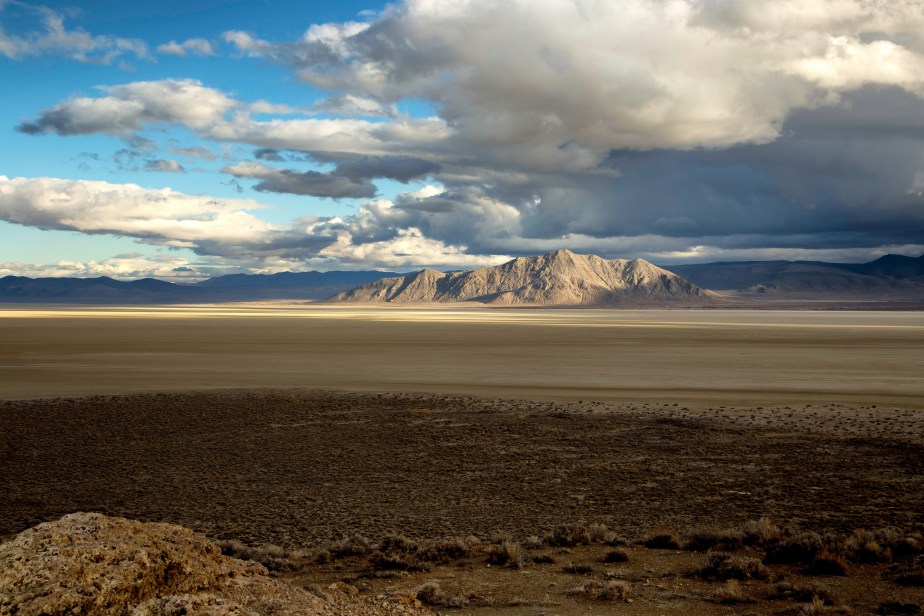
The most famous Tufa Rock is found around Mono Lake in California. It is a popular destination for photographers. I have not made my way down there yet though I may soon as this type of landscape photography is of interest to me. We have the same type of Tufa rock formations in and around Pyramid Lake. When we have cloudy days, and I have time I try to get out there to photograph the rocks. Last week the clouds and my schedule aligned so I was able to get a few shots that I liked.

Stallions

This time of year the foals are the show stealers for sure but the stallions always command my attention. The herd stallions have a presence that is captivating and for photographers trying to get close they must be watched carefully. You could put yourself in real danger if you did not pay close attention to what they are doing, their body language and their mood. Sometimes they graze quietly not at all alarmed as you come close, at other times they are in a definitely protective mode and then you had better watch out if they are showing you that they consider you a threat.
Each band of horses has a social structure that includes a stallion, a lead mare, a few mares with foals and half-grown offspring of varying ages that have not left the band yet or been driven off by the Stallion. These bands come fairly close to one another at times and that is when the fighting between the stallions breaks out. They seem to have a tolerance level of about 50 to a hundred yards. Within that zone one of the stallions will feel threatened and charges out to challenge. Sometimes nothing happens, the other stallion will round-up his band and move off, at other times a battle will ensue with roaring and squealing, biting and kicking. These types of photos are exciting to capture but the photographer has to be extremely careful to stay well out-of-the-way. I have been watching some of these stallions for years now and while they are familiar to me I don’t take it for granted that they are truly a wild animal.
Horses seem to me to be special in the animal world in that they know they are beautiful. If ordinary horses know that they are beautiful, then wild stallions know this tenfold. I have included some photos here of herd stallions and one young appaloosa stallion that I saw for the first time a couple of days ago hanging out with his bachelor friend. He is the first appaloosa I have seen in the wild bands. I hope to see him gather some mares in the next few years and pass on his genes. He certainly knows he is beautiful and he is.

More Babies

The hills have greened up and the horses look good. Most of the horses appear to be well fed and sleek. Each day more and more little ones show up shyly peeking out from behind their protective mothers.

I don’t know where the horses go in the winter, but in the places I am used to seeing them there are a few small bands around during the winter months. This time of year the rest of the horses reappear. Now there are hundreds and everywhere you look they are dotting the landscape.

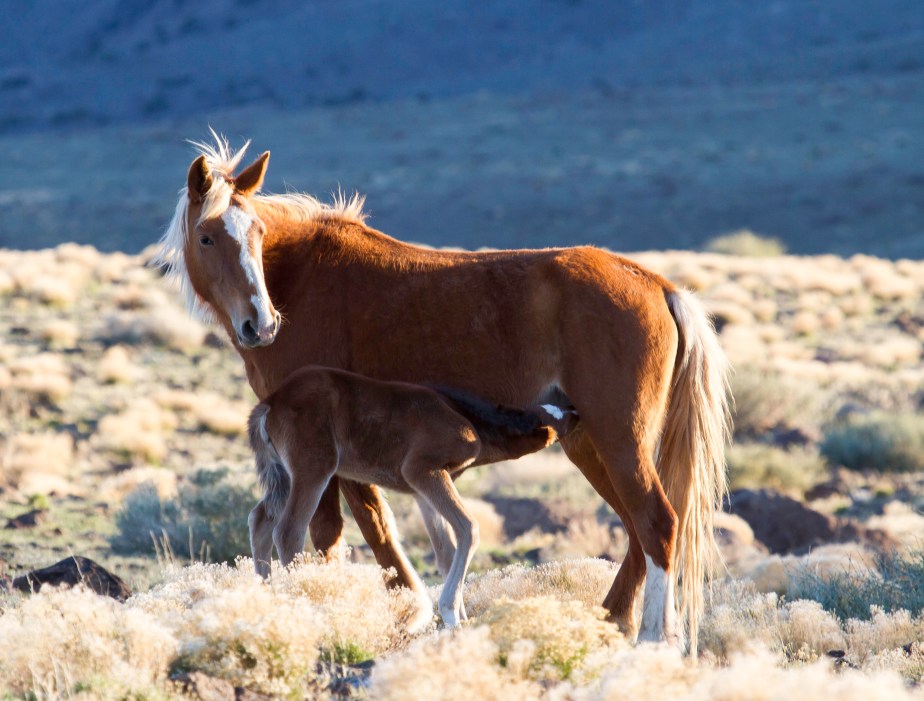
I have been fortunate to get quite a few photos of new foals. Is there anything cuter?

It’s That Time of Year

It is the time of year that spring surprises pop up all around us. Trees and flowers blooming, grass greening and leaves starting faintly to show in the cottonwoods along the river. It is also the time of year that the wild horse bands start showing up with new members. I took my camera out yesterday and was fortunate to find several mares who were amiable to having a family photo taken.

The big seal brown horse with the large white star is a stallion that I have been photographing for 5 years. His band of mares changes membership from time to time but he has always had the same red roan mare alongside him. He passes that big white star on to many of his offspring. I have included a couple of photos of his foals with the distinctive white mark on their face.

The stallions are constantly fighting over mares and stealing them when they can. I caught a couple having a bit of a scuffle on their way to water. I liked the way the dust in the evening light softened the look of the battle.

Carson Valley

This past weekend I attended a well known event in the Carson Valley called Eagles and Agriculture. Every year at this time they celebrate the return of Bald Eagles to the valley and have built a rather successful attraction for wildlife and bird enthusiasts to enjoy each February. At this time of year the cows are calving and the Eagles are attracted to dine on the placentas and some of the calves that inevitably die or are stillborn.

I have never attended anything like this before. It was well organized and I met great people, had good food and overall enjoyed myself. It was not however, a great opportunity to take wildlife photos. The drought we have been having has led to ranchers carrying less cattle on their land; less cattle, less calves, fewer eagles and raptors to see. Also arriving on tour buses with 40 other photographers and birders is not my usual mode of operation. Again, no complaints from me, it was what it was and I made the most of it by taking photos of some of the historical ranches we were allowed to visit and enjoyed meeting people who were interested in wildlife and photography. I probably won’t attend the event again or at least for a few years. I came away with some ideas of places to go on my own to take wildlife photos and an appreciation for the history and beauty of the Carson Valley.

165,000 Acres All to Myself – Stillwater Wildlife Refuge

I had an wonderful time today out at the Stillwater Wildlife Refuge about 70 miles east of Reno. I had only visited this area once years ago before I became interested in photography. I usually don’t think about the Stillwater as a good place to photograph as hunting is allowed 7 days a week during the waterfowl season and it is too hot in the summer. I just needed to get my timing right is all. Today I drove all over this huge refuge and did not see another soul the whole day!
There are several large ponds and lakes dotting the sagebrush plain. The water is the last remnants of ancient Lake Lahontan that covered most of northern Nevada 15,000 years ago. Tundra swans were present as well as ducks and geese. Many bodies of water were dried up, further evidence of our ongoing drought. We started off so promising this fall with good snowfall but January and February have been pretty dry. It is going to be another tough year for wildlife here this summer.
I was disappointed that I did not see any deer, antelope or coyotes but there were plenty of birds. I got the best photos I have ever been able to take of a Meadowlark. They are so skittish but this one stayed put for quite awhile as he sang his spring song. My earliest memory is hearing a Meadowlark like this one when I could not have been more than two out behind our house in the sagebrush. It always takes me back to hear one.
I saw lots of Tundra Swans and sparrows and some herons that were flew off before I could get any pictures. The birds were all very wary no doubt as a result of the recently closed hunting season. I was hoping to see snow geese but they all seemed to have moved on.
I will definitely make more trips out to Stillwater. It was an amazing experience to have it all to myself. I don’t know if I could possibly get that lucky again but I think with 165,000 acres if one or two other people showed up it would not be too crowded would it? 😉

Waiting

Abandoned places make wonderful subjects for photographers. I am attracted to them like everyone else. Especially the old homesteads that can be found scattered across the Great Basin. As you pick your way through  old sites you wonder: Who lived here? What was it like with just the wind and meadowlarks keeping you company day after day? The nearest neighbor might be as far away as forty miles over bad road. What finally happened to make you pick up and leave?

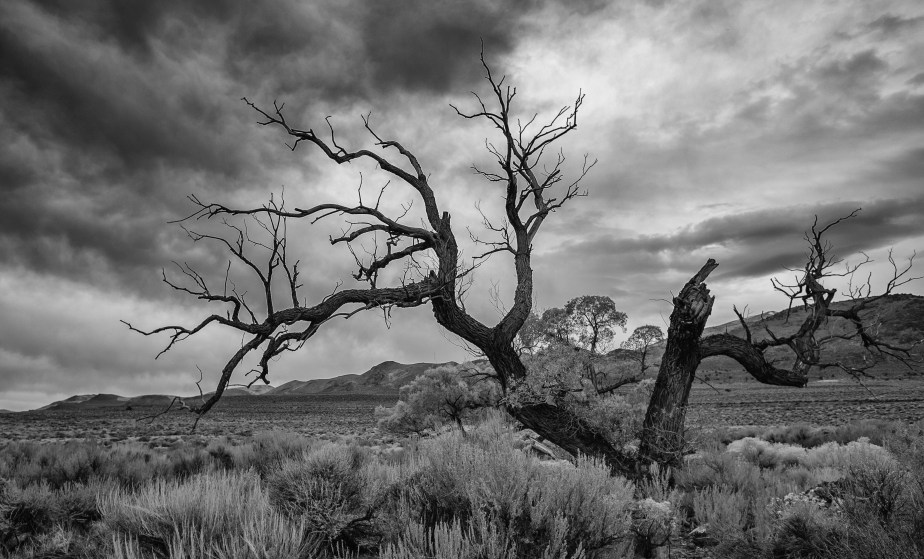
On a recent trip to Eastern Oregon I found two such places and in one case was lucky enough to have some clouds race by for some of the photos. Black and white seems to suit this type of picture. I am not much of a poet but was inspired to write a little poem thinking about these forlorn and lonely places. They stand alone while the elements work on wiping them off the landscape.

This is a Nonet.  Only nine lines with the first having nine syllables and subtracting a syllable for each line thereafter. Rhyming is optional too.

Waiting

Waiting for them to come back as if
They never left you in the wind
and brutal sun  to shoulder
Winter’s heavy snows year
after year for them
You wait until
you give in
Falling
Down