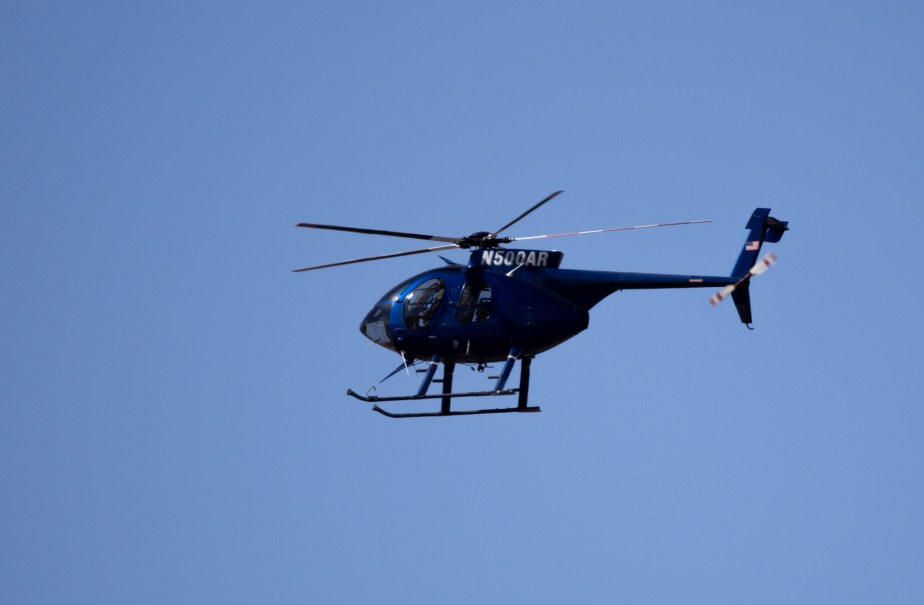
As winter rapidly approaches the high deserts of the Great Basin, the Bureau of Land Management has the thankless task of gathering overpopulated wild horses off our drought stricken and fire ravaged western ranges. The activists against responsible management have stepped up their game of protesting these gathers by taking legal action and stopping some of the emergency gathers. One of the tools in their toolbox is attending gathers, photographing them and sensationalizing any mishaps that inevitably occur in handling wild, unhandled animals. Yesterday a group of conservationists, myself included attended a gather north of the city. We had several large wildfires this summer and there is little forage left for any of the animals that live there.
The BLM’s 2026 North Complex wild horse gather will begin October 17, 2026, targeting about 320 horses to bring the population down to the 101–157 “appropriate management level” (AML)
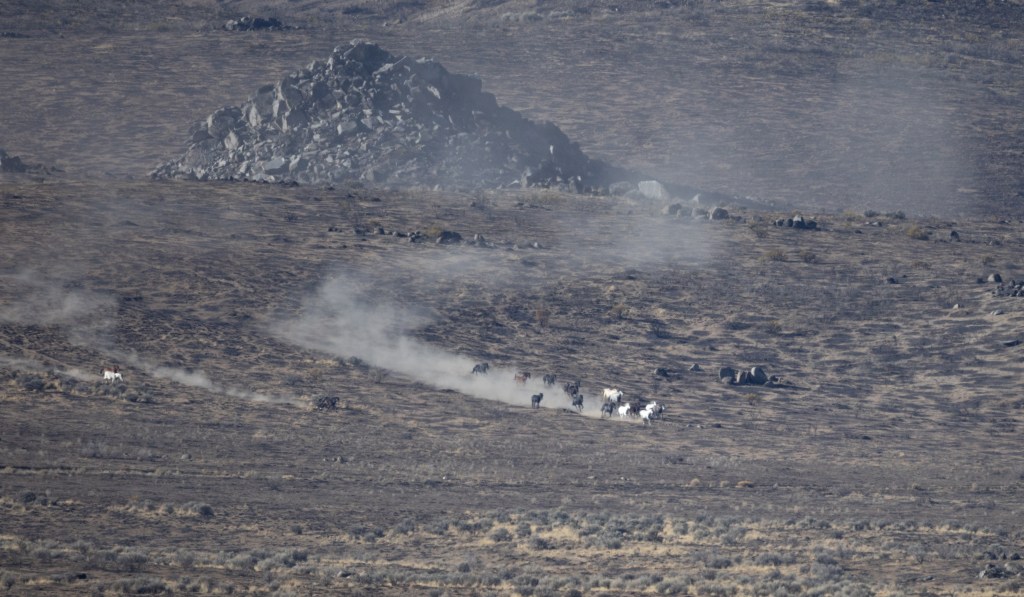
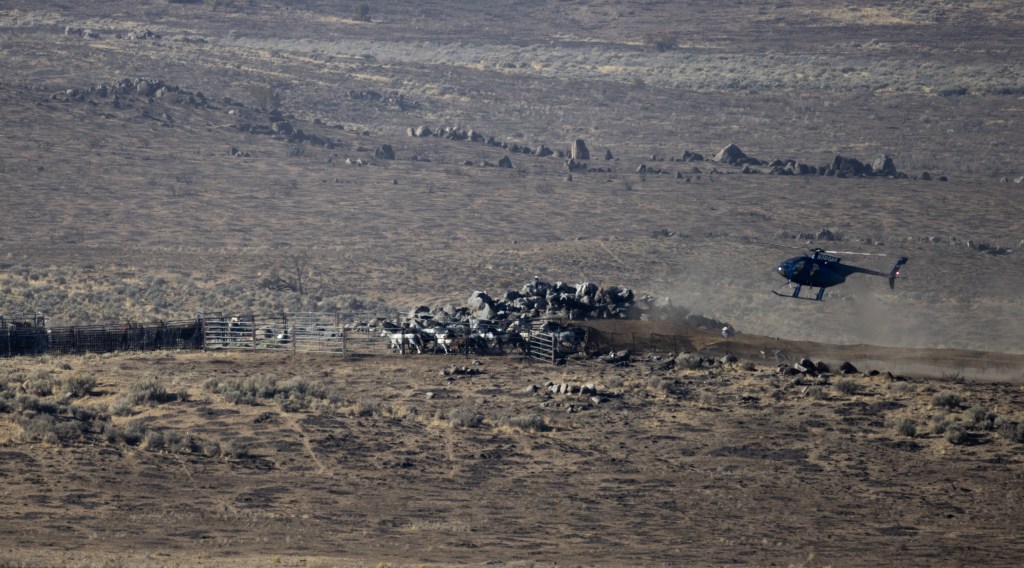
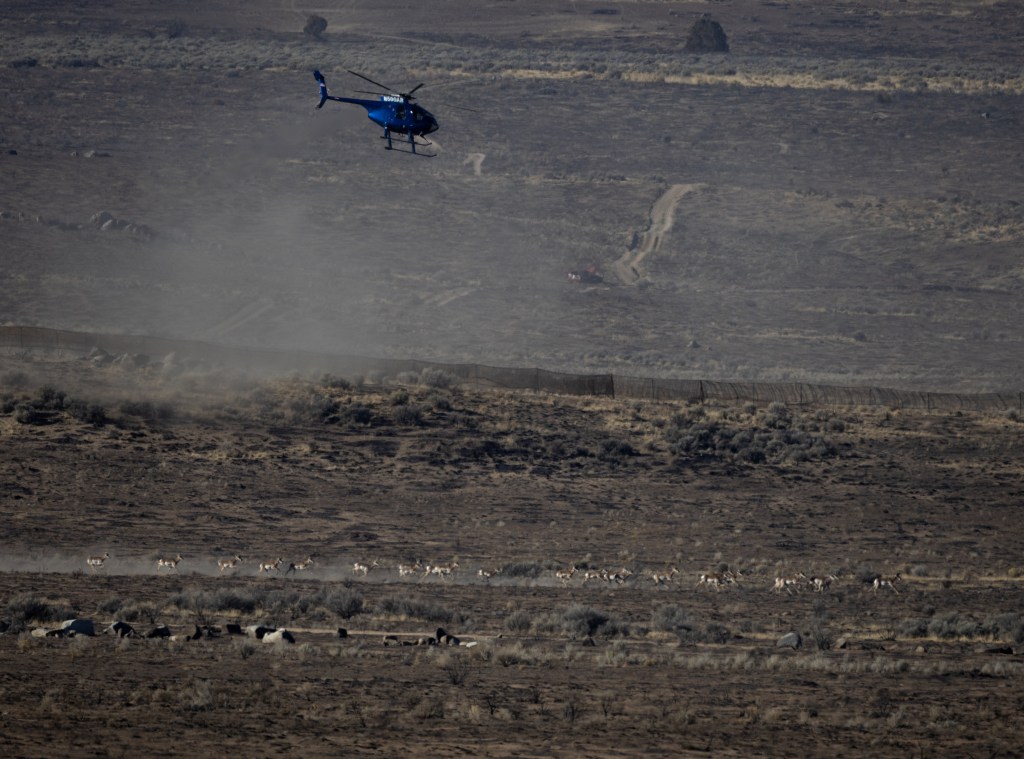
Attending these gathers takes some commitment. You must notify the BLM of your intent. You then wait for a phone call the night before a gather operation. You are told where to meet the BLM officials conducting the gather early in the morning the day of. You are met by BLM wild horse and burro specialists, BLM law enforcement and other civilians who have been approved to attend. Then you convoy out to the gather site. The observers are usually placed about a half mile from the trap site, and this was true in our case. While you have a clear view of the helicopter bringing the horses to the corral it does not make for great photos. Too far, and 80-degree weather ruined my pictures with the heat haze that plagues long distance photography in the desert. You then are committed to staying at the observation site until the operation concludes for the day and the BLM escorts you out of the area.
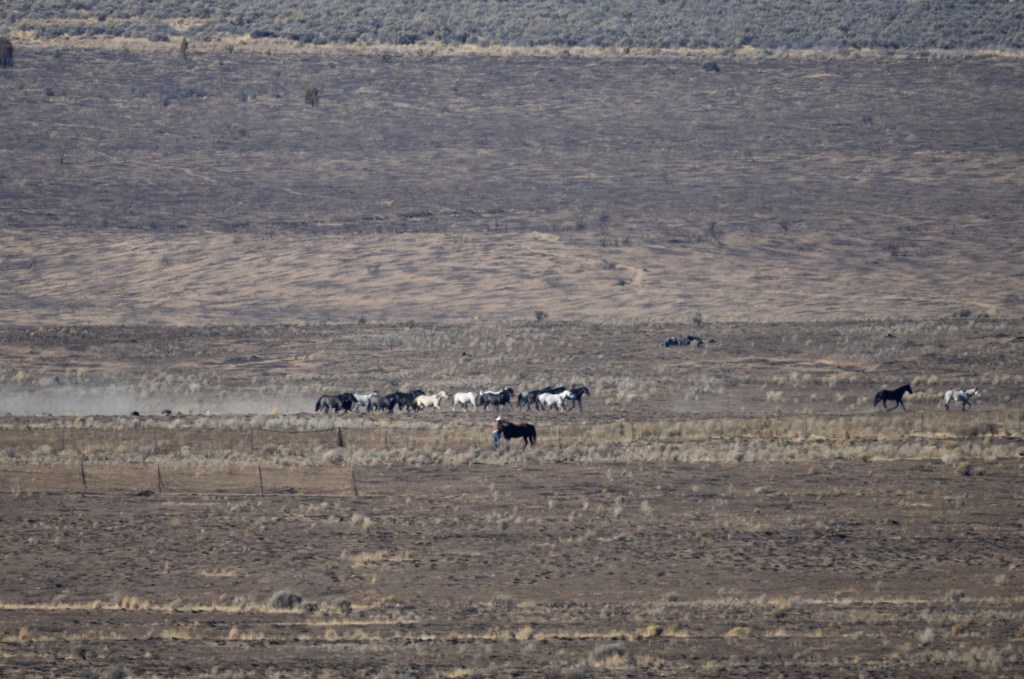
A cowboy holds the prada horse, or judas horse. A horse released to lead the horses into the trap.
Access to the trap site used to be better. You could be pretty close and really see what was going on. Activists ruined that for everyone by behaving like lunatics, running out in front of the horses entering the trap and threatening BLM employees and contractors running the gathers. In one case they caused a horse death and an injury to a contractor.
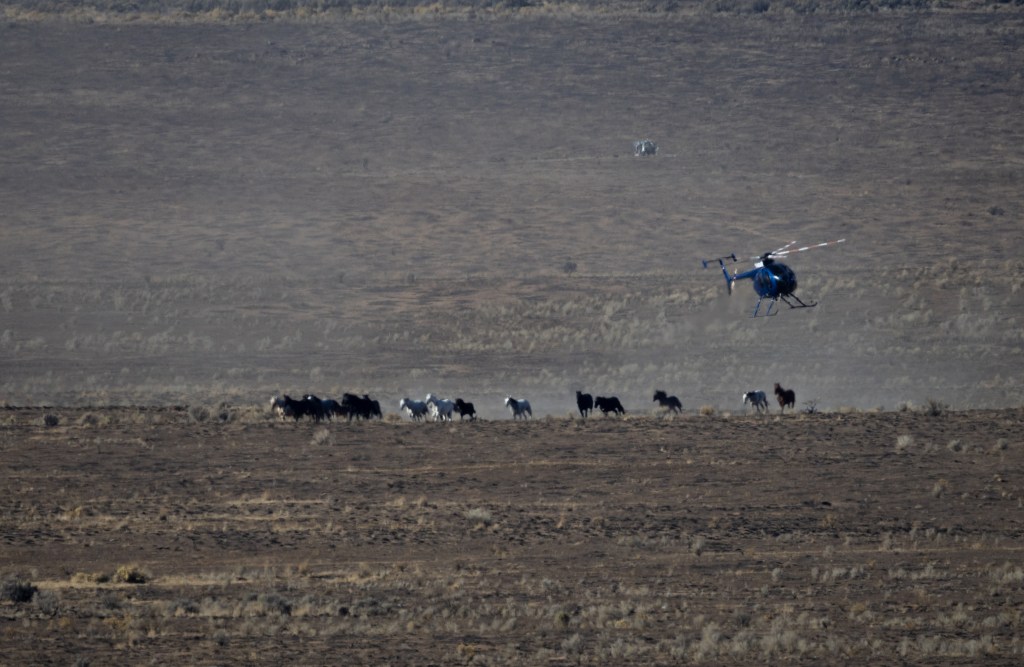
Helicopter turning the horses into the trap
We observed a smooth operation, professionals doing their job professionally. Some of us are committing to attending more of these operations to counter the narrative of activists who claim the BLM is cruel and helicopter gathers are inhumane. I am planning to attend several this winter across the state to bear witness to the need for these gathers and to counter the drama that is being pushed by people who don’t want or understand the need for management. Some horses are going to starve in areas that legal injunctions have halted gathers. These areas have burned and forage is gone as we go into winter. Part of my plan is to document those horses suffering as well. It isn’t my dream to see and photograph this type of situation but the reality has not been adequately shared. Looking forward to long freezing days in America’s outback.
,


I admit, I’m not necessarily a fan of BLM and their roundups. But I don’t understand the people that get in the way of them, either. It makes a dangerous situation worse.
Unfortunately, there is a growing movement among some that if you can’t have it your way violence is acceptable. I understand the feelings about gathers the alternative, doing nothing, can be a heck of a lot crueler.
We have the same problem here (without the obstructions) when it comes to the management of wild goats on our nature reserve. The goats have been managed sensibly for many many years to keep the flock at a size where it can stay healthy without destroying every plant in their area. This has come as a terrible shock to people who had no interest in goats at all previously.
Right?! This is becoming an ongoing issue everywhere. Well-meaning people interfering in things they don’t understand and have no stake in. You may or may not be surprised to know how many people from Europe want to tell us how we are mismanaging the horse situation.
Excellent documentary. As a former educator in forest and wildlife ecology and management, I am very frustrated by irrational environmental actions based on emotions rather than science. The concepts of carrying capacity, unbalanced predator-prey relations, etc. are lost on the activists. Eg, they are nowhere to be found when we have a long, hard winter with deep snow and deer, mostly fawns, die a slow death of starvation. We must do more with environmental education.
Thank you Nick! I respect your knowledge on these topics. I am an amateur conservationist with more passion than actual education. I read widely on these subjects and have the pleasure of having scientists as friends. I refuse to use the word advocate when these people are actually emotionally fragile activists who are doing far more damage than they will ever know or admit. Thanks for stopping in and commenting. It has been a while. 🙂
I’ve never seen a round-up or gathering, so your photos and explanation of the event gave me a better understanding about what is entailed.
Yes this was my first official gather. I had seen them from afar. It was interesting to see it in person and have the BLM staff there to explain the ins and outs.
This is a stunning series of photos along with the passion of your writing… great documentary and bearing witness.
Thank you for visiting and commenting. 🙂