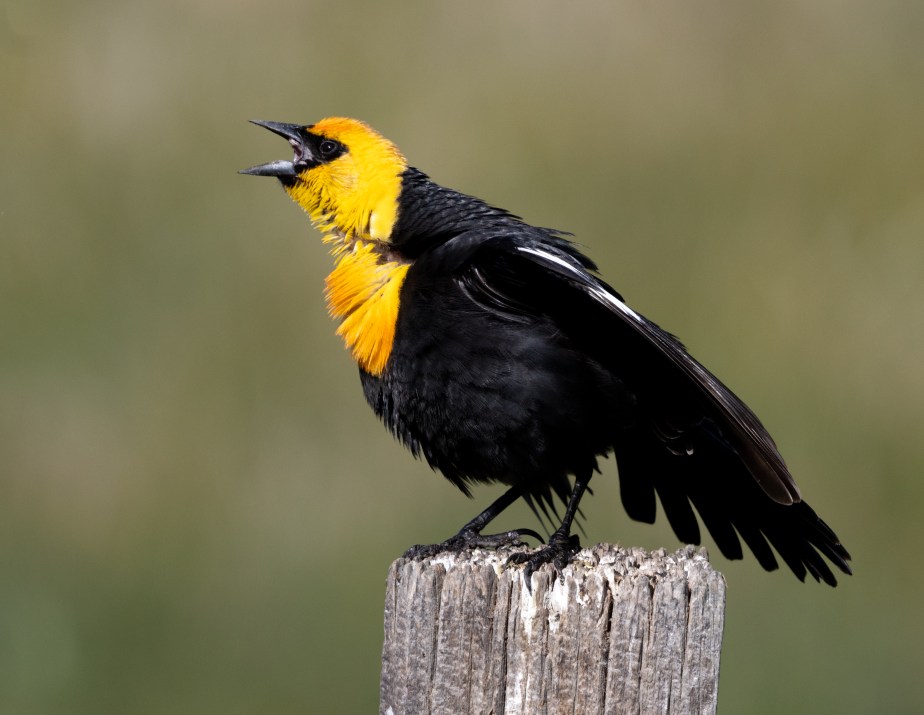
There is no shortage of controversy in the wildlife world right now. This spring wolves have invaded Sierra Valley, a large, flat well-watered agricultural valley 30 miles north of here. This valley is a rich farming area nestled in the eastern Sierra Nevada of California. Ranchers have made the valley home for 150 years raising hay crops and cattle.
Wolves have been absent from California for a hundred years. The last recorded wolf was shot in 1924. In the 2000s wolves have been spreading on their own from packs in eastern Oregon and reintroductions elsewhere. They have been far more successful in reestablishing themselves than anticipated. There are now 7 packs in northern California with approximately 65 pack members.
This spring in Modoc and Lassen County the carnage began. In the Warner Mountains a large cattle ranch lost at least 10 calves to a marauding wolf. In Lake County in southeastern Oregon a ranch suffered similar losses. The wolf responsible showed no fear of humans. The rancher’s family feared to leave the confines of their home due to the proximity of the killings. The rancher’s hands are tied in these situations. They are not allowed to protect their livestock with lethal methods. In the Oregon case, several hazing operations were employed to try to frighten the wolf off. Drones and mounted patrols to chase off the wolf were tried. None of these worked and eventually wildlife officials were forced to kill the wolf.
Now wolves are present in Sierra Valley and the cattle killing began with calving season this month. The ranchers are understandably angry. In addition to the substantial economic loss they suffer, they are the caretakers of these animals, and they anguish over each death and mauling. There are studies that show cows exposed to predation don’t lactate as much and pregnancies are down as a result of stress. Contrary to the rich rancher narrative animal rights people like to characterize cattle producers with margins are thin and making a living as a rancher is a hard scrabble existence in most cases. The loss of a few calves can be a make-or-break situation.

Wolf enthusiasts will say that the government will compensate the ranchers, but it isn’t as easy as it sounds. They must prove the loss was due to wolves. Calls to wildlife officials must be made, law enforcement is involved, sometimes DNA tests have to be taken, in short, a lot of extra work for the rancher and the wolf is presumed innocent until it can be proven otherwise, and the onus is on the cattle producer. Compensation is not automatic, guaranteed or a fast solution for farmers.
When the killing started a few weeks ago in the valley, a Sacramento News station sent a film crew up to interview the ranchers involved. They spent about three hours with the ranchers touring the sites and speaking with them about the situation. In a not to be believed turn of events, the wolves showed up at the edge of the cow herd as the news crew was filming and they got footage of the wolves circling mother cows and calves before they were driven off.

As a wildlife photographer and enthusiast these kinds of wildlife human conflicts are a mixed bag for me. I am on one hand thrilled at the return of a long-vanquished apex predator. On the other, the hardships that wolves present to livestock producers and the small communities that depend on agriculture for survival are very real. I ask myself if the return of wolves to central California, the Tahoe Basin can really work? Are we inevitably going to see a tragedy involving wolves and humans? We will definitely have pets killed and frightening encounters between humans and wolves. This is 2025 not 1825 and these areas are full of people now. They are not large tracts of unfractured wilderness that are sparsely populated. There is not enough wildlife to support large wolf populations, and the wolves will prey on livestock for survival as has already been shown.
In other news, the son of a friend of mind took some video of a large gray wolf east of town where I run my trail cameras, so the wolves are already in my immediate area. The Nevada Department of Wildlife confirmed the animal in the video as a wolf. When the young man got out his truck to take the video the wolf snarled at him and pinned back it’s ears and stood its ground showing no fear. That is concerning as these animals are not hunted, they seem to not have any natural fear of humans.
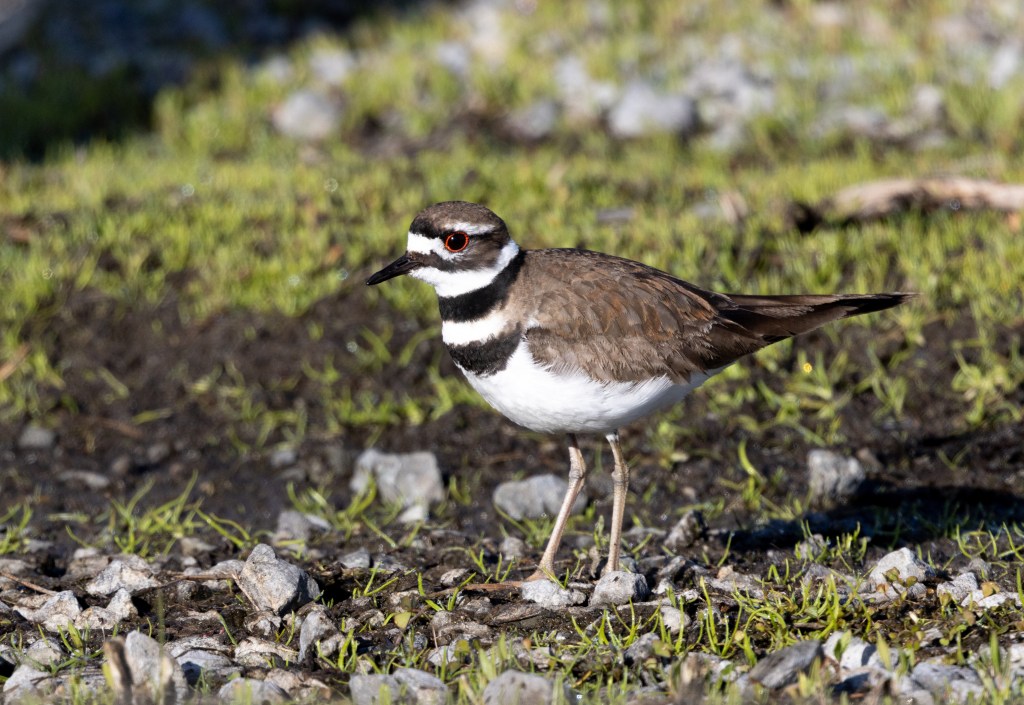
It remains to be seen how this will all fall out. I have driven up to Sierra Valley twice this week hoping to see the wolves. It is place I go to photograph birds and other wildlife. It is a birders heaven, and I am sharing some of the photos I took up there. I didn’t see any wolves but as I drove the ranch roads at dawn yesterday, I saw a cowboy sitting in an ATV in the middle of a herd of cows and calves trying to protect them from the wolves. I thought to myself what a difficult situation everyone is in. This isn’t sustainable for ranchers. Is it sustainable for the wolves?

 Northern Desert Photography
It’s a difficult situation. Wolves are important to a healthy wildlife population, but their land is vastly diminished in many places. So was it fair to bring them back to places where there’s not enough land? I’m not sure. Maggie
Exactly. I don’t feel like this will end well for any of the players involved.
Here I respectfully differ with you in some key ways. But before I launch into my diatribe (I hope you’ll bear with me), I want to clarify a point. Wolves who are not fearful of humans (because they rarely see one), approach us, if at all, with wary curiosity. This is seen most commonly in arctic wolves. Snarling and pinning back ears is a fear response.
And now for the diatribe. 😉 I’m not insensitive to the plight of struggling ranchers, please don’t get me wrong. I’ve known plenty, and in no way demonize them or their need to support their families and their communities, or their attachments to a time-honored lifestyle. But I liken this situation to the controversy surrounding logging practices in my neck of the woods.
At the turn of the last century we thought our “resources” were inexhaustible, that we could take from the land without consequence. One of the things we thought was acceptable back then was the large-scale government orchestrated and funded extermination of native predators to convert land to cattle ranching. The extermination or relocation of indigenous populations and their food sources, the lack of vast herds of native ungulates, and the attempted (and in the case of wolves, near-successful) genocide of predators, subsequently combined with industrial feedlots and slaughter operations made the modern beef industry the behemoth it is today. A result of availability, our newfound taste for these products in the quantities in which they’re currently consumed has produced a worldwide environmental (and some would argue health) catastrophe. It’s this that is not sustainable.
You are right. Everyone is in a difficult situation. But it’s we humans who are the piece in this puzzle who must attempt to adapt our practices. Because one thing’s for sure, we won’t solve our problems with the 1820’s thinking that created them. By continuing in the mentality that we can log every old growth tree or that the existence of a widespread cattle industry justifies razing the Amazon or forcing a species into extinction, we dig ourselves deeper into the hole.
Maybe there are too many wolves per capita for your patch of earth, but in the big picture, it’s time to contemplate co-existence. Creating wildlife corridors between wild spaces, for example, goes a long way toward releasing the pressure on a particular area. Solutions exist, but we have to want them. We have to realize that we can’t always do things the way our grandfather did them. And we have to be willing to make compromises and genuinely work together. If we persist in the mindset of entitlement that our ancestors had when they shot the buffalo, we’ll get more of the same outcomes.
Personally, I don’t eat beef or dairy. It’s not because I don’t like them, and it’s not because I want ranchers to suffer. It’s just flat-out time for a paradigm change. We can have successful economies and successful intact wild places, with a different view of how we fit into earth’s ecosystems. If we cultivate a new mentality, we might even surprise ourselves.
I don’t blame you if you don’t want to post this reply, but I hope you’ll take it as food for thought. Beautiful bird pics! 🙂
I would never avoid posting a differing view. I hope my post while supportive and understanding of the rancher’s point of view is not unsympathetic of the wolves and a certain thrill at their return and presence in my neck of the sagebrush. These are complicated issues and will not have simple solutions. I am not convinced that wolves will fit into the 21st century reality of fragmented ecosystems, large urban areas, pets and livestock. All of this remains to be seen, and I am intensely curious to see how it works out.
While I agree that we can’t get stuck in our thinking and must consider new ideas and paradigms the people who live with the issue must be listened to. What we are seeing more and more across the rural west is a desire by people from afar to dictate to people who live intimately with situations and are not heard or respected.
Even people who do not eat beef or dairy use products from cattle which are in medicines, auto parts, cosmetics, chewing gum, sheet rock, cake mixes and a plethora of widely varying things that are used every day without thought. Google it as the list is quite extensive.
I am not married to the idea of ranching and if I were King or Queen, all livestock, including feral horses, would be removed from public land. Not a realistic goal or idea I am aware. If only they would prey on feral horses. We could have a win win. 😉 The lands these recent wolf depredations are occurring on are privately held land holdings. Some of them are very close to dwellings and within sight of homes.
In the meantime, it is with a little more wariness that I am making my way through familiar spaces. The need for awareness heightened. A combination of hope and dread of what I may see on my trail cameras. I will continue to visit the Sierra Valley in hopes of seeing wolves and photographing them.
I completely agree on this: “What we are seeing more and more across the rural west is a desire by people from afar to dictate to people who live intimately with situations and are not heard or respected.” I have seen this, too, and it breeds resentment and division and does nothing to promote real solutions.
I like your proposed “win-win.” That, combined with banning all-you-can-eat crab from Las Vegas — you and I could solve all the world’s problems, LOL!
Willingness to engage in two-way conversation brings enlightenment to these issues. Dispelling rancor is the first step toward making anything reasonable happen, so as always, I appreciate you!
If they would just let us! Thanks for taking the time to read and comment. I always enjoy reading your thoughts. 🙂
A very knotty problem indeed, and one with no easy solution.
However, I really enjoyed your bird pictures.
Thank you!
I wonder if some of the attackers have been misidentified as wolves . Coyotes exhibit all the traits you described, including having no fear of humans. They roam around the suburbs of major cities, such as Philadelphia and Los Angeles, in search of food, including pets. Thanks for sharing.
No, definitely wolves. They have lots of pictures. The ones I have seen are mostly black and quite beautiful. We do have lots of coyotes doing coyote things as you describe but these are larger and not coyote colored. Thank you for stopping in. 🙂
Love the pictures!!! Please be safe … I’ve had a few run-ins over the years (nature lover also) and can’t extend any advice on the subject matter (I don’t know enough). Most “sightings” the animals (bobcats, wolves, coyotes, bears) have all taken off, don’t engage with humans. Snakes … now those, I fear!!! and bugs and mosquitos (okay, I will stop). Wonderful article and I do hope ranchers, farmers, and photographers find humane solutions!! The Sierra Valley is an Eden of paradise ~ ❤
Thank you. I will be careful. Hoping for solutions as well. I am with you on snakes! LOL!
Really,most difficult situation for everyone-both.. the public and renchers. Wildcreatures are nessesary for ecological balance in wild life but here is important to save the cattles and pets.The renchers have to choose any device for saving their animals from wolves.There’s birds are most beautiful.A thought provoking post.❣️🙏❣️
Thank you. Yes, it is a complicated issue for all involved. Thanks for visiting and adding your thoughts.
You are most welcome for nice opinion.Really,It is most complicated matters for all’s.🙏🙏🙏
Beautiful capture
Thank you!
Wonderful shot 👍 well shared
Thank you.
🙏😊
https://youtube.com/@pritilatanandi2010?si=aLQcAEmNgoRzXYdt. Please subscribe to my YouTube channel 🙂😀
This issue, like the wild horses one, is a touchy one. Each side has strong points of view. In certain parts of Oregon, the wolf packs prey heavily on livestock. They are easy prey. Yeah, I heard about the recent case of a wolf in southeastern Oregon who killed several calves and was unafraid of people. Unfortunately, poachers have their own ways of managing wolf populations.
I thought of a couple things while reading your post. If ranchers actively manage their herds on ATVs or on horseback, the chances of predation decrease. However, it doesn’t disappear. I often see herds with little oversight in the High Desert.
I’m glad you saw a responsible rancher on an ATV keeping watch over his herd. Last year I saw cowfolk (men and women) moving herds near Summer Lake in Oregon.
In moist climates, you can run one cow per acre. In desert environments that goes up to 100 to 150 acres per cow. Is that the best place to graze livestock?
Wolves adapt to what food is available where they live. The International Wolf Center website has an interesting article about their diet.
On the same site, it notes that there were only 26 fatal attacks worldwide on people between 2002 and 2020. The son of a friend you mentioned ran into a less than friendly wolf. I don’t think that kind of behavior is normal.
I imagine being a wildlife biologist working with wolf management must be a very challenging job. You would have to make conservationist who don’t want any wolves killed and ranchers who rely upon the land happy.
Yes, it is incredibly complicated as are most issues now. What keeps emerging in all of these conflicts is a growing unease between city urban dwellers who live far away from the consequences of management decisions and those who are face to face with them. In both the wild horse and wild wolf issue I repeatedly see people from Florida for example tell ranchers to just move or quit ranching because we love wolves. Same with the horse conundrum. I work with groups who are motivated to work out solutions, but it is disheartening to not be listened to respectfully by, I am going to say it, outsiders. Sigh, the work continues…
Yes, they are difficult issues. Thanks for shining a light on them! 🙂