Success with My New Blind

I recently bought a new photographer drape from Naturescapes and put it to the test today. It is ideal for photographers and is well designed for taking wildlife pictures. It is made with Camouflage material and has an opening for your lens to poke out. Camo netting allows you to look out over your lens and see everywhere except directly behind you. There is ample material for covering you and your tripod mounted camera standing or sitting. I have been anxiously awaiting a chance to try it out.

I arrived at a Sage grouse Lek this morning well before dawn and set it up. I was a little too far from the grouse for great pictures but something else happened that saved my day.

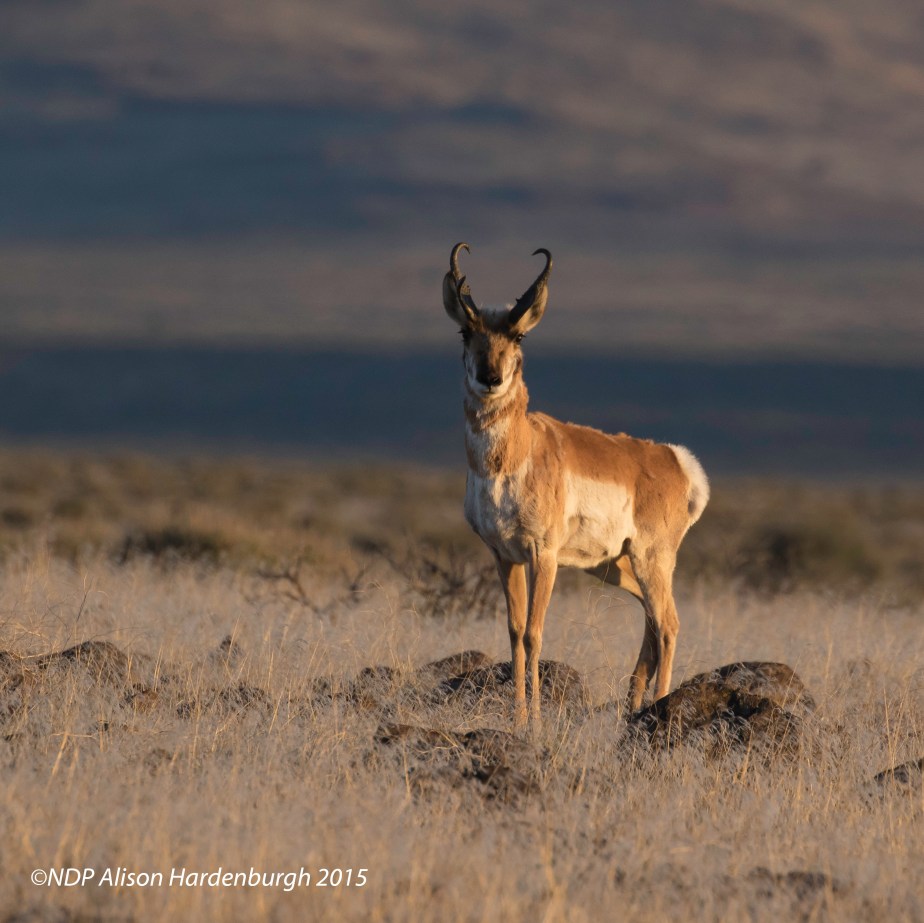
As it began to get light I saw larger flashes of white in the distance and soon was able to make out that they were Pronghorn or antelope. They have amazing vision and they picked out from a distance my blind because I had to move in it, and were spooked and ran off at first. I settled in to take photos of the birds which is what I came for anyway. Then the good stuff happened.

The birds never caught on to my presence and they strutted and danced on the Lek for several hours. The antelope circled back not once but four times and actually approached me and the blind coming in very close. The sound of the camera clicks, and I did have to swivel the lens from time to time, alerted them that something unusual was up but I believe that because they did not see a human shape they were more curious than alarmed. They were extremely curious and I was surprised how many passes they made by the blind. At one point they marched right through the strutting Sage grouse neither party taking much notice of the other.

This was a thrilling experience for me as antelope are difficult to get close to. You can take photos of them from your car fairly often but it does not have the same thrill as being up close to them in their environment. Looking forward to trying this out on more antelope and other species soon.

Wild Burros

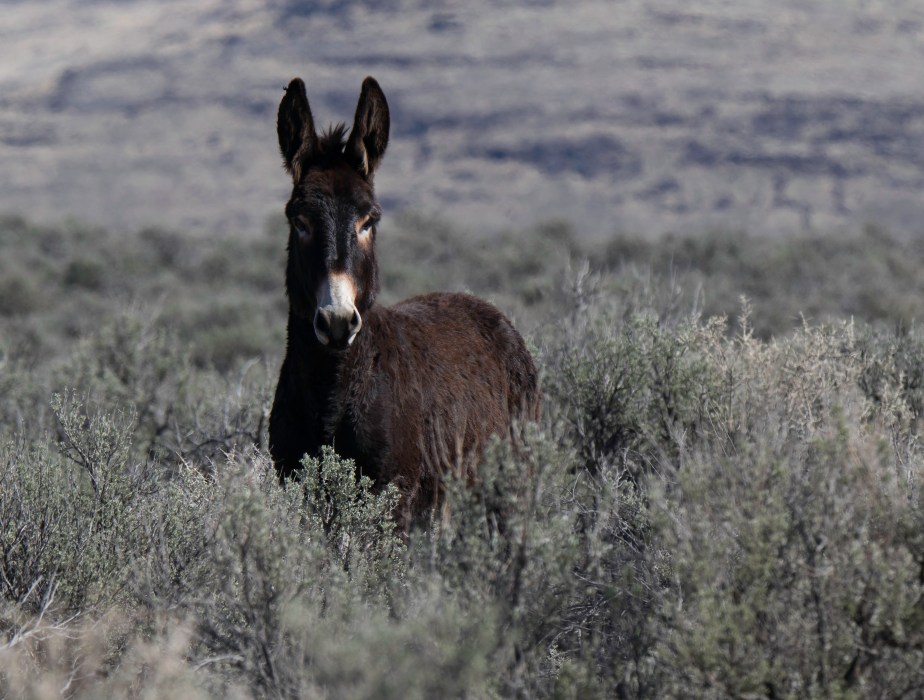
The American West is home to Mustangs, feral horses and the less glamorous wild Burro. These Burros came to North America with the Spanish explorers, miners and settlers and like the wild horses, some escaped or were let loose. Over the course of time they thrived and multiplied. They don’t get as much attention or press as wild horses do. They don’t have the Hollywood looks and appeal that horses have.

I run across them from time to time and the foals are about as cute an animal as you will ever see. They are very fuzzy and look like a plush stuffed animal. Driving back from Alturas, California a few weeks ago, I spotted this small band close to the highway so I took a detour to photograph them.

They were pretty spooky, or at least the Stallion was. He tried to intimidate me and drive his mares off but everyone settled down fairly quickly and I was able to complete a short session. The Stallion is the big dark colored burro and actually I think he is quite handsome.

While Burros are not native to North America they have done very well here and current wild populations are estimated at about 20,000. They are a desert animal so the arid west is a natural place for them to live. They do need water, just not as much as other animals. Wild Burros can lose as much as 30% of their body weight through dehydration, and replace it in only 5 minutes drinking. (Humans require medical attention if 10% of body weight is lost to dehydration and require a full day of intermittent drinking to replenish this loss.) They do need to have a water source within 10 miles.

Hopefully I can find a band this spring with a foal and update with a photo of one of the cute little ones.

Northern Harriers

As I work on bird in flight photography, I am having a bit of a love affair with Northern Harriers. They are as hawks go, fairly accommodating for the photographer. Their habit of gliding low to the ground over marsh land makes them much easier to photograph than say a high flying Red-tailed hawk.

I discovered that the Swan Lake nature study/refuge area north of town is a favorite haunt of these birds. The refuge is just under 2000 acres and surrounded by warehouses and neighborhoods. They built a long dock-walkway out into the middle of the marsh and standing on this puts you right in the middle of the action for Harriers as they hunt.

Northern Harriers are easy to identify. They have an owl shaped face. This shape helps funnel the noises of voles and mice to them which are their principal prey. The females are brown in color and the males are grey to white.

There are quite a few of these hawks frequenting the swamp. I hope the action continues through the year. They are fun to practice flight photography on and beautiful to watch.

Canyon Wren

I made a quick trip up to the Lower Klamath Wildlife Refuge this week and as usual it was teeming with photo opportunities. I met a friend from the Medford area there Wednesday morning and we had a great time driving the roads, hiking and taking pictures like mad women.

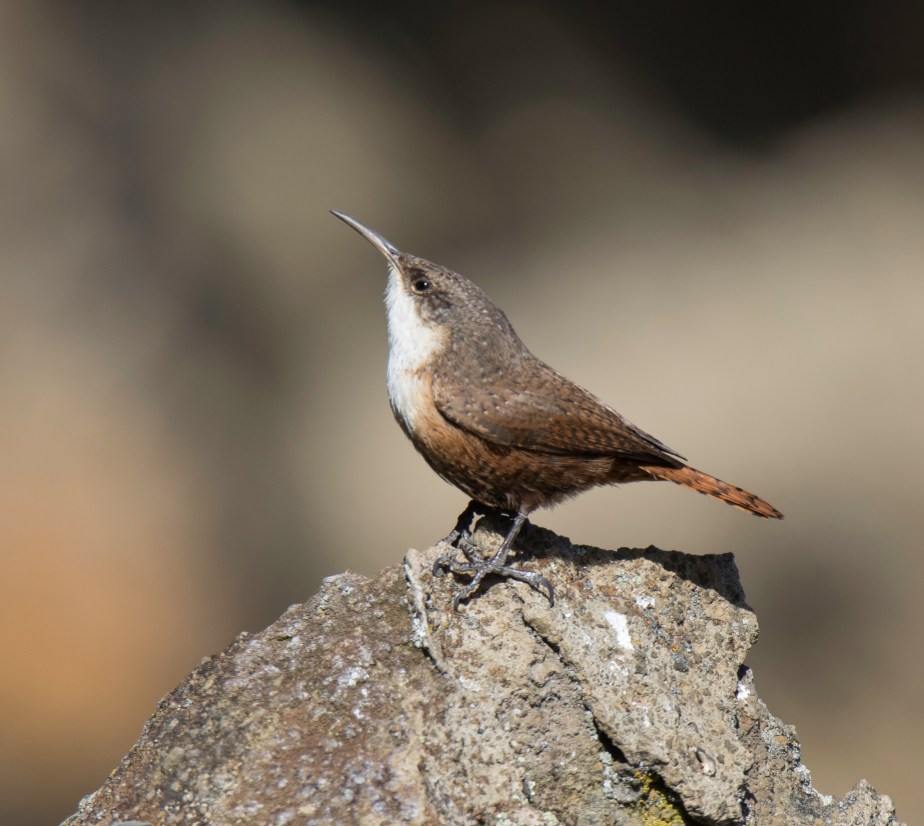
While we did find the usual, bald eagles, coyotes and massive rafts of snow geese, I was really captivated by this tiny bird I have never seen before; the Canyon Wren. We visited Petroglyph Point, and sheer walled cliff area on the refuge famous for, you guessed it, petroglyphs. There are a lot of nesting raptors in the walls of the cliff but it was this tiny wren with a powerful song that I was determined to get a photo of.

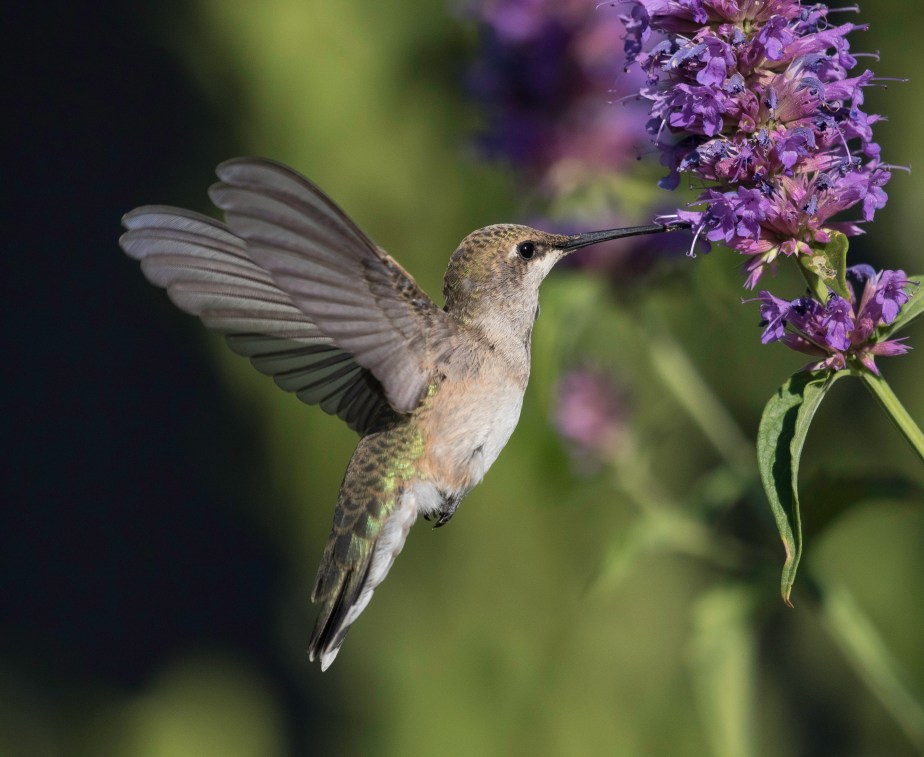
These wrens live all over the West but somehow I have never run across it. I will be seeking it out locally here over the next few weeks. We must have them somewhere nearer to me than Klamath. I don’t think I have ever heard it’s distinctive song before. Anyway, they like to live in sheer walled cliffs and rocky areas are fairly widespread across the Western U.S. They have a very long bill as you can see and they find their prey by poking into the rocks and cracks. They find and eat spiders and insects. Anything that rids the world of spiders is an ally of mine!

Amazing New Lens

After months of researching, saving and trading in old equipment, I was able to cobble enough money together to buy the Tamron 150-600 telephoto zoom lens. It arrived on Monday and I have been able to take it out a few times and I am impressed. I probably could never save up for a Canon prime 500 or 600 lens or justify spending that kind of money so I was praying that this Tamron would be an answer for me. I have it paired with the Canon 7dMark II.

All wildlife and bird photographers want more reach. You always want to get closer and fill the frame with your subject. Birds especially are challenging as they are so small in the frame if you don’t get close enough.

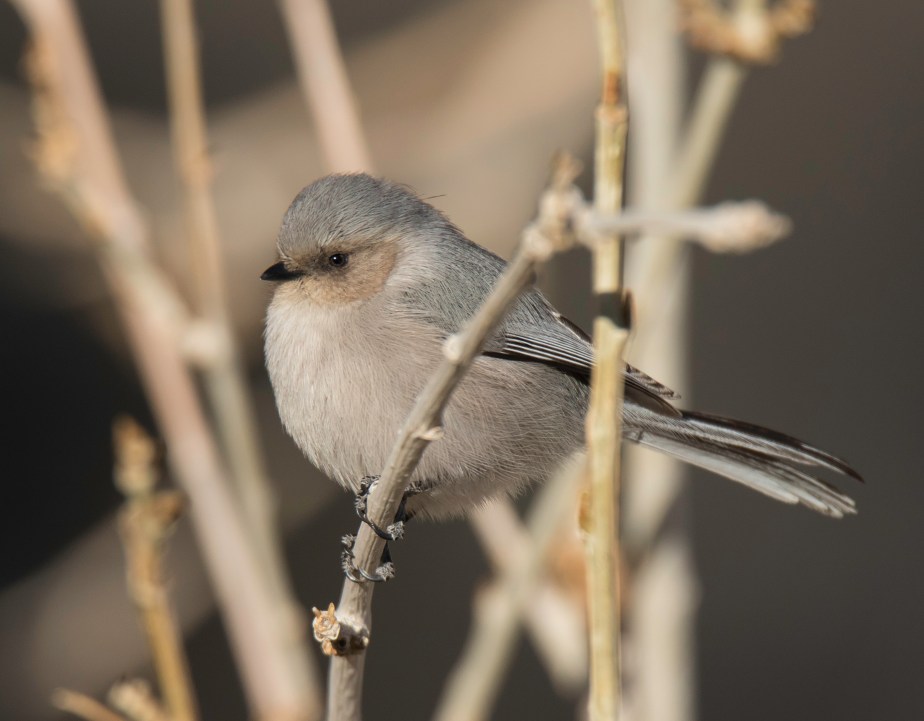
This morning I tried it out on one of the tiniest of birds I know, the Bushtit, and I am very happy with the results. These birds are so small and fast moving that to get a good photo of them is very difficult or at least I have always found it so. They are lively little things and flock in large noisy social groups and I think I have several good photos here that demonstrate how sharp this lens is. All of these were taken at 600mm.

I took a pretty good photo of a Mountain Bluebird sitting on a bird house yesterday also at 600mm. I don’t see any softness with these photos at 600mm. The Mourning dove was on my fence in the backyard and was also taken at 600mm hand held.

I took this in flight photo of a Northern Harrier which is not sharp but that was operator error. The Tamron is so light at just over 4 pounds that you can hand hold it for bird in flight photos. Someone let me take some photos with their Canon 600mm prime once and I think without a tripod I could not take any photos at all.

Can’t wait to take this new lens up to Klamath and on a Sage Grouse trip I have planned for next month.

Winter in the Klamath Basin

The Klamath Basin National Wildlife Refuge is a large complex of refuges on the California/Oregon border. Every winter over 500 Bald Eagles choose to winter here because of the abundance of wintering snow geese and tundra swans that use the refuge through the winter. A couple of years ago I made several trips up there to photograph wildlife but never made it back in 2014. I got a new lens and could not think of a better place to try it out so I made a quick trip up there last week. I think I got a pretty good representation of the wildlife you can find on the refuge in the photographs I took.

Great Blue Heron
Great Egret
Bald Eagles
Mule Deer
Coyote
Red-tailed Hawk

Happy Thanksgiving

It has become a tradition for me to make sure I spend Thanksgiving morning out enjoying nature as being able to immerse myself in the natural world is an aspect of life I am most grateful for. I had an awesome morning. The mule deer rut is in full swing so I donned all my camo and got out to the river before it got light. I included a couple of photos of me in my camo as some folks have asked to see it. It is far from flattering or fashionable attire but I think you can get an idea how effective it is when seen against a sagebrush backdrop. I bathe in scent killing soap, wash my camo in scent neutralizer and use scent elimination spray before heading into the brush. It certainly worked this morning.

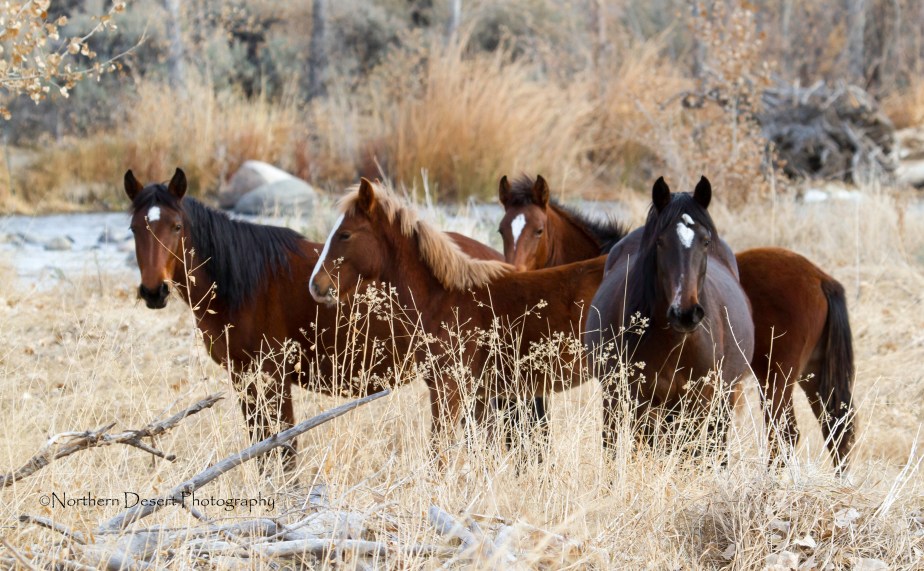
I passed a band of wild horses feeding in a meadow by the water as I made my way deeper into the river bottom. Noting their location I was reassured that no matter what happened I wouldn’t get skunked for photo ops today.

I had not seen any deer as of yet and the woods were quiet. I wondered if I was going to see any deer. I was setting up my tripod and deciding where I should plant myself at the intersection of deer trails and all of the sudden the area was alive with deer. I had a spike and a small two point walking through a small grove of cottonwoods and heard more deer crashing around in the high grass about 75 yards to my left. I could see the large rack of a 4 point over the tops of the grass as he was chasing some does around but could never get a clear photo of him. Meanwhile the two smaller bucks just ignored me as I stood still and shot away at them. The two point heard the camera clicks and was alert to something amiss and never showed himself fully but the spike eventually lay down in the grass close to me but not where I could photograph him.

Something startled all of them at one point and they all ran away. It wasn’t me. Maybe a coyote or another hiker along the trail I hadn’t seen. I sat down in the sagebrush to wait for everything to calm down. A few minutes later a doe came charging through the brush and almost collided with me. We were both startled! Behind her a smaller 4 point came into the clearing so close I couldn’t get a photo. He saw me but couldn’t quite figure me out. He ran off and I got the slightly blurry photo of him as he scrambled off.

I decided to walk through the woods toward the place I had seen the horses. Looked into a thicket of young cottonwoods and saw a sleepy Great Horned Owl. Was able to take a few photos without disturbing him and moved on to the horses.

I have seen this band before and the herd stallion is a particularly good looking flaxen chestnut. He has passed his coloration on to his son complete with white blaze. The other looker in the band is a seal brown mare with a broken star on her face. I got some mediocre photos of the horses the grasses were in the way of some of the shots but all in all a very good day.

A perfectly happy Thanksgiving morning for me.
I love My Camo!

Last year I watched the Outdoor channel a lot getting ideas from hunters about how to get close to animals especially deer. I watched a lot of archery deer hunting shows with my finger on the remote and clicked away as the hunter released their arrow. I can’t watch the kill shot. I am not anti-hunting as long as hunting is done legally and responsibly I don’t have a beef
So I made several trips to the Sportsman Warehouse and got some good desert Camo, pants, jacket, face mask, hat, the works. After studying the archery hunters I learned about scent killing techniques as well. Back to Sportsman’s for special soap, detergent, even mouth wash to neutralize human scent. This stuff is amazing! I have had deer walk right by me without knowing I was there. I can’t always get a picture but have had many heart pounding moments. Sometimes they catch a whiff or sense something is not right and bound off but when everything works right it is pretty exciting.
I took this photo of a nice sized Mule deer buck the day after my coyote trapper encounter. I got out to the river around dawn and sat with my back to some sagebrush along a heavily used deer trail. Within 15 minutes of sitting down I saw this buck coming my way. He never saw me. He looks like he sees me in the photo but that alert, ears up look is from him hearing the camera clicks. He kept coming and walked within 20 feet of me. Actually he got too close for my lens.
I am sure I look ridiculous when I am in my camouflage but I almost feel like I have the power of invisibility. I sat in a bush at another location and had a flock of shy, tiny birds land all around me very close to me as they did not realize I was there.
I am learning the value of sitting very still in a zen like state, patiently waiting for what will come rather than hurrying around trying to find what is out there. Please, just don’t send me a mountain lion. 😉

No photos, just words.

I don’t have any photos to post with my words today. Actually, I usually have words to post with my photos as this blog for me has always been meant to be about the photography. I enjoy reading other people’s stories, poems and inspirational writing but I have never felt like I wanted to write long posts or had much to say. Today I don’t have any photos but something to say.

I spend a lot of time visiting a beautiful natural area along the river east of town that the Nature Conservancy has spent millions of dollars restoring over the last 12 years. They have created a paradise for birds and animals. They restored the natural curves and bends to the river, planted thousands of trees, put in a bike path and generously opened this all to the public. There is almost 10 miles of river access that had been ruined by misguided attempts by the Corps of Engineers to control flooding and is now a stunning oasis for animals and humans. I joined the Conservancy after they opened it and I took my first walk through it marveling at my good fortune to live close to this beautiful place and the good work that had been done.

To say I love this place is an understatement. I spend countless hours there walking, thinking, not thinking, watching animals and birds, taking photographs and sitting quietly enjoying the solitude. I worried that when it opened that it would be flooded with people because I could not imagine that everyone would not want to be out there all the time. To my surprise I hardly ever see anyone else. It is a bit of a drive, there are only two access points and you have to hike in. I guess that is enough to dissuade most from visiting.

There are other visitors and I can read the signs of their activity. Footprints, bike tracks and in the fall the tell tale signs of those who think the rules do not apply to them. I find them where the ducks rest on the ponds that were created for them, and in the brush where the quail scurry to take shelter from walkers and bikers, the colorful spent shotgun shell casings litter the ground. I get angry when I see this disregard for the rules of this place. This is a no hunting preserve. This is a place where animals, birds and people can interact with each other without fear or could if it were not for the rule breakers.

I have asked myself what I would do if I encountered hunters on the property. I am often there in the early morning hours in the quiet before dawn and I am there alone. I told myself countless times that to confront anyone would be a mistake and that it would be dangerous. My husband told me the same thing when I expressed my disappointment and frustration with people who would hunt there against the posted rules. So I thought I had a plan, had prepared myself for the inevitable moment that I would run across someone hunting there. I would try to avoid them, take down a license plate number when leaving, report them to the game warden or the caretaker of the preserve but under no circumstances would I confront them.

I have not been out there in a few weeks as I have been waiting for the Mule deer rut to start to get good photos of bucks. I donned my camo, got out there before it was light and started walking through an area that ordinarily is full of deer at dawn. I did not see anything. The area seemed strangely quiet and empty. I circled back around through some sagebrush which in the past I have caught deer bedded down in. A coyote was peeking at me through the sage and I got excited about trying to take photos of it. It ran back and forth frantically and I could hear a chain clinking. My heart sank. Of course it was in a trap. I got a little closer and sure enough it was held there by a leg hold trap. It tried desperately to break free and I was sickened and felt helpless. There was no way I could free it. It sat down and barked at me in fear. As I was deciding that I needed to go I saw a man approaching over the hill.

At this point in the story all of my common sense left me. I shouted out at the man, “Hey are you running a trap line here?” He said, Yes he was.” I said you have a coyote in your trap.” He said good I will be right there.” I stopped in front of him and proceeded to tell him that he was breaking the law and that he could not run a trap line here. This was Nature Conservancy Land. He had all kinds of reasons that he said he could do exactly what he wanted to do here or anywhere else. I asked him for his name which he refused to give. All this time I can hear the coyote distressed behind us. I know that this man is going to either dispatch him with a gun or stomp him to death. He tells me to wait right here while he takes care of it. I blurted out I would not wait and that I would be reporting him and took off walking as fast as I could back to my car thinking what a fool I was to get into a confrontation with someone who most likely was armed.

I was lucky he didn’t follow me. I drove home with two overwhelming emotions; rage and relief. I immediately called the Conservancy office when I got home and reported this incident. They were grateful that I had taken the trouble to report it and assured me that they would deal with him. The man I spoke to was informative and helpful. He gave me the number of the steward who lives on the property to report any further such incidents to. I have that number in my phone now and should I see any hunters or trappers I will stick to the plan and just call that number.

It was very foolish of me to confront someone like that. I won’t do it again, I swear. I have promised my husband that I won’t though he understood why I got so passionate about it. Next time I will act like it is not something I am concerned about, take some photos of the offender or offenders and make that call.

Taylor Creek Bears

Every October a little bit of Alaska can be found at Taylor Creek. Taylor creek is a small creek on the south end of Lake Tahoe. It only runs a few miles between Fallen Leaf Lake and Tahoe but this time of year you can find a lot of action there.

Back in the 1940’s the non native Kokanee Salmon were introduced to Lake Tahoe and they thrived. Each autumn thousands of the bright red fish make their way up Taylor Creek to spawn and die. The native black bears, always a resourceful animal, have made eating the fish an important part of their preparation for their long winter sleep.
The bears are concentrating on fattening up and pay little attention to the people that gather to watch them. I made my first trip up there today and was lucky to have the opportunity to photograph this big mama bear and her cub.

I am aware of bear safety. These photos were taken with a telephoto lens from a safe distance. It was amazing to watch the bears fishing, foraging and going about their day as if they had the forest to themselves.

I think I will go back up next week. I heard that as the fish start to die in large numbers even more bears are apt to show up.