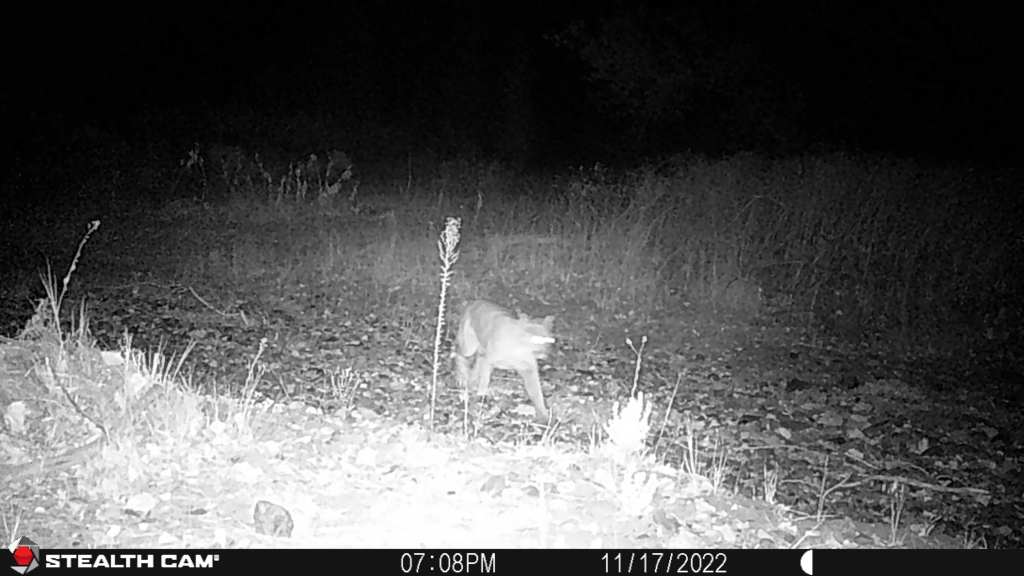
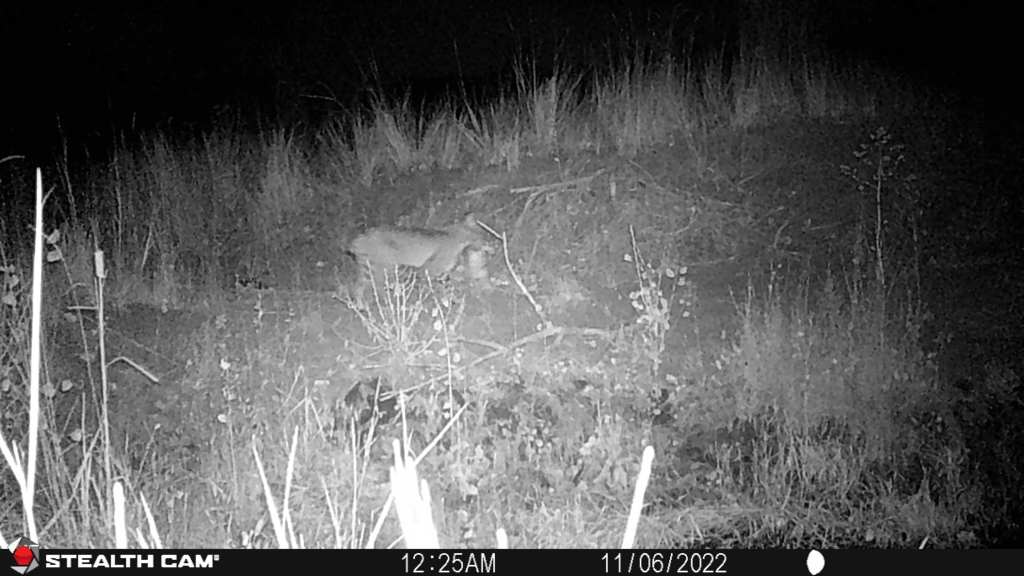
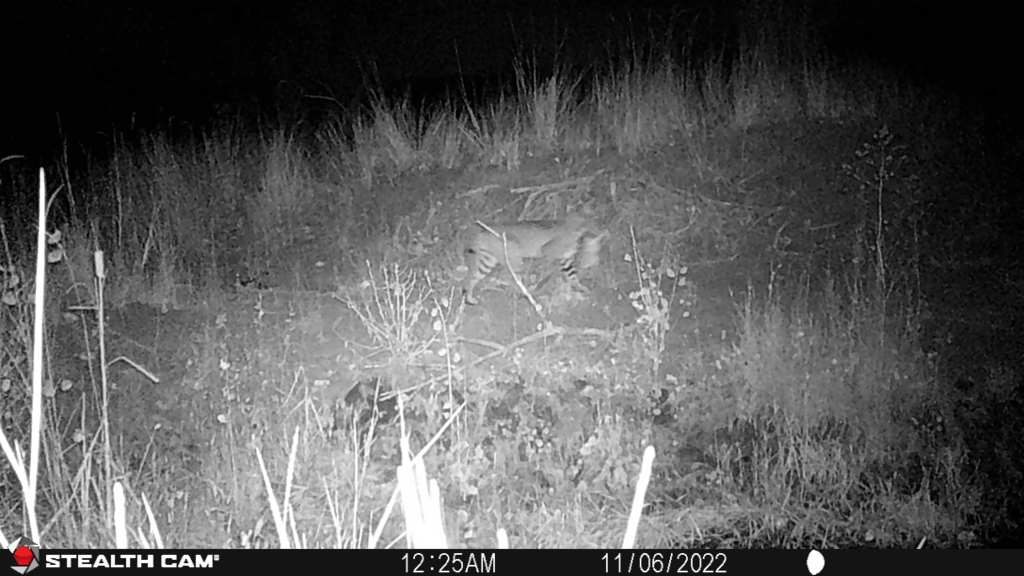
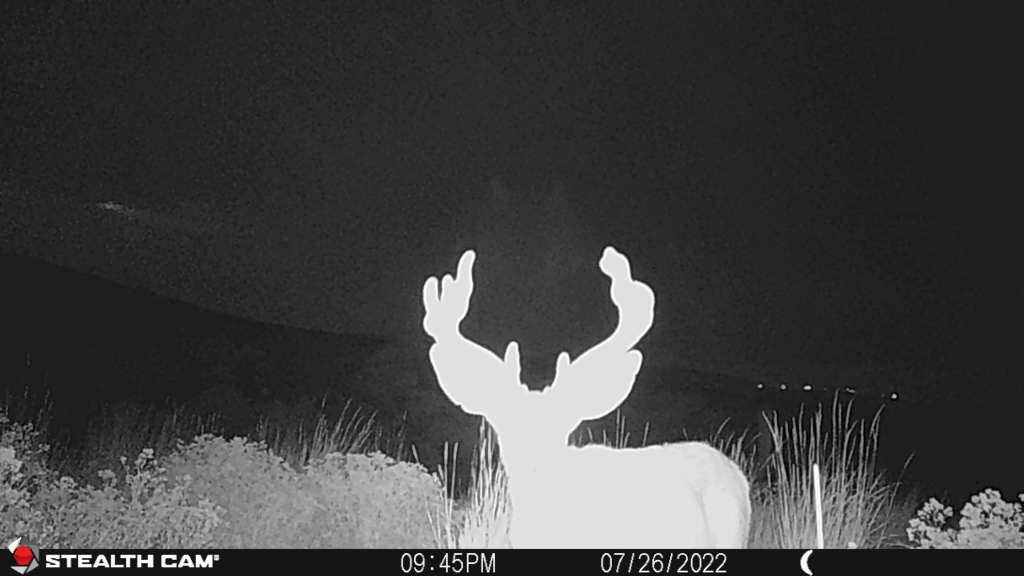
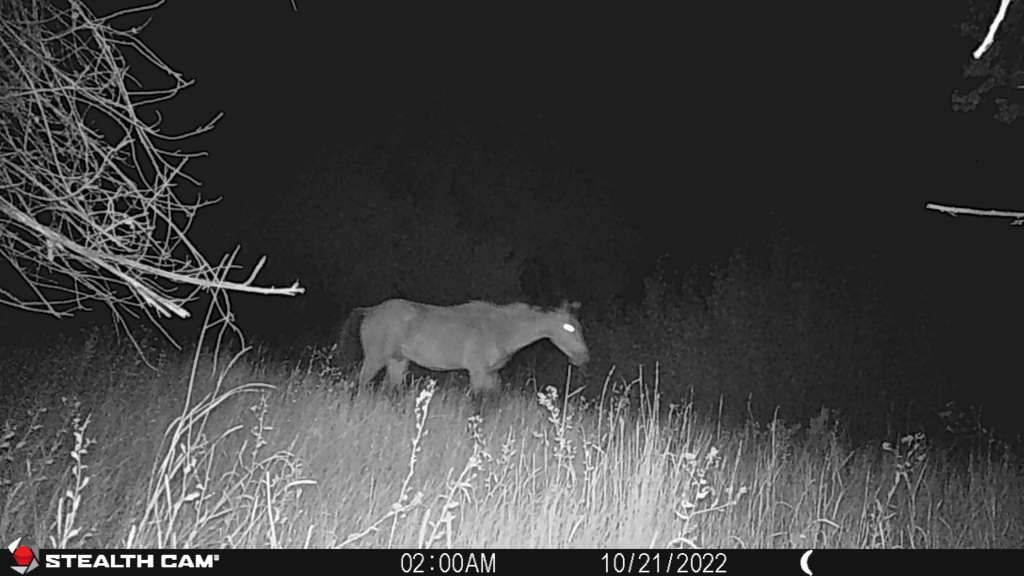
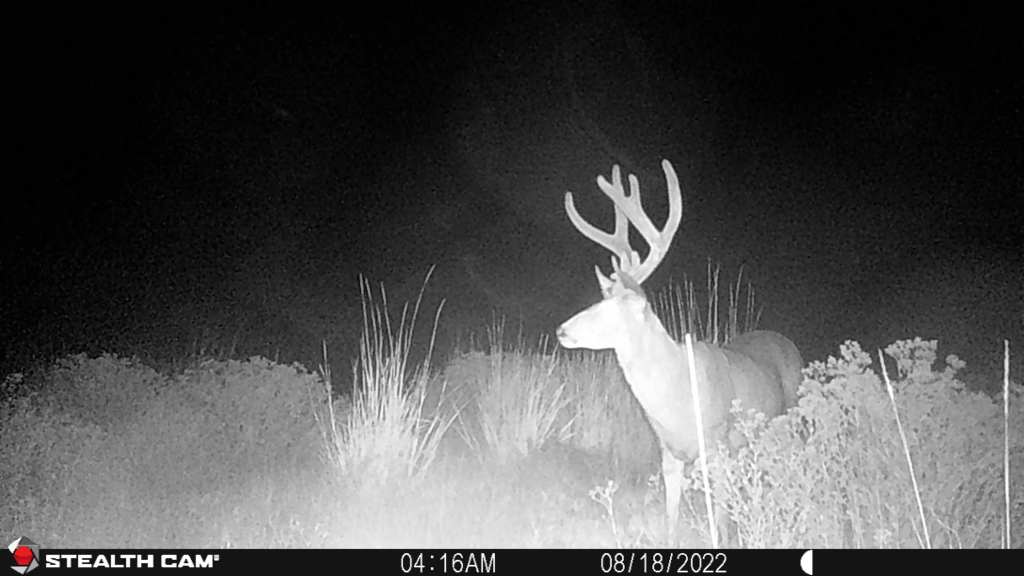
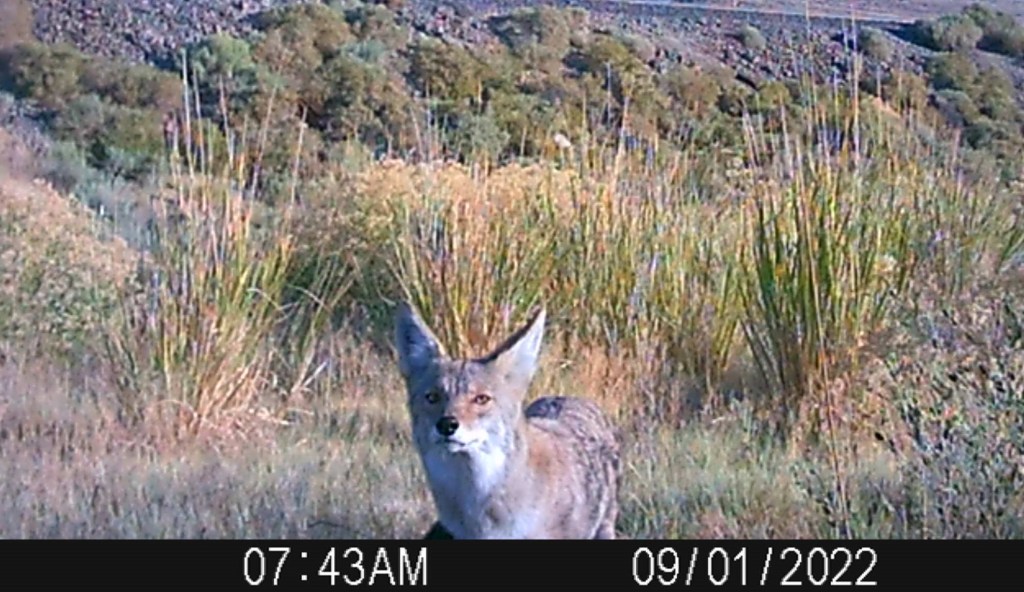
I have always been afraid of the dark. This fear has not gone away even at my advanced age. I just have far too much imagination and can conjure frightening images from the slightest noise or unexplained movement out there in the scary dark. I laugh at myself as even when reviewing trail cam photos that are taken in the dark I can get creeped out. It is disconcerting to stare at a photo that was taken at 2:00 AM and there is nothing obviously in the photo that triggered the flash. Another eerie sight are eyes glowing out of the dark with no hint at what animal or other being is behind the eyes. In these photos the animals are easy to identify, deer, feral horses, coyotes and a raccoon.
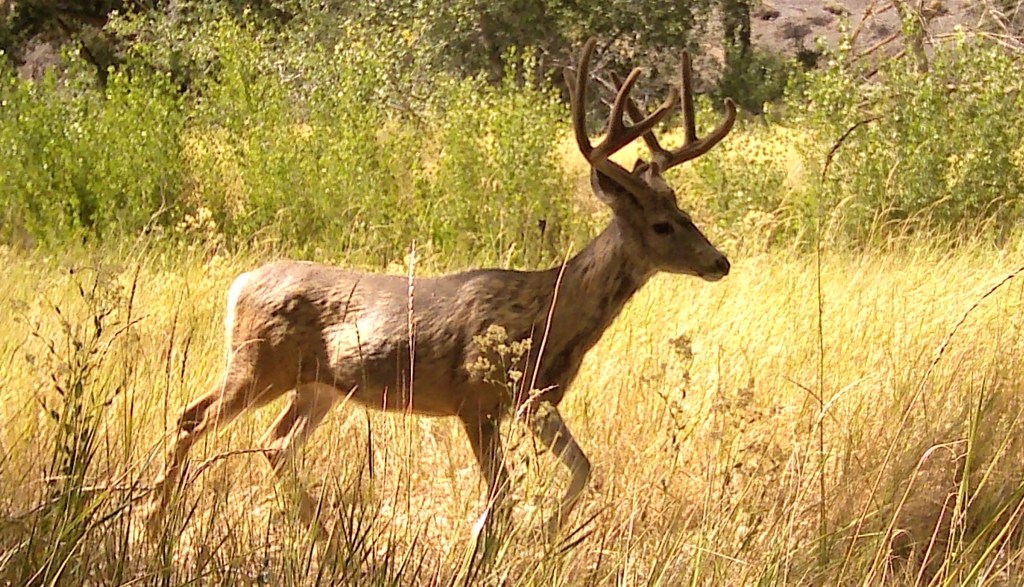
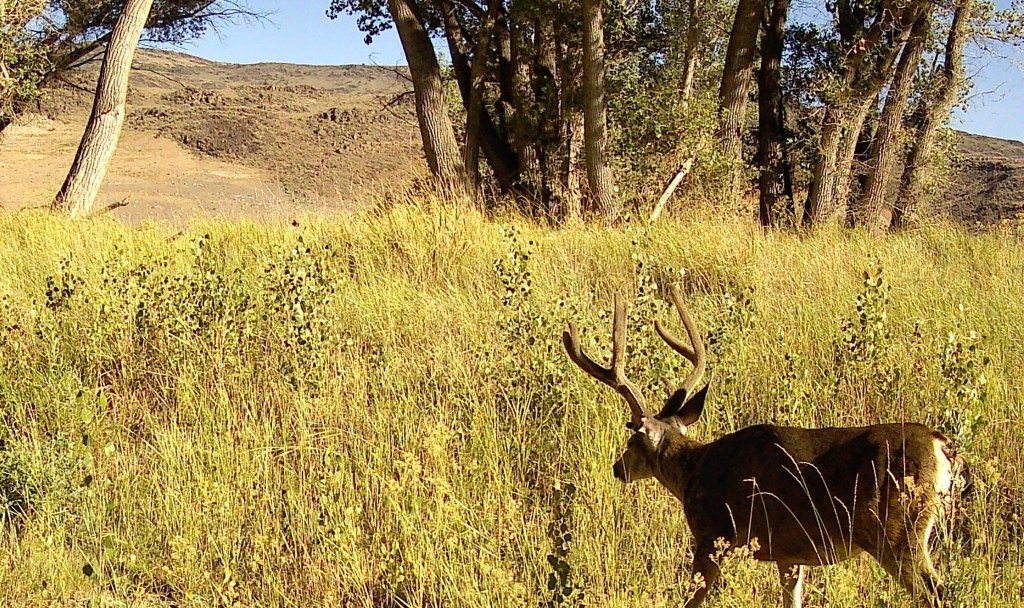
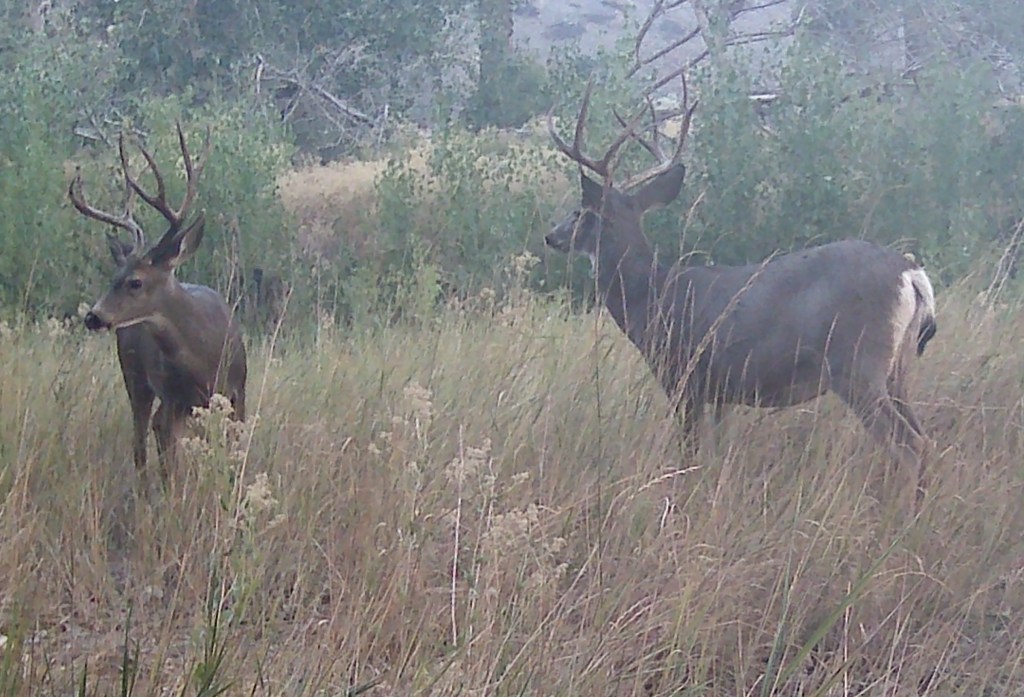
Last post was an example of the unexpected when it comes to photos captured on Trail-cameras. What is the desired objective? …beautiful animals of course. I started placing a series of cameras out in July in two main areas that are full of wildlife. Nevada State Game Laws makes the placement of Trail-cameras illegal after August 1 of each year until January 1 of the following year in the interest of fair chase. My goal is photographing animals not hunting them in this application, but I am still subject to the law. I obtained permission to place these cameras on private property which is legal. I am seeing lots of large Mule Deer bucks along with does and fawns. The cameras have also captured a skunk, coyotes and feral horses. While Trail-cameras don’t take high quality photos the pictures are hopefully going to increase my odds of getting good pictures with my real camera. Here are some examples from the last few months.
Mule Deer BuckBusiness End of a SkunkCoyoteHeavy Horned Mule DeerTwo Mule Deer Bucks
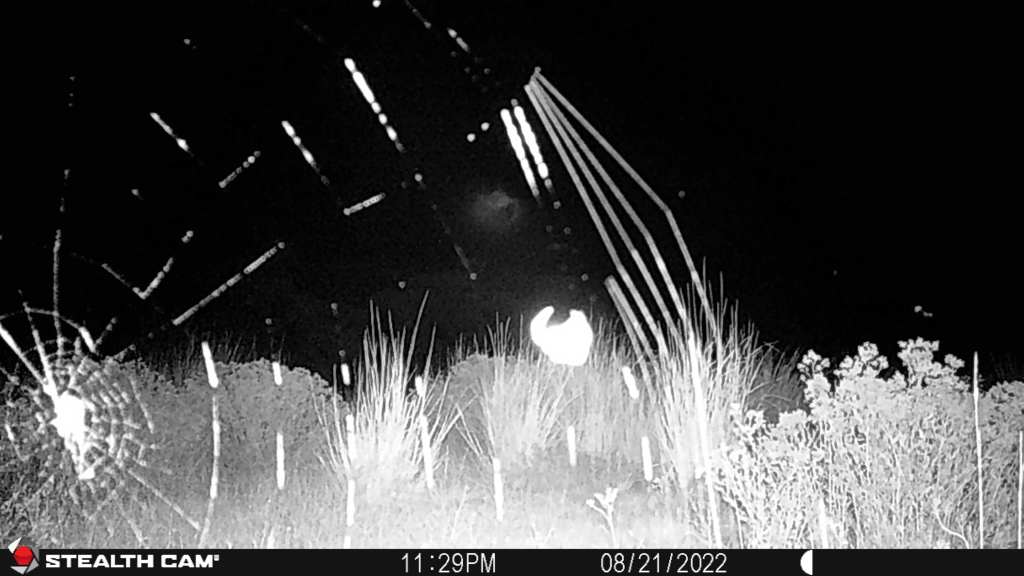
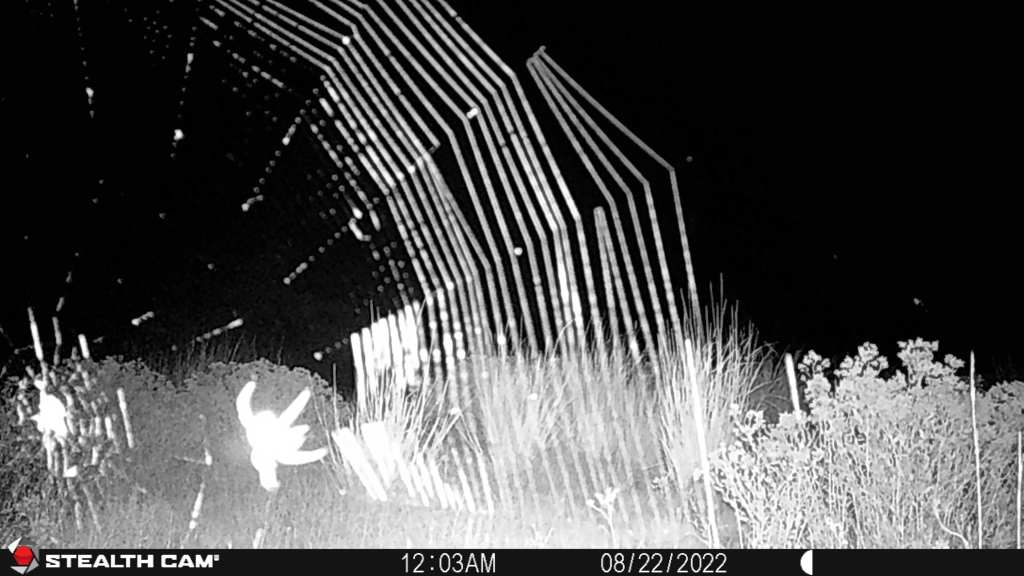
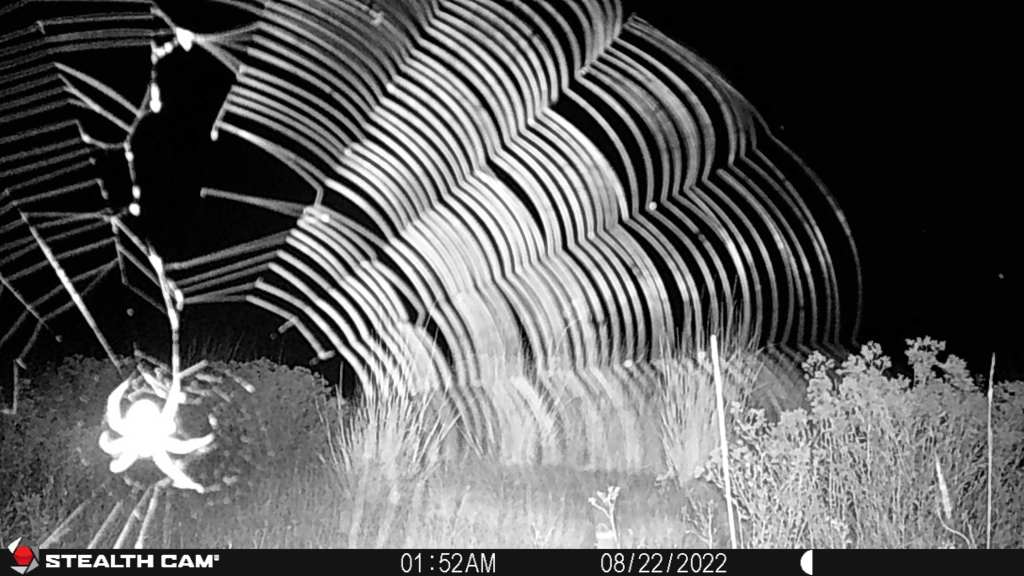
I admit to having horrible arachnophobia. Ever since I can remember spiders have terrified me. I almost get physically ill when having to confront them. I am aware of all of the positives of spiders and what they contribute I just don’t want to see them. I run a string of trail cameras to capture deer, coyotes and anything else I can see in my ongoing interest of the natural world. I enjoy the date and time stamp aspect of the photos which adds to my knowledge of animal movements and habits. Imagine my surprise on capturing a large spider building it’s web in front of one of my cameras one night. Ever wondered how long it takes to build the web? I now have the answer – around 4 hours from start to finish. I am grateful that by the time I came by to take the memory disc out of the camera; web and spider were long gone.
Just starting to weave the web.
Thirty ,minutes in and a pretty good start and outline.
At one hour the web is taking shape.
After 3 hours the web is almost complete. Just finishing touches left.
Started at 11:00 PM and appears to be complete at around 3:00 AM. Now it sits in the center and waits for it’s prey. Yuck! 😉
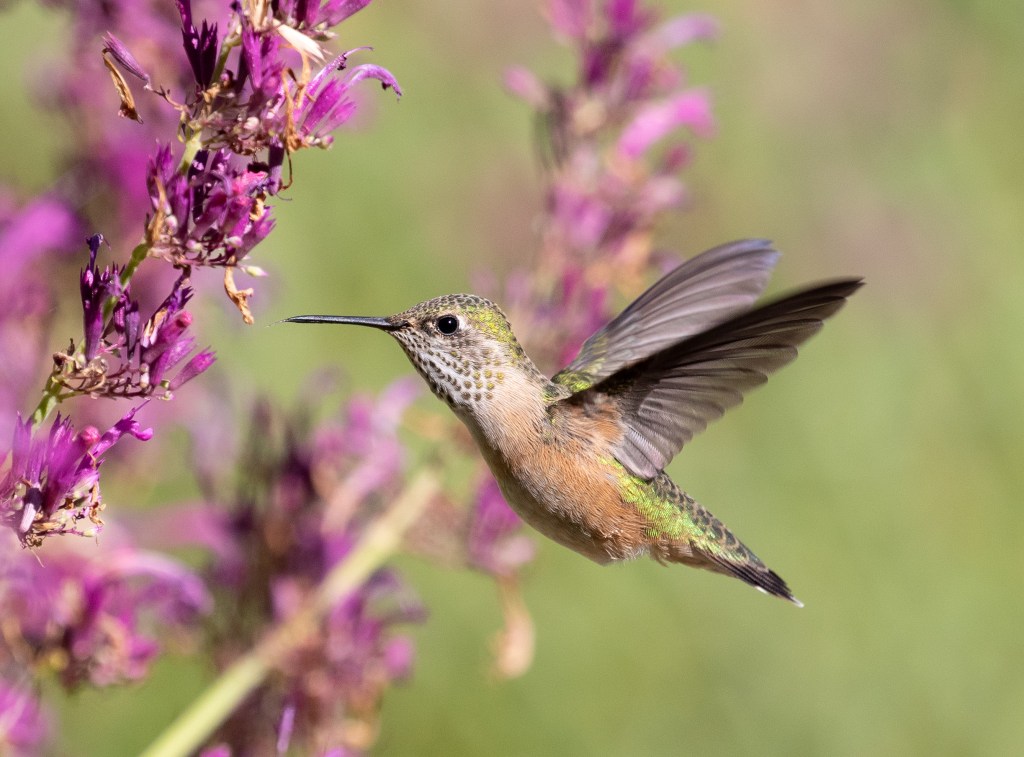
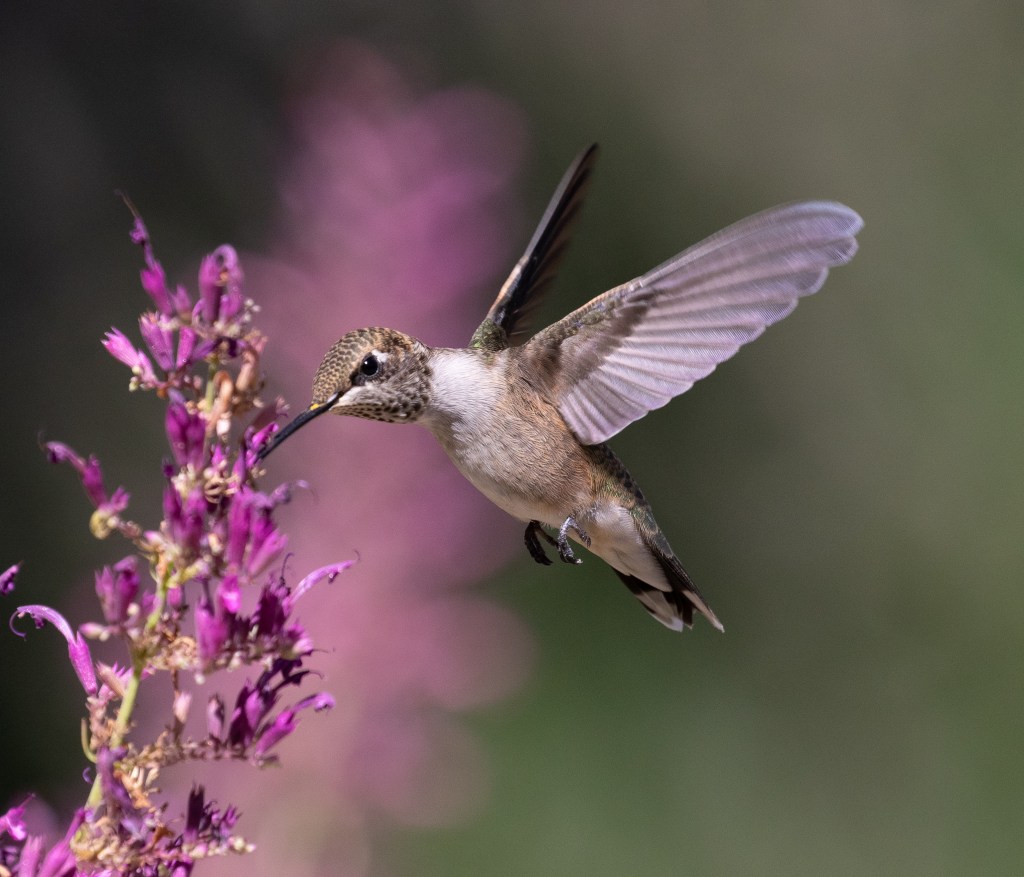
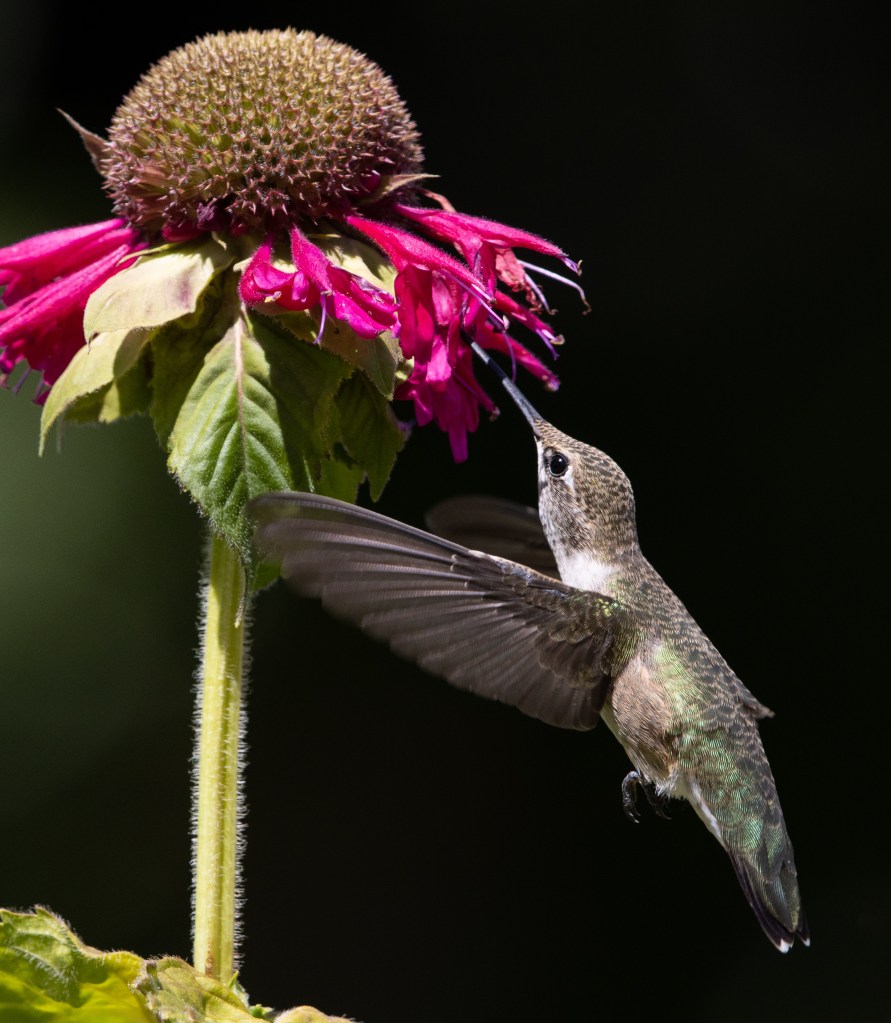
Hummingbirds are called the Jewels of the Garden or Jewels of the sky. It is easy to see why. As they flit through the colorful flowers the sun catches their brilliant, iridescent feathers giving them a gem like appearance.
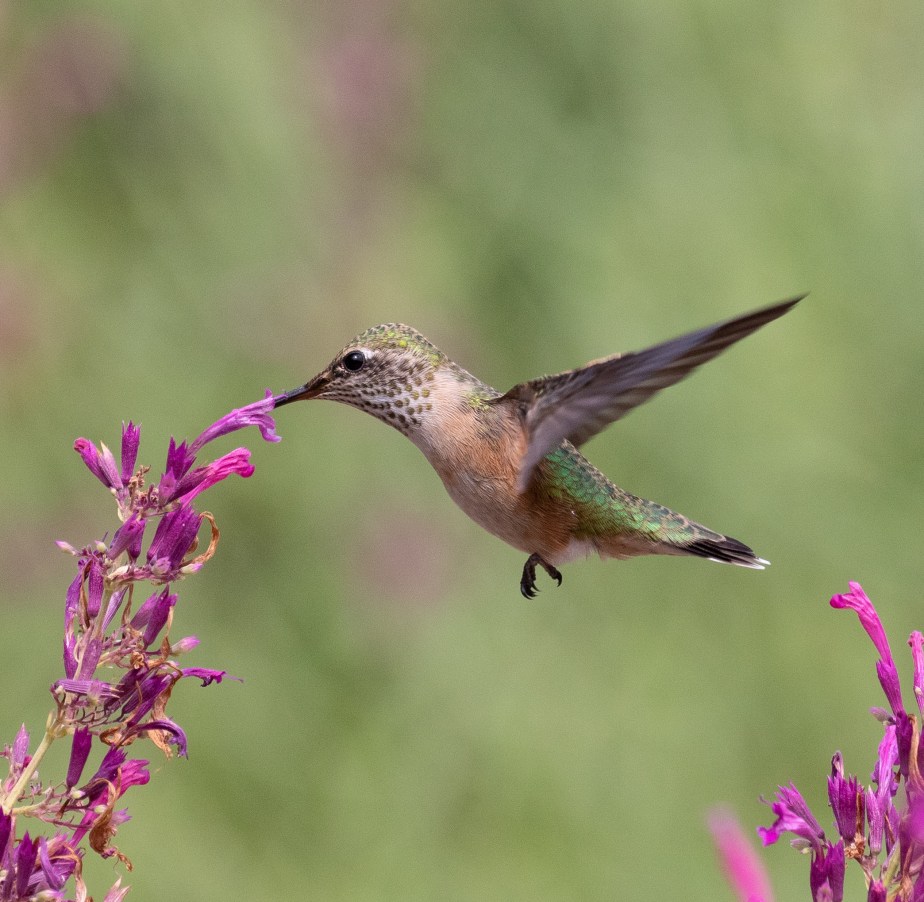
Hummingbird and Pink Agastache
These birds are some of my favorite photo subjects. I have turned my backyard into a hummingbird, or pollinator garden as I have written about in the past. I love being able to hang out in my own space, no driving, complete privacy and unlimited time to devote to these tiny subjects.
Pollinator Heaven in Pink
I don’t know what impacted my flowers this year, but I have very few great photos of the Hummers with beautiful flowers. This is one I like. The flowers seemed to be stressed by the heat and bloomed early and faded fast. I still had a good showing of birds but just not the number of pretty flower and bird opportunities I’ve had in the past.
I was fortunate to find a nesting pair of Yellowthroats earlier this summer. They were busy feeding their young ones and the number of dragonflies that were consumed was staggering!
Male Yellowthroat
The males are more colorful with a bandit like mask of black across the eyes. More dragonflies in his beak for the nestlings.
Feeding Interaction between the Couple
I was happy to capture this interaction between the male and female while they were feeding their young.
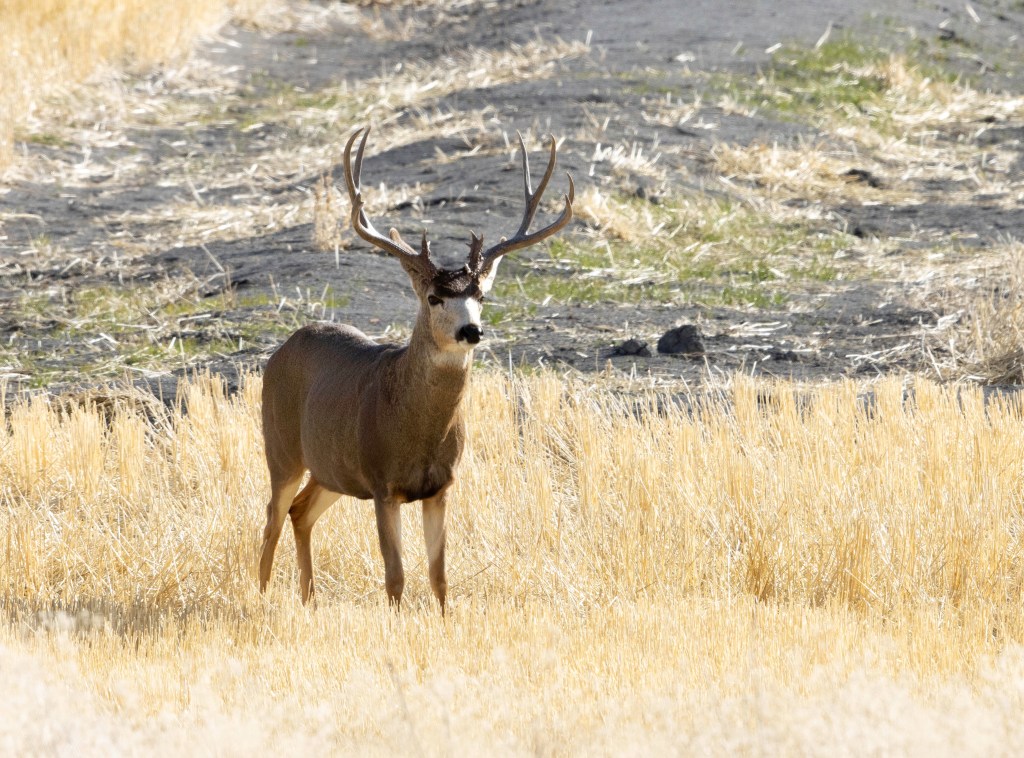
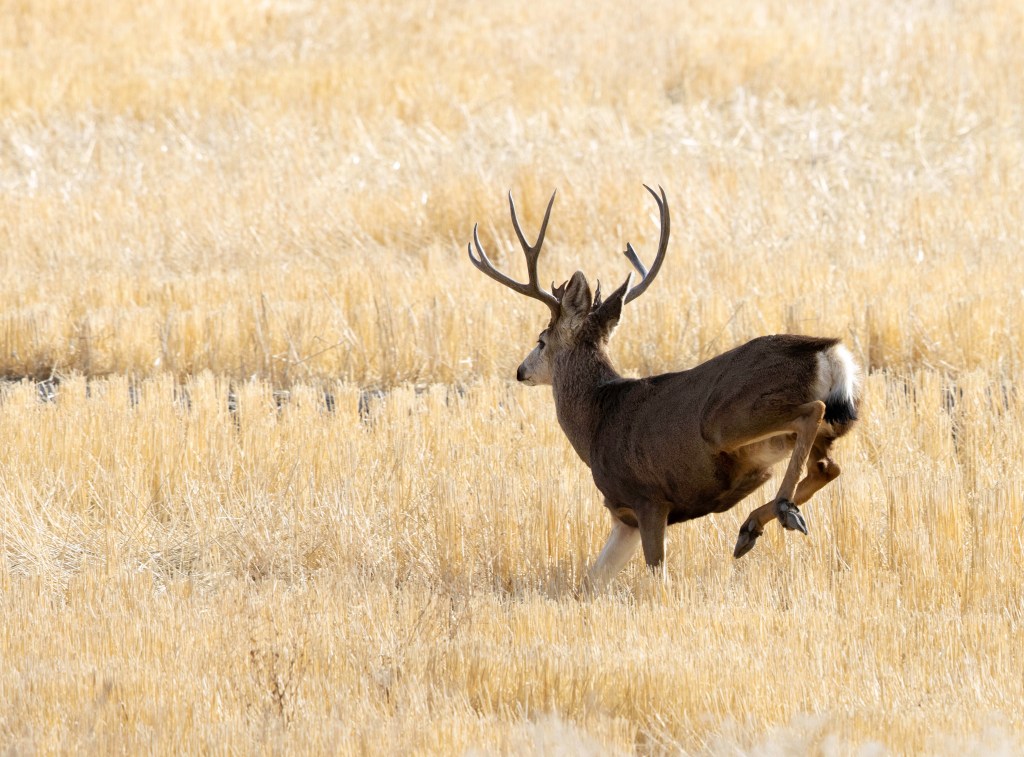
I was fortunate to run into this handsome herd of Mule Deer bucks just as they were leaving a field in the early morning. It isn’t often you see this many horned ones together and it was a joy to watch and photography them for about an hour before I had to move on.
Mule Deer
These fellows got over their alarm at my presence fairly quickly and it was interesting to watch their interactions at my leisure.
Four Point and Three Point
Western count, this is a nice four point and three point hanging out.
Alert
King Stag
This guy was definitely the biggest buck and the most wary. He dived into the tall brush and hid for a good little while until he decided I wasn’t a threat. He ran out an joined the rest of the herd and allowed me to get a few good shots. He has some pretty gnarly eye guards. Classic four point Mule Deer Buck.
Mix of Bucks and DoesIn MotionPlay Fighting
These bucks did a little bit of play fighting while I watched. I was hoping they would knock their horns off it being March and time for them to be dropping their antlers. No such luck.
February and March are prime months for seeing Bald Eagles as they migrate through the high desert. They follow the flocks of snow geese, tundra swans and numerous ducks that fly through the area on their way back north.
Bald Eagle in FlightBloody Feet
I like to photograph and record nature with realism. Birds of prey have to eat and that is messy. Eagles cull the weak and sick birds from the flocks. They fly over large rafts of snow geese scaring them into panicked flight. They pick the ones off the water that are too weak to fly or are struggling. Nothing goes to waste. Ravens follow the eagles and clean up any scraps.
I have been impatiently waiting for the migration of Rufous Hummingbirds to start. Finally on Saturday the birds seem to have arrived. I don’t know if climate change is affecting their timing but the last two years they have shown up about 10 days later then I am accustomed to seeing them and they have definitely been hanging around later in the fall until I am forced to take down freezing feeders. I think these Rufous make their way north in the spring up through California. We don’t see too many of them at that time.
We have locals, Black Chinned Hummingbirds, that quietly hang out in the backyard helping themselves to the feeders and early blooming flowers in spring and early summer. Then in August it gets wild with high numbers of Rufous battling over blooms and the feeders.
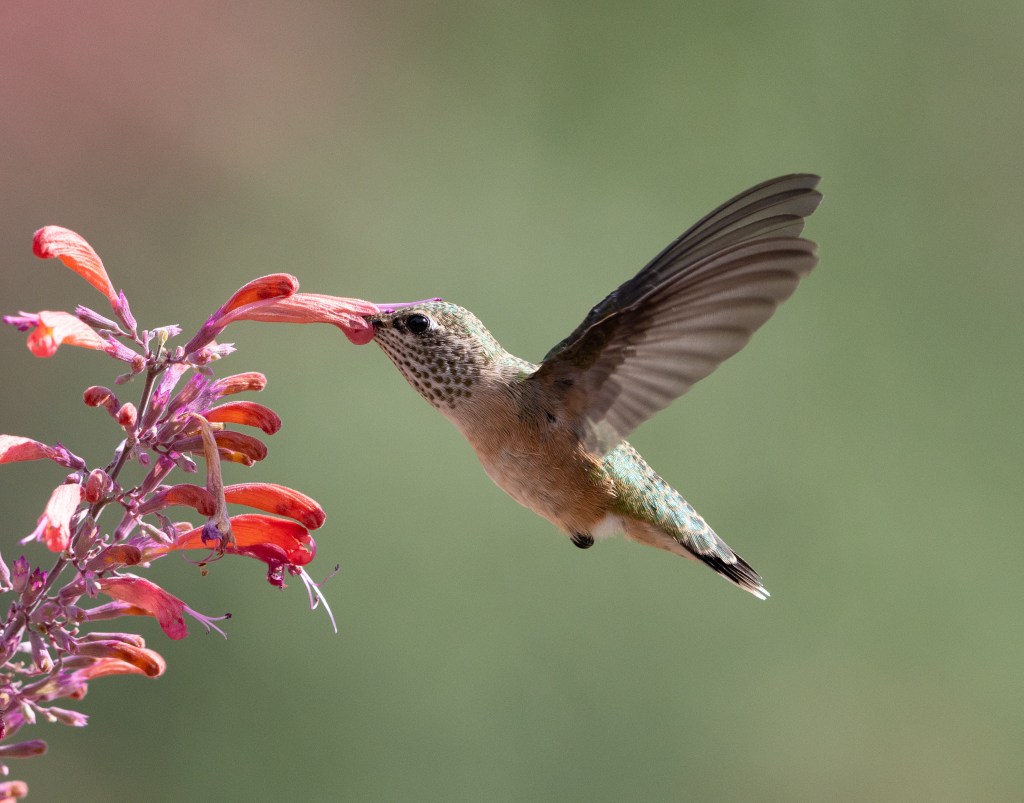
Rufous with Astagache Glowing Embers
It is challenging and fun to try to capture all the action with the camera. The birds soon become used to your presence if you sit quietly. They are apt to fly right up to your face and examine you at close range. I have read that they recognize people and learn to trust you.
Rufous with Desert Solstice Astagache
One of the challenges to getting a good photo is they are always chasing each other off the flowers. They are fiercely territorial and even though I am offering them a huge banquet of flowers and feeder choices they are quite protective of their food sources.
Hummingbird defending against attack from above
Pretty Pose
Better late than never. Enjoying the annual show these tiny titans are putting on.