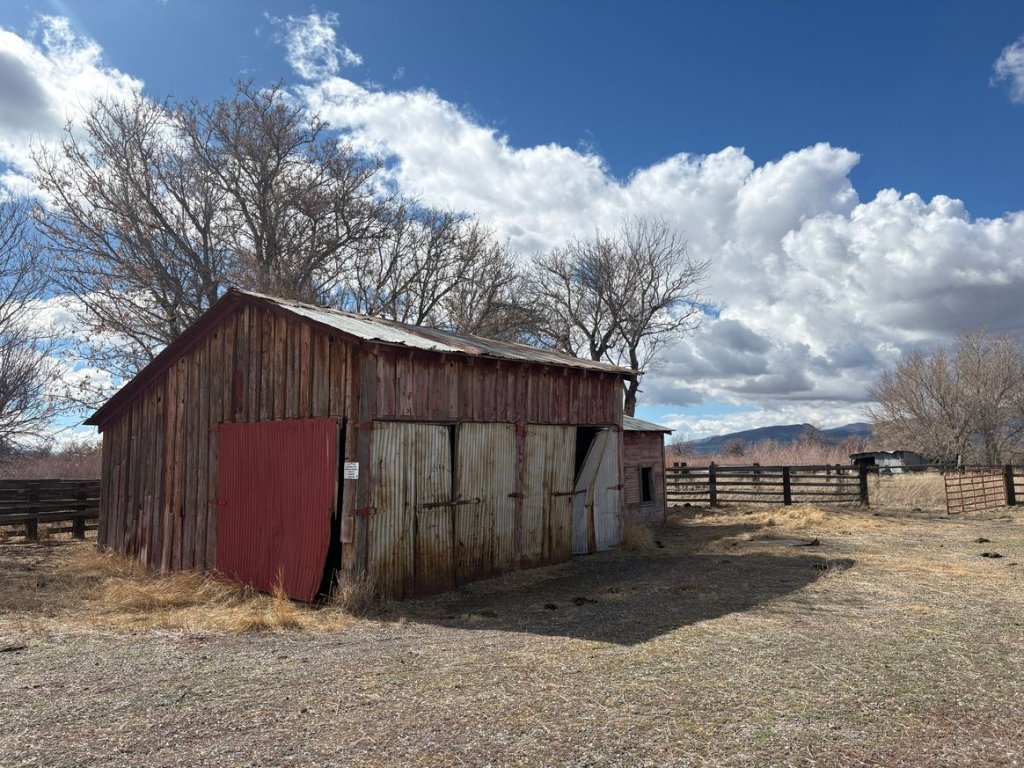
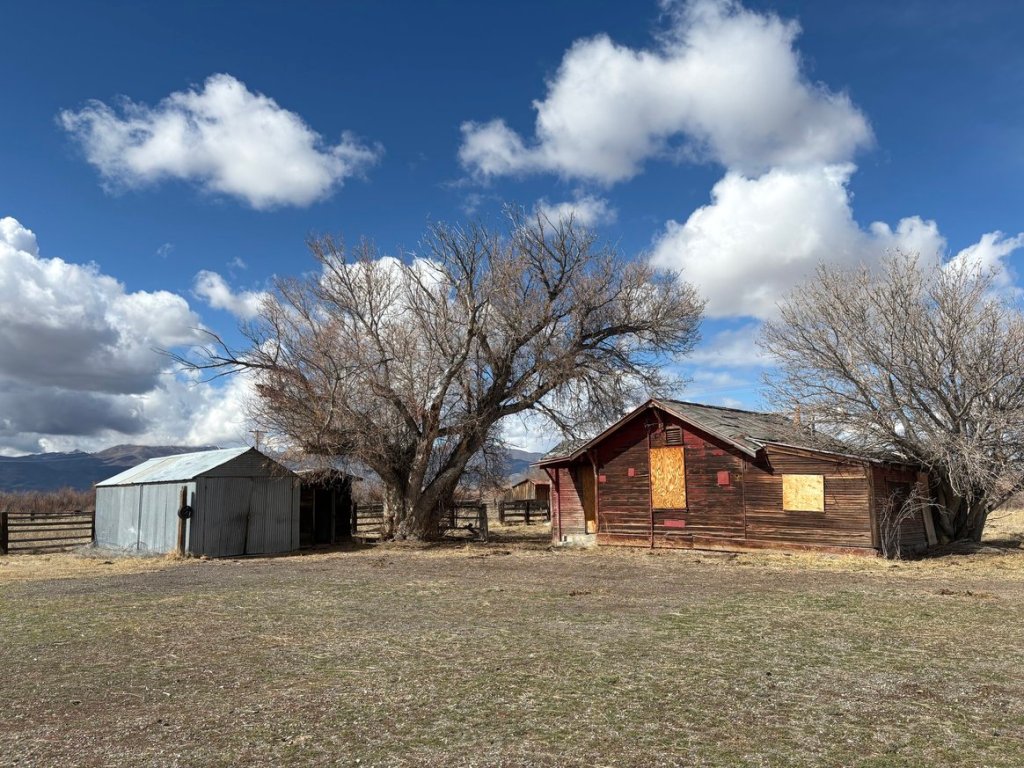
The AWMA is a relatively new wildlife area that was created from a historic ranch property along the Humboldt River on the outskirts of Battle Mountain Nevada. I follow several wildlife pages on Facebook and have seen some good photos from a local photographer who visits the area regularly. I took a trip out there yesterday. It wasn’t productive from a wildlife photography standpoint, but I had the property to myself. I had a pleasant few miles of walking through the area. I thought it might be too early for a lot of bird life, and it was, but the habitat is healthy and looks like it supports many species. I will visit again when the birds are present.
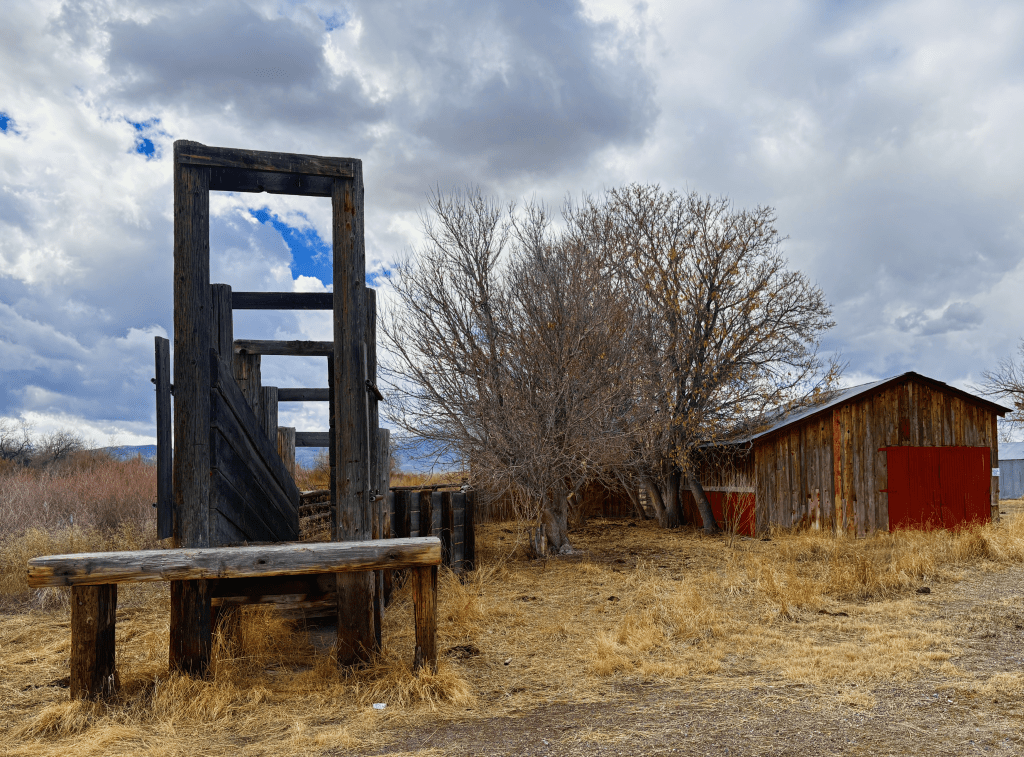
The loading chute at the abandoned ranch at the center of the property
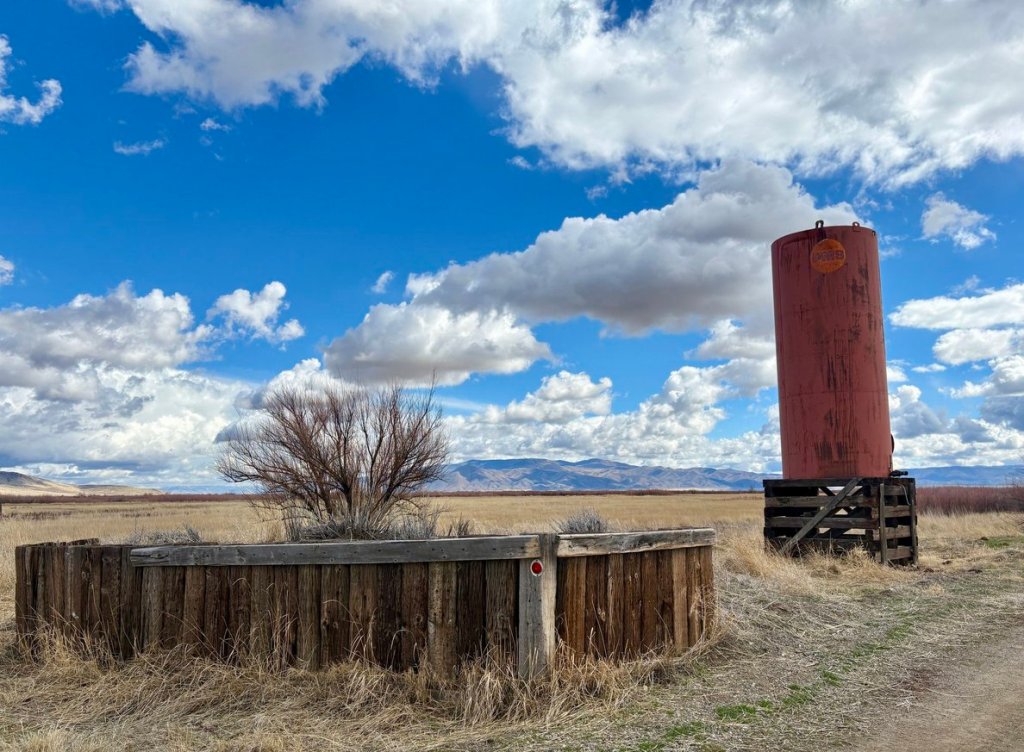
I think this is an old fuel tank for the ranch.
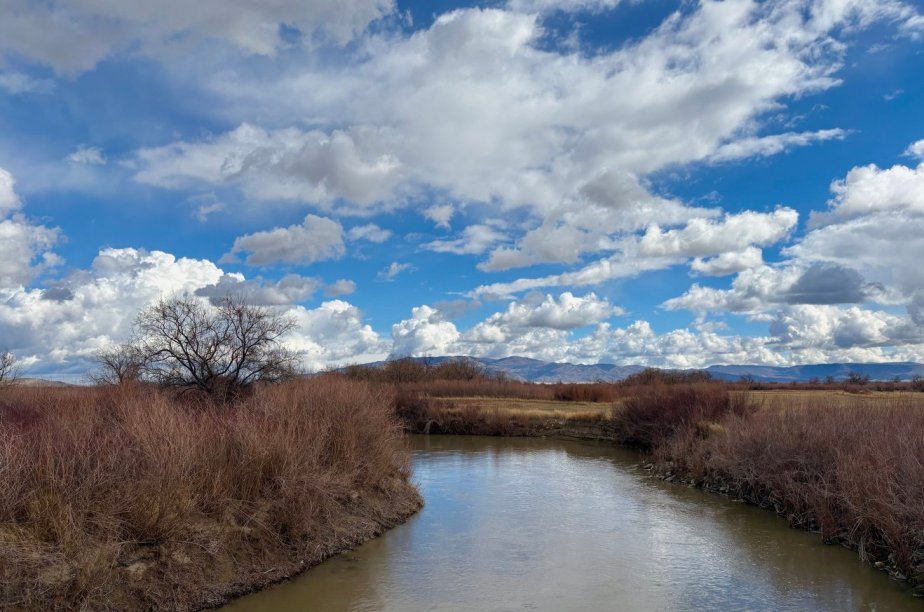
The Humboldt. It will be a trickle in the summer but is flowing full with snow run off.
The Machine Shop
Abandoned ranch house. I think that autumn photos here would be pretty.
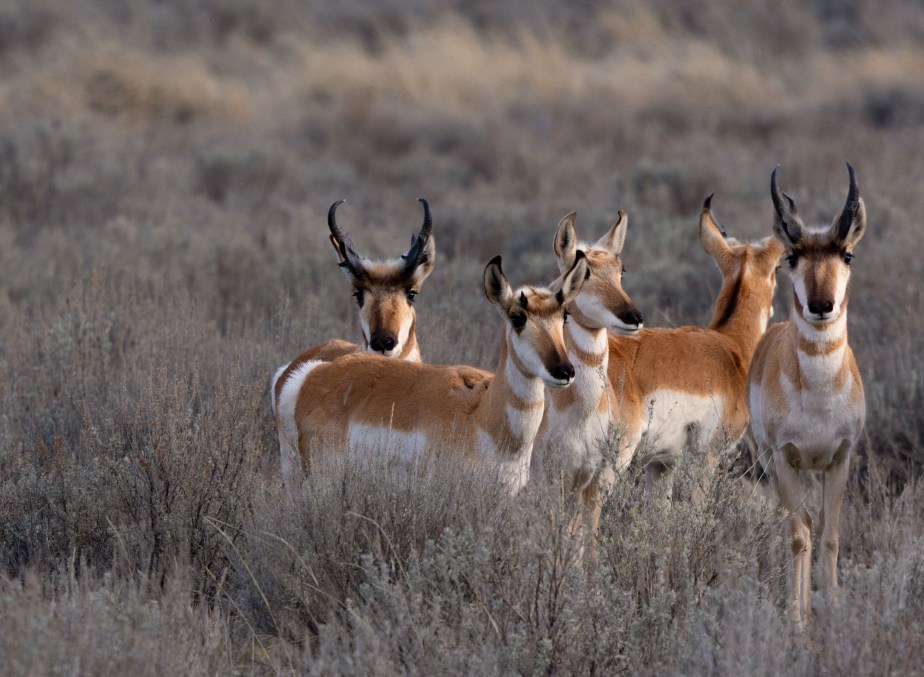
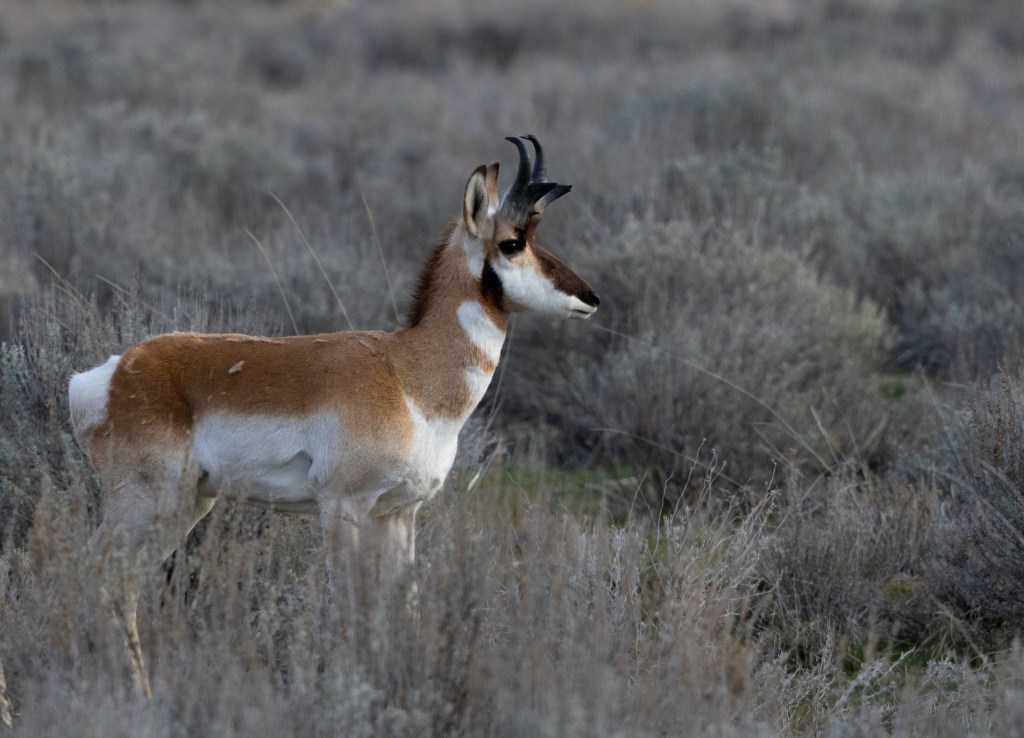
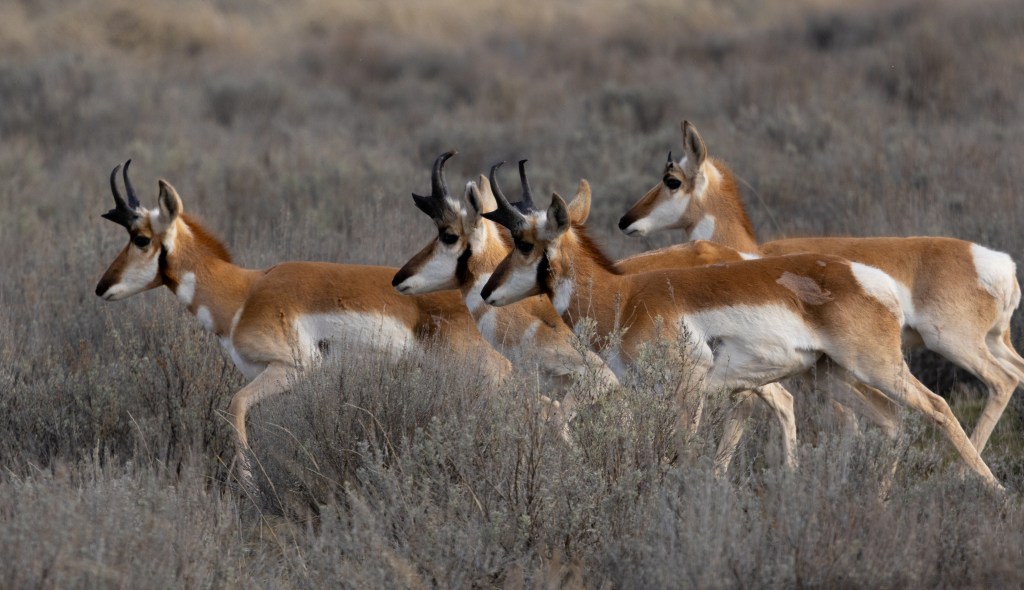
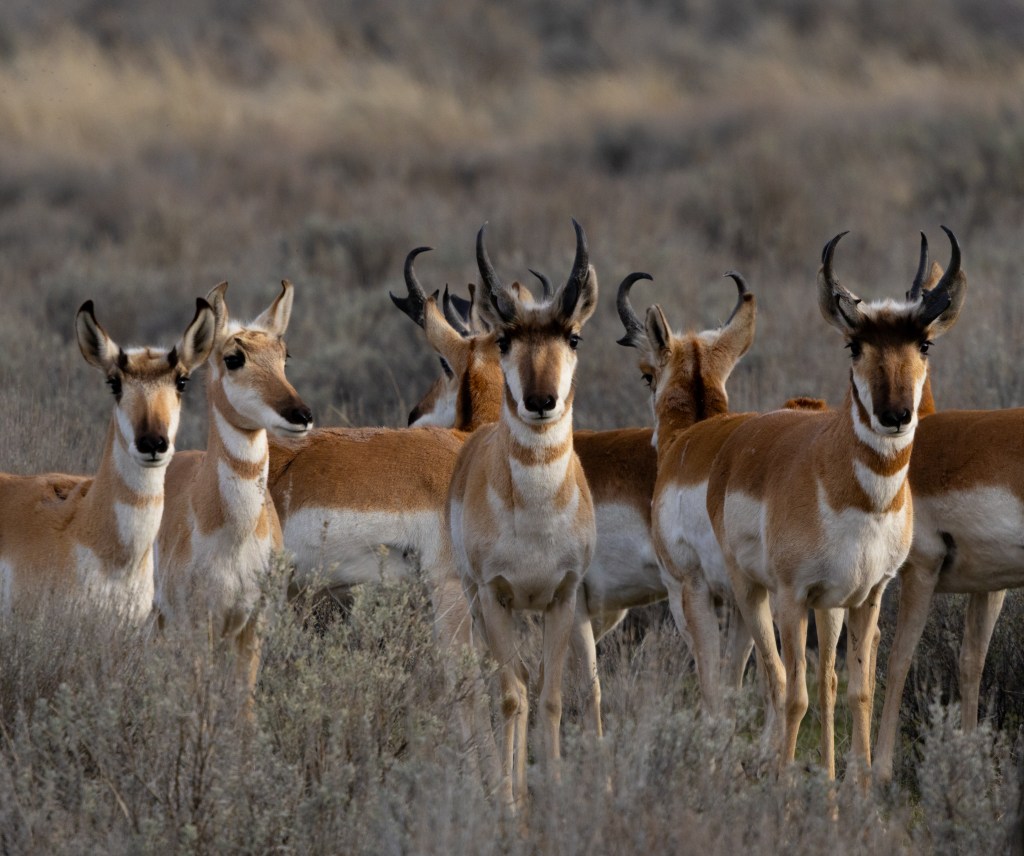
I have been going out in the evenings trying to find owls to photograph. Barn Owls and Short-eared owls often fly at dusk this time of year. No luck with owls thus far but I did run into this nice little band of Pronghorn. They are my favorite animal. They look so exotic for the sagebrush steppe. Like something that would be more at home in Africa. Their huge eyes and unique colors make them a beautiful contrast on the drab winter landscape.
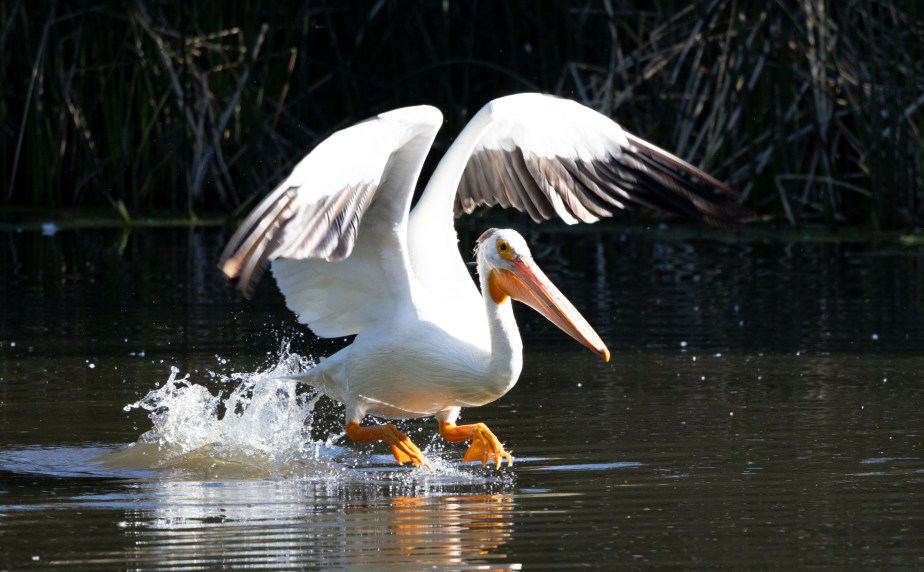
Living in the desert, a long way from the ocean, it is always a bit of a shock but a pleasant surprise to see American White Pelicans return in the Spring and Summer. I run into them on the river and lakes in the area. There is a large breeding colony on Anaho Island in Pyramid Lake.
I have been involved with conservation organizations in Nevada for a long time. I love our public lands, and Nevada, with 48 million acres designated as public, has the vast majority of public land in the United States. I choose to live in Nevada primarily because of access to huge areas that were set aside for public use. It is rare for me to come across a no trespassing sign which can be all too common in states that don’t have a large amount of public land. The BLM, the Bureau of Land Management is responsible for managing these lands for multi-use purposes.
I wrote this article for a sportsman’s publication, and it was published this fall. It isn’t an in depth look at the wild horse issue but was designed to be informative on a basic level. There were a few graphs and tables which I am not including. I am going to write a series of essays on the topic which will look at some of the problems with wild horse populations exploding on our public lands. If you are an anti-management “advocate” of wild horses and drinking the Kool aid that animal rights extremists are serving, feel free to unfollow me and move along. With all the changes coming to the Department of the Interior, the BLM and new appointments to key positions, I want to put down my thoughts as we move forward in uncertain times.
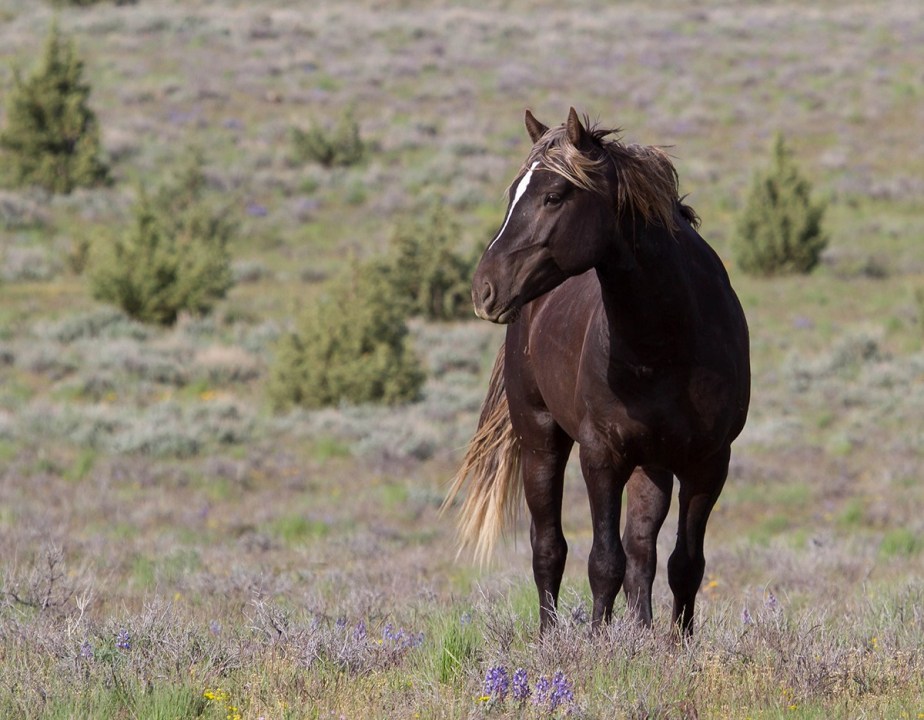
The horse in the feature image is a healthy horse on a properly managed range.
Wildhorse Management for Healthy Rangelands and Wildlife
Nevada is the driest state in the United States. It’s vast stretches of sagebrush steppe are some of the largest undisturbed swaths of Sage Grouse habitat left in the West. Many big game animals and unique bird, fish and amphibian species make the mountains and basins of Nevada home. As a state mostly made up of high desert, water and forage are the limiting factors for the viability of all living things on the landscape. All animals, plants and birds depend on and share the often, scarce resources.
Wild horses and burros also have their place out in the wide-open spaces on our State’s public lands and are legally protected by the passage of the Wild and Free-Roaming Horses and Burros Act of 1971 (WFRHBA). Familiarity with the law regarding wild horses and burros is a great starting point for those who would like to educate themselves about wild horse management and is available to read online.
Horses and burro numbers managed to the original (AML)s, appropriate management levels, would be ideal and solve many of the problems we are seeing with degradation of habitat and critical riparian areas that are essential for all wildlife. Nevada has the privilege and burden of having the largest populations of wild horses and burros in the U. S. There are 177 (HMA)s, Herd Management areas, and Nevada has 77 of them. When the (WFRHBA) was passed, the carrying capacity or number of wild horses in Nevada was set at 12800. While this number fluctuates with gathers and foaling, the current number of horses in Nevada is approximately 40,000 horses and 4685 burros. Obviously, the number is far above the original number set which has contributed to degradation of rangelands and negative impacts to our native wildlife.
If the BLM were allowed to gather the horses and get the number of wild horses and burros down to AML in every HMA, the ability to use fertility control instead of gathers would be a real possibility. With numbers far above AML this is not a practical or workable solution. Fertility control can help to stabilize populations but is not effective in reducing them.
What can we do as sportsmen and women to ensure that balance is maintained on our public lands? We must be a strong voice for responsible management of the horses and burros along with all wildlife on the lands managed by the BLM. Balance must be achieved and then maintained to protect the health of our rangelands, wildlife and yes, even the horses themselves. There are many opportunities to engage in positive action:
Write your Legislative Representatives asking for responsible Wild Horse and Burro Mangement. Ask that priority is made in budgets for management.
Respond to Public Comment requests from the BLM on planning for Herd Management Areas asking for responsible management.
Attend public meetings such as the Wildlife Commission meetings and make public comments.
Educate yourselves and others on Wild Horse and Burro management issues.
Make observations when in the field and report any issues you are seeing to appropriate partes, BLM and NDOW for example.
Engage with and support efforts by the sportsmen organizations that are striving for balanced management of our resources and wildlife.
If you are able, and need a new ranch, pack, or hunting horse consider adopting a horse from the BLM adoption program. They are sturdy and sure footed and could fill that spot in your string.
End of article.
More to come on the cruelty of mismanagement by advocacy groups.
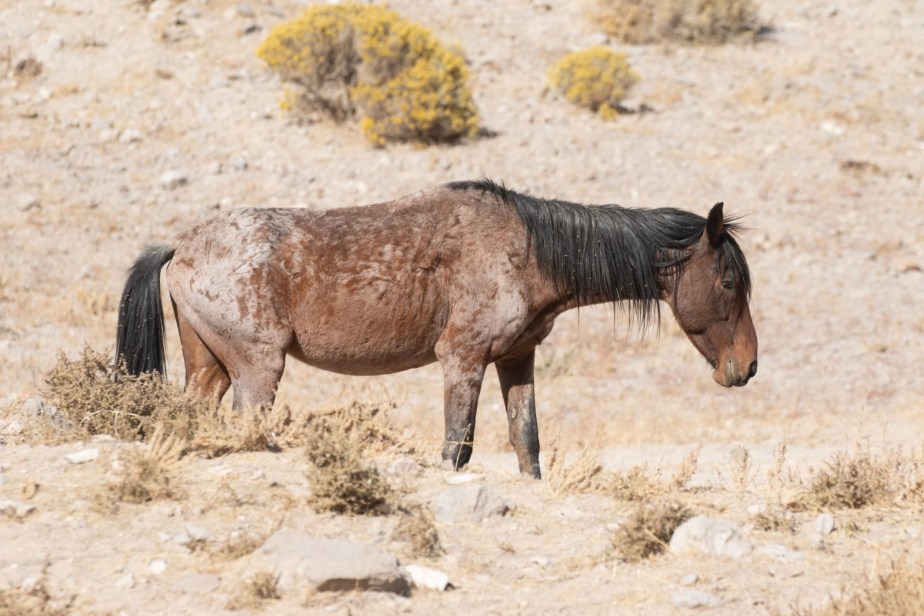
This horse is in bad shape due to an over population of horses on the Virginia Range. Many of the horses in the Virgina range are healthy but they are rapidly headed for a population crash. The fertility control is not effective. I will write more about this management debacle later.
This Virginia Range horse is one of many displaying a painful skin condition. Because these horses are wild this kind of condition is almost impossible to treat. The condition may be the result of overpopulation and poor feed. The BLM does not manage the Virginia Range horses, Advocacy groups and the Nevada Department of Agriculture have a cooperative agreement. I alerted the group that manages these horses about this situation, and nothing has been done to help this horse.
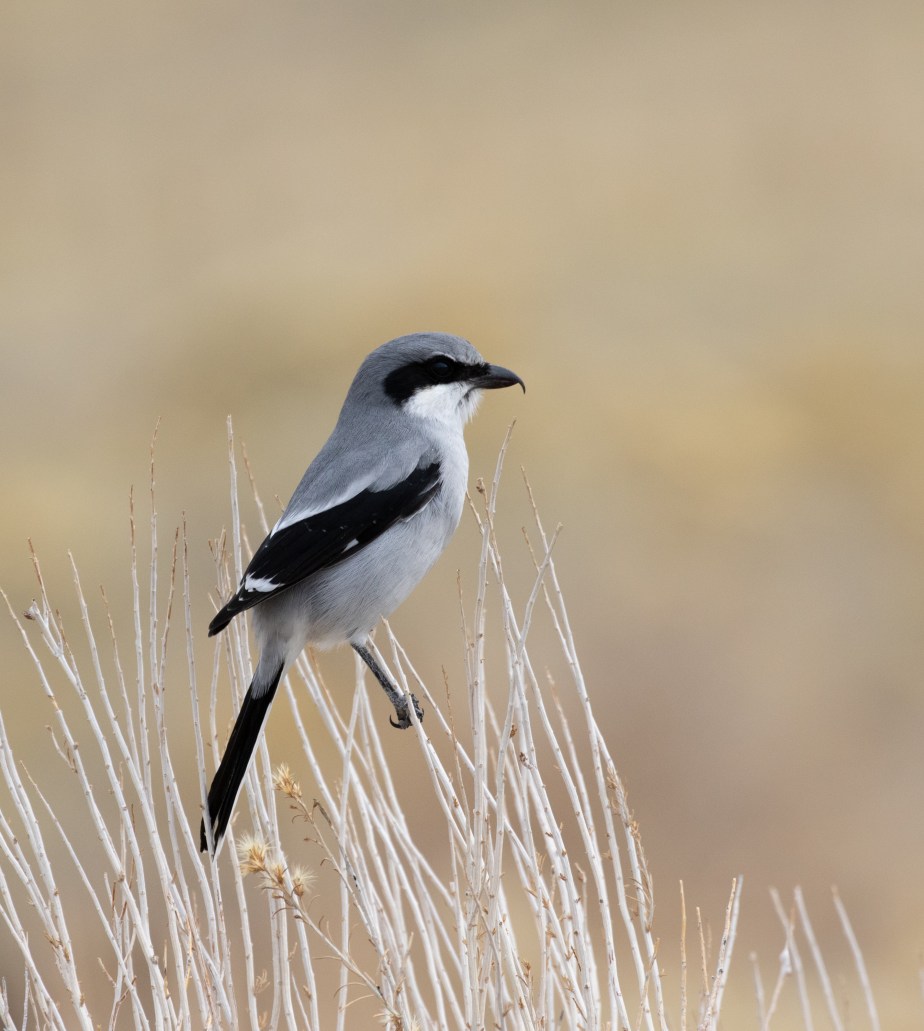
A Loggerhead Shrike, or Butcher Bird pictured in the first photo is a fierce predatory bird. They have a specialized beak for severing the spine of their prey. They are infamous for impaling their captured prey on thorns or the barbs on wire fences. They eat insects, small rodents and amphibians. Their relatively weak legs and inability to hold their prey without talons is the reason they impale their food. It makes it easier for them to hold and eat their catch.
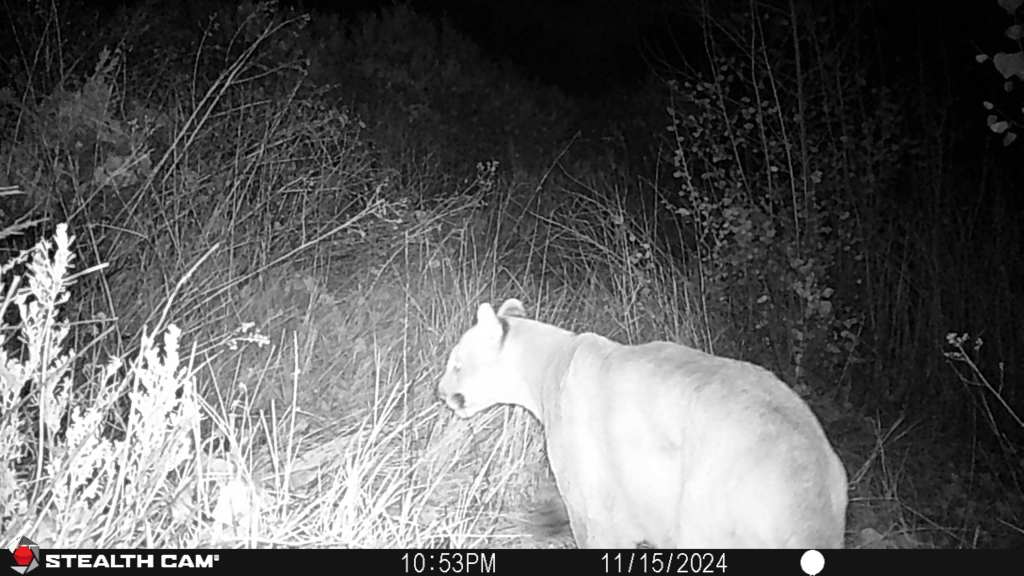
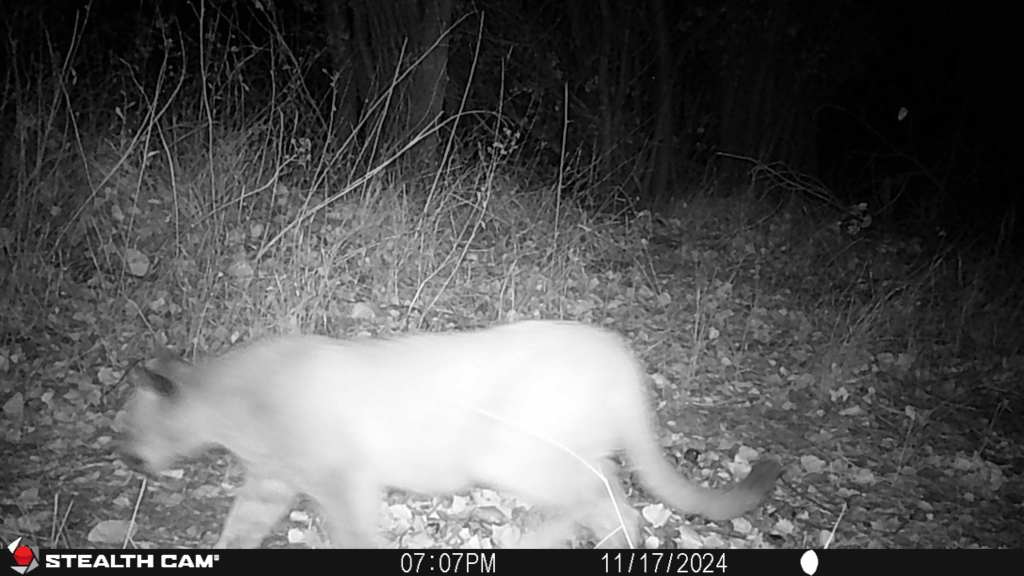
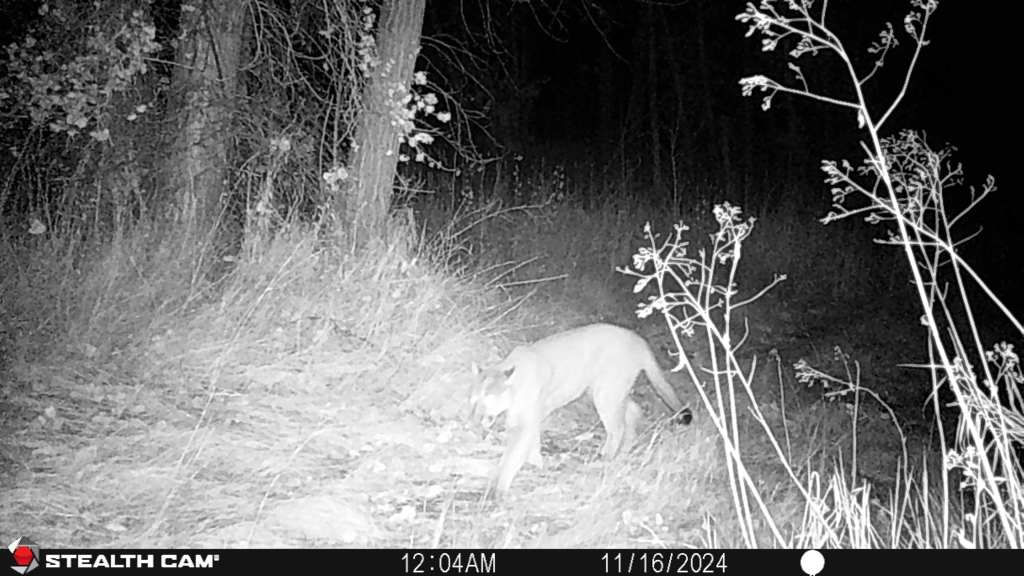
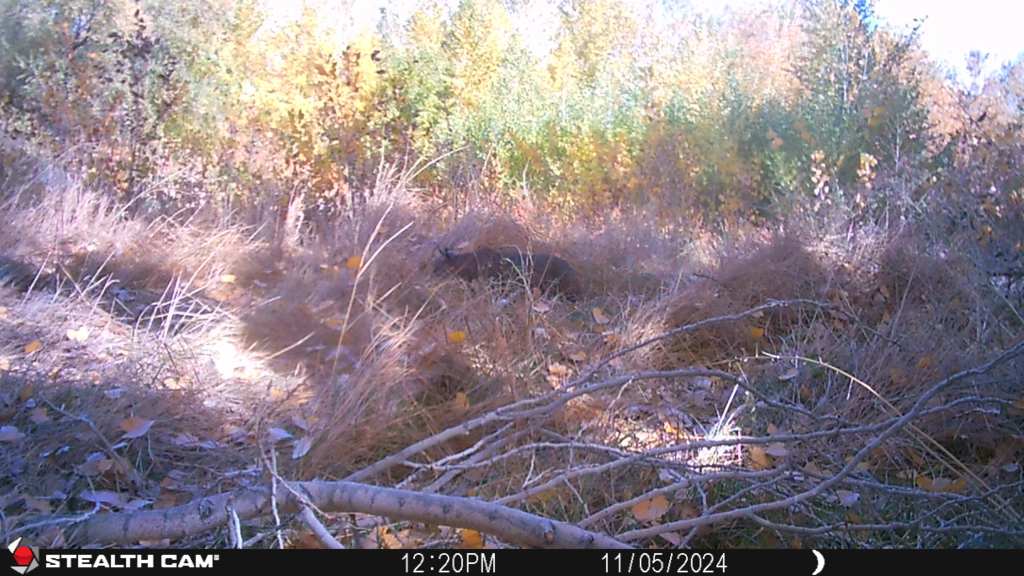
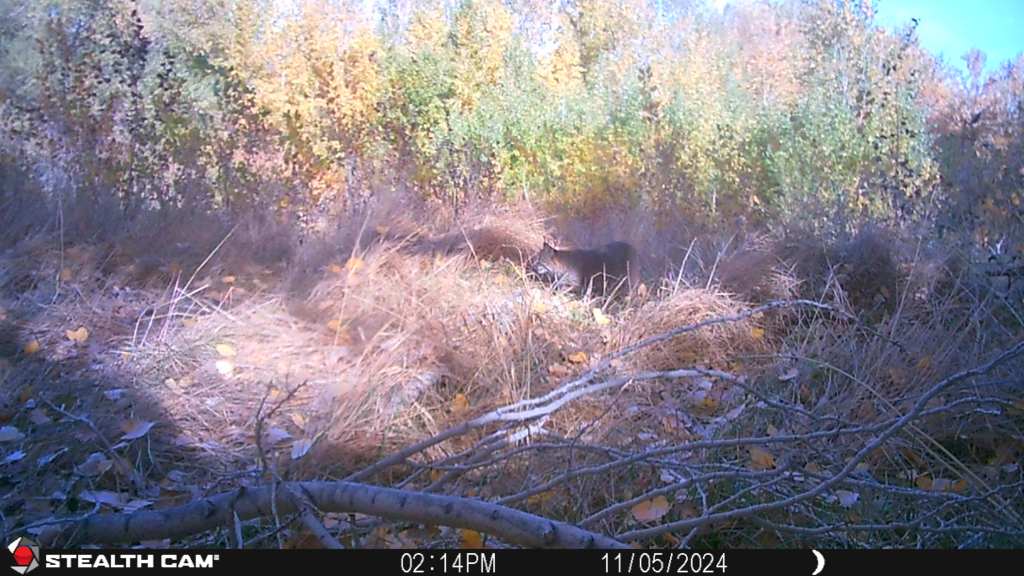
Some recent updates with Bobcats and Mountain Lions from the Trail Cameras follow.
I remain grateful these Lions are waiting until dark to roam the woods.
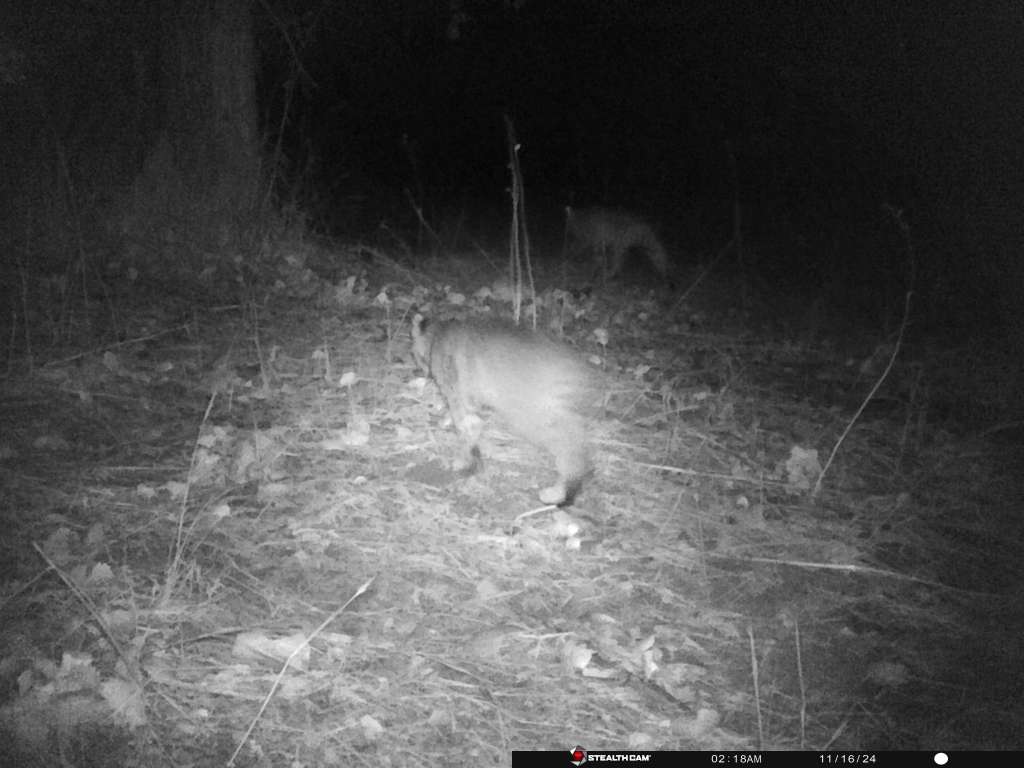
The Bobcat continues to be a mostly daytime predator. But I did manage to get a photo of two Bobcats together at night.
It may be her kitten or it may be mating season. No way to tell.
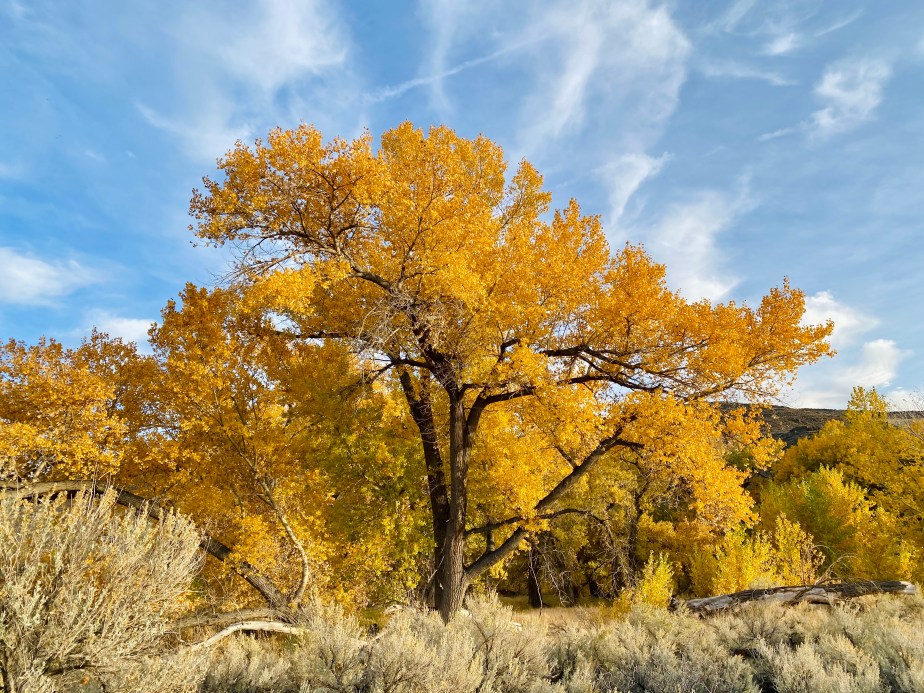
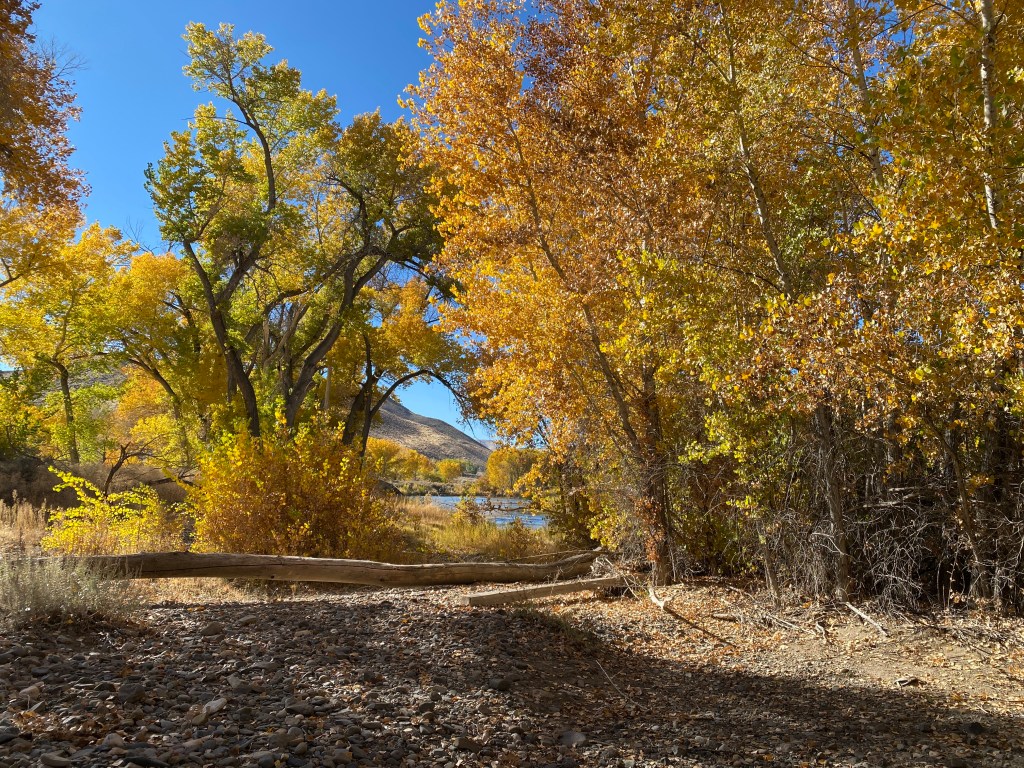
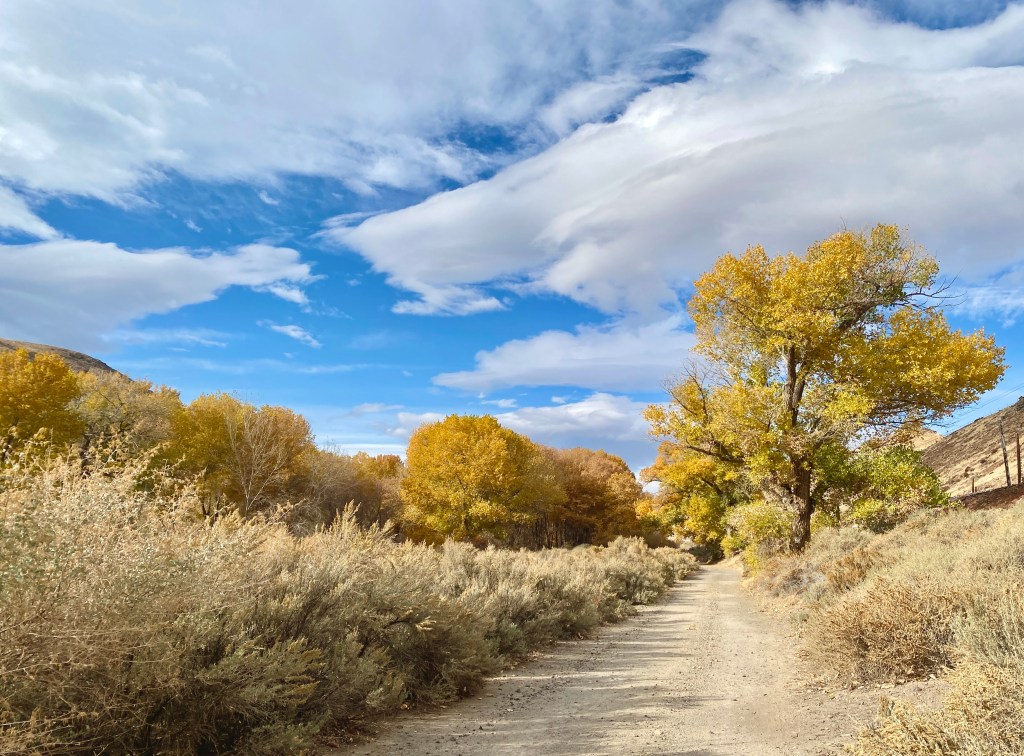
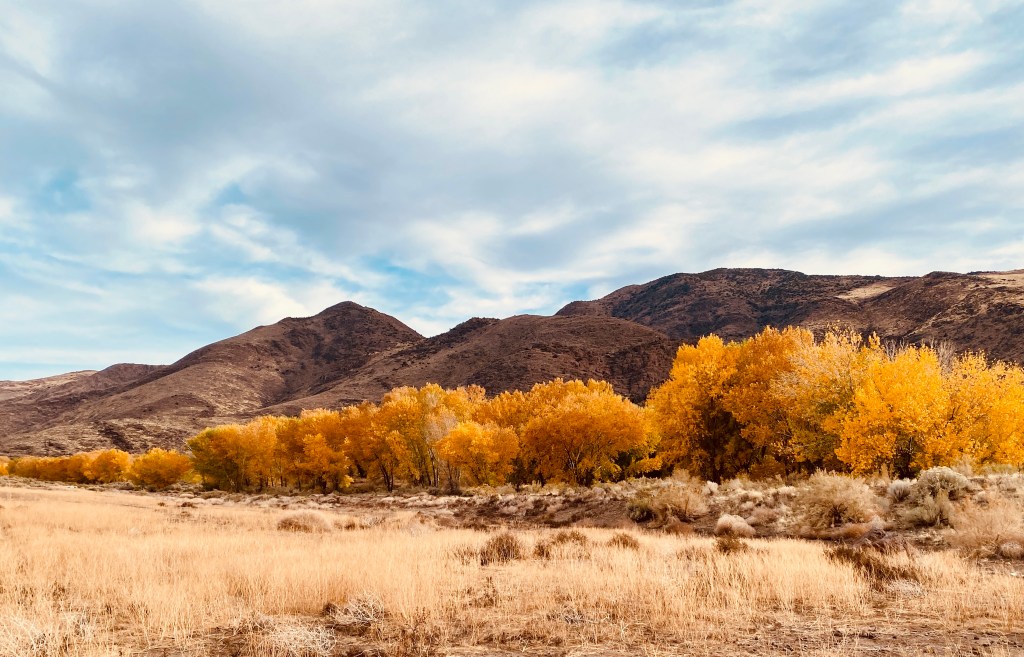
I know that I am not alone in loving Autumn. I feel it is by far the shortest of seasons. Maybe it is my imagination because I love it so much, but it always feels like it flies by. It seems like we finally have cooler weather, the leaves turn to bright gold and far too quickly the leaves are gone, and the short dark days of winter descend.
Early Autumn along the river
We don’t have brilliant red foliage, but I love all the subtle shades of gold that paint our autumn days. Most of the leaves are gone now but there is beauty in bare branches and the silence of winter.
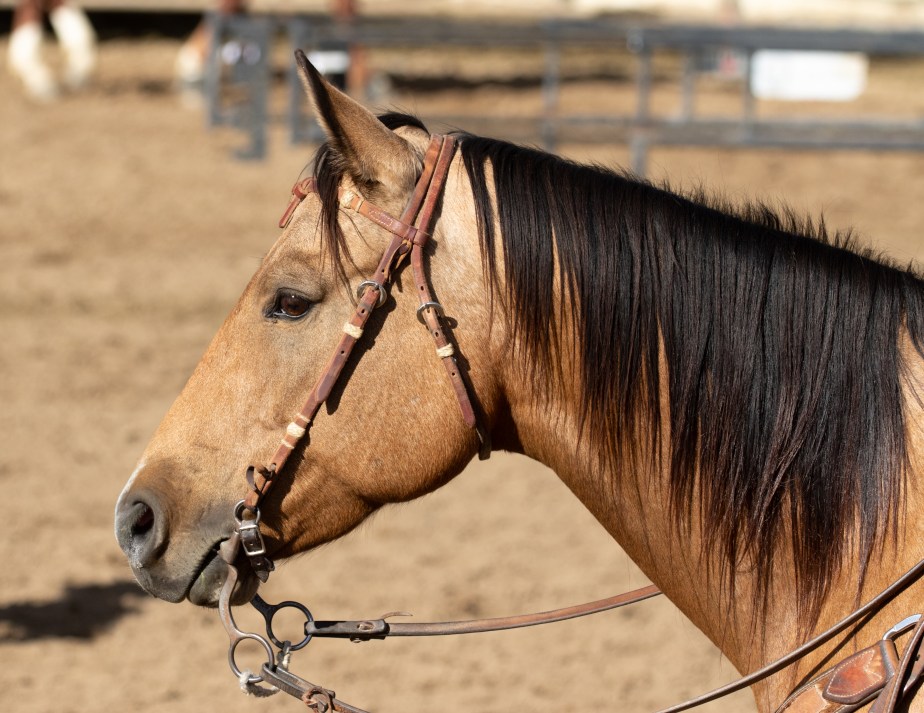
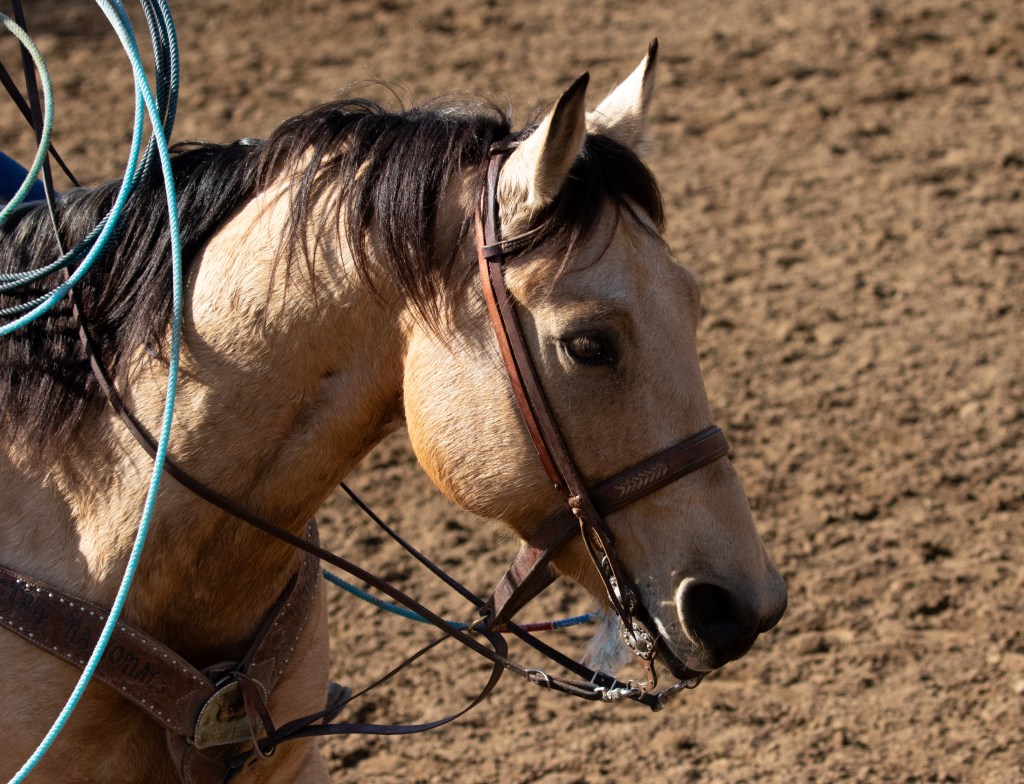
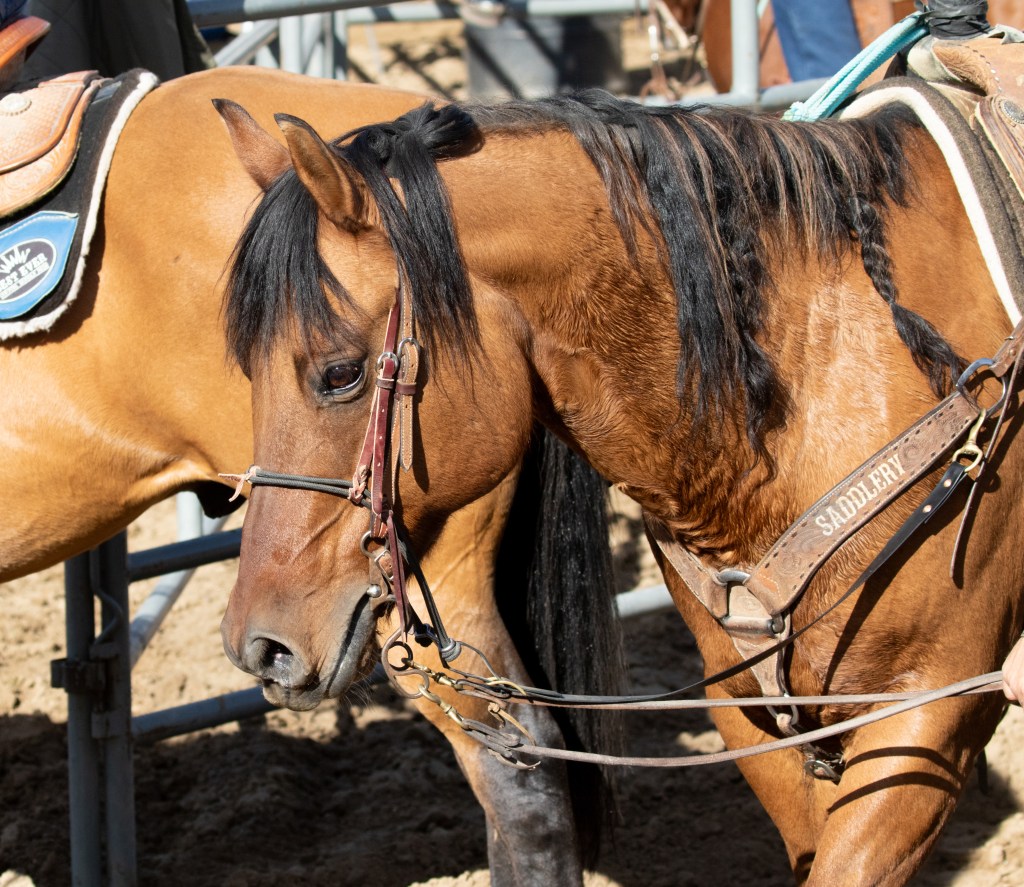
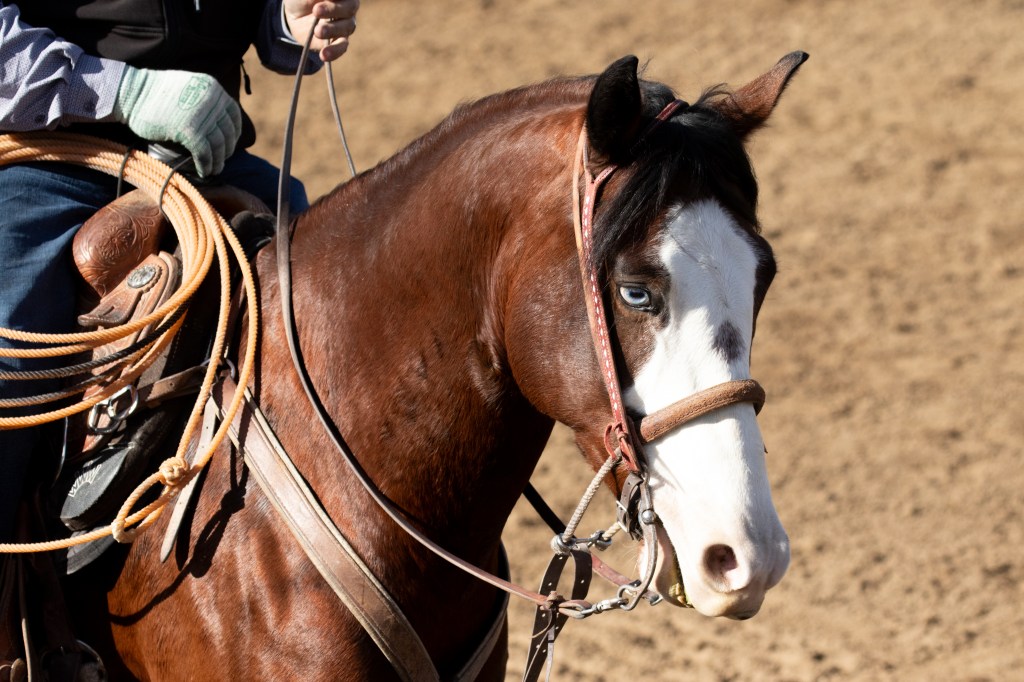
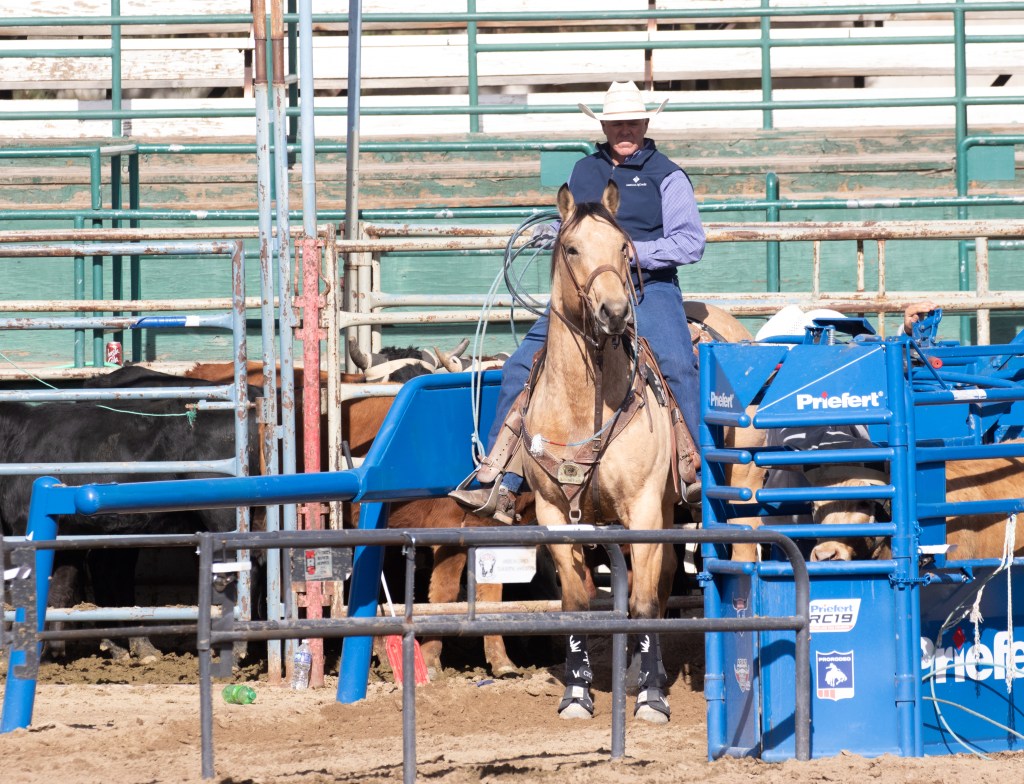
Last week the Events center hosted a team roping event. I went down as I was sure there would be some pretty horses. I love a buckskin and there were several.
I never get tired of looking at horses. So please indulge me with all the cow pony photos.
I walked the dog early this morning so I could get out to the river. I sat for a while along the path the Bobcat takes in hopes of seeing it in person and getting some photographs. No luck. It’s going to take a lot of patience to ever get an in-person sighting. No walk is ever a waste of time. It was lovely out there today.
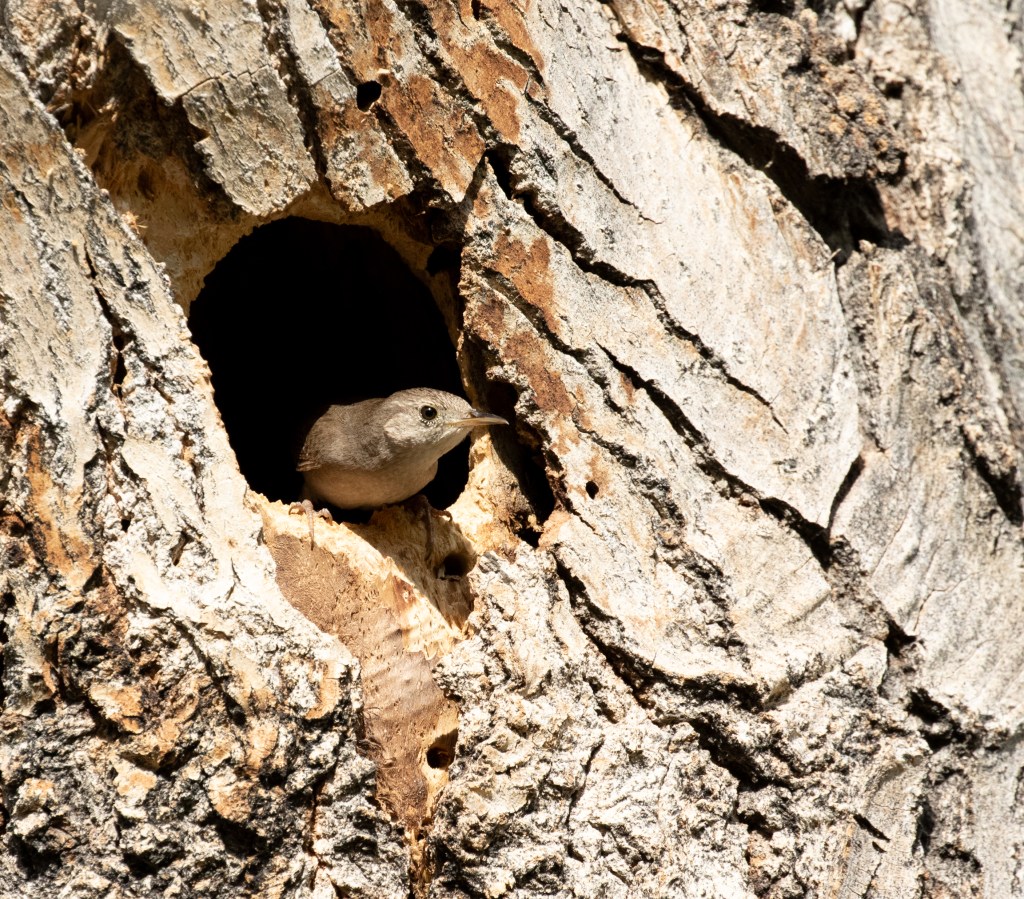
This House Wren and a Northern Flicker seemed to be competing for a hole in a large cottonwood tree. No doubt the Flicker made the hole and the wren was bug hunting inside.
It is difficult to get close to Flickers so I was pleased to get these photos.
On the way out I caught sight of this wild horse across the river. I have seen him a couple of times before in the distance. He is a mature stallion and looks quite healthy. It is unusual to see feral horses alone. Since he is older, I can only assume he has lost his mares to another stallion. Younger males without mares hang out in bachelor bands. Horses are so social that this kind of behavior is out of the ordinary.
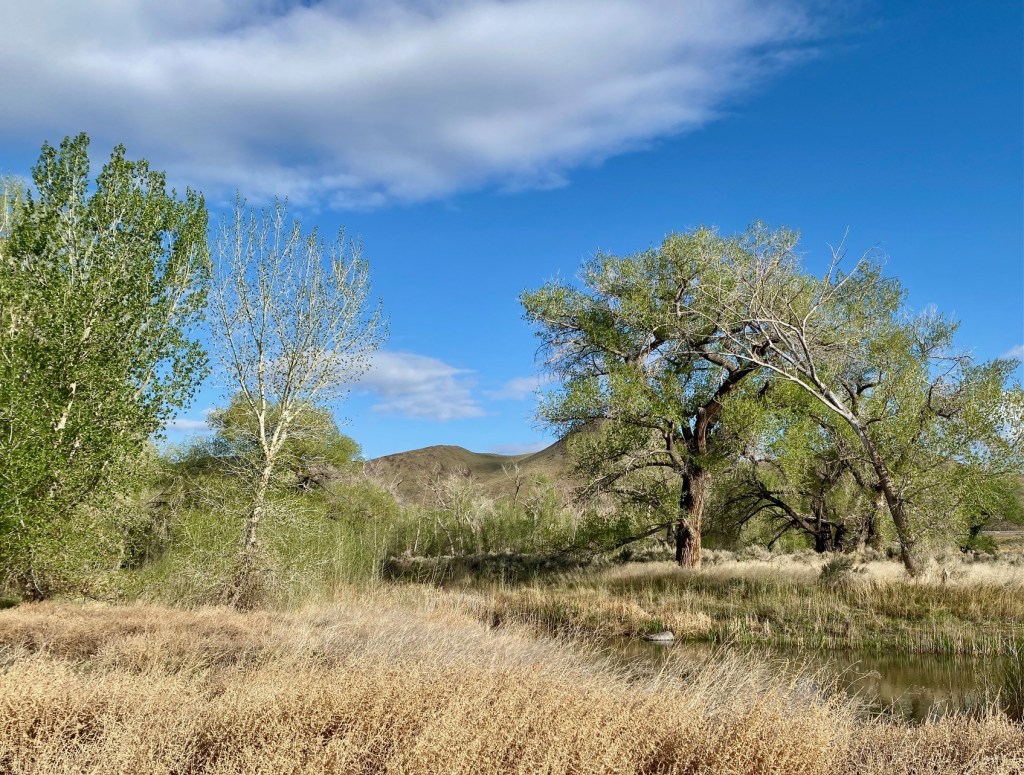
This is a typical landscape of the area I am walking in. The cottonwood trees are getting serious about leafing out now. Small ponds like the one in the foreground are starting to fill up. The river is running fast and full of snow melt from the Sierra Nevada west of here.
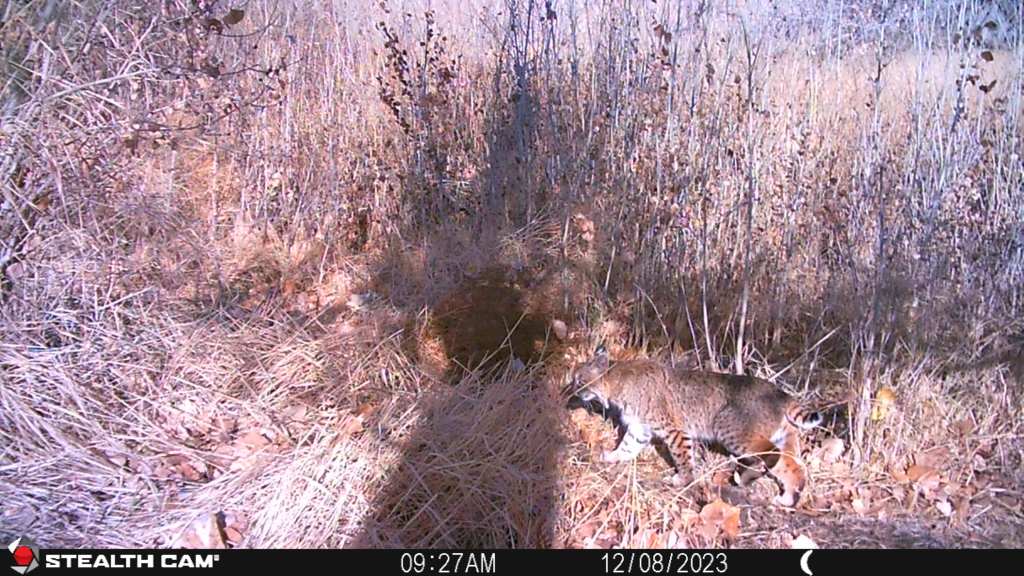
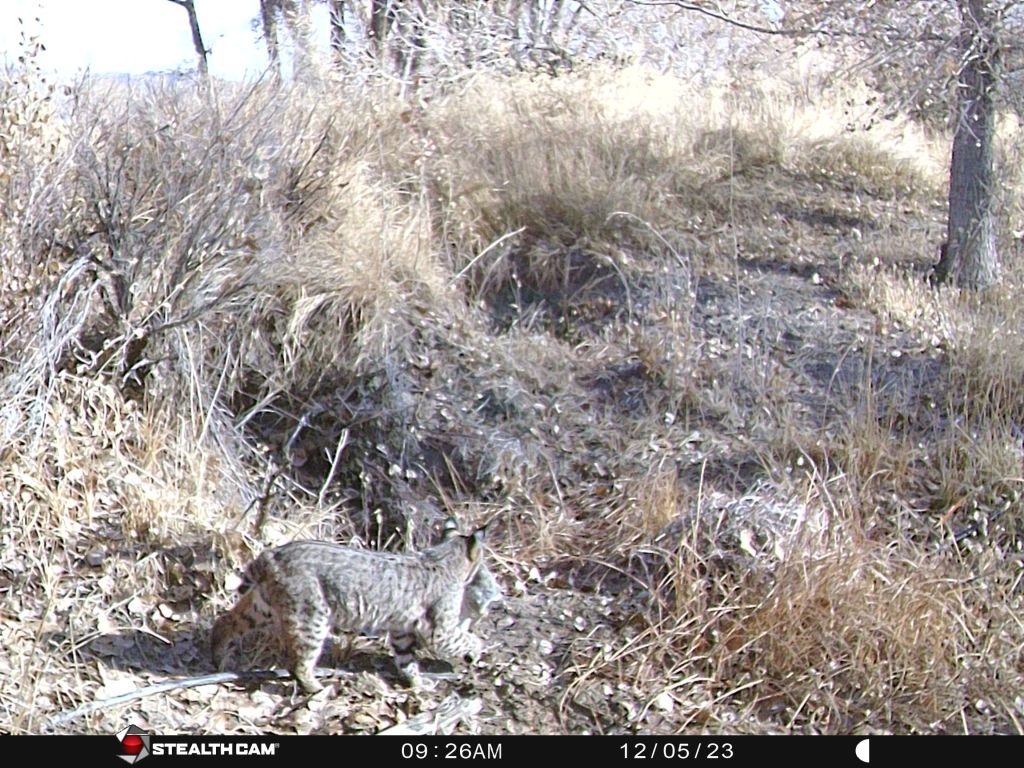
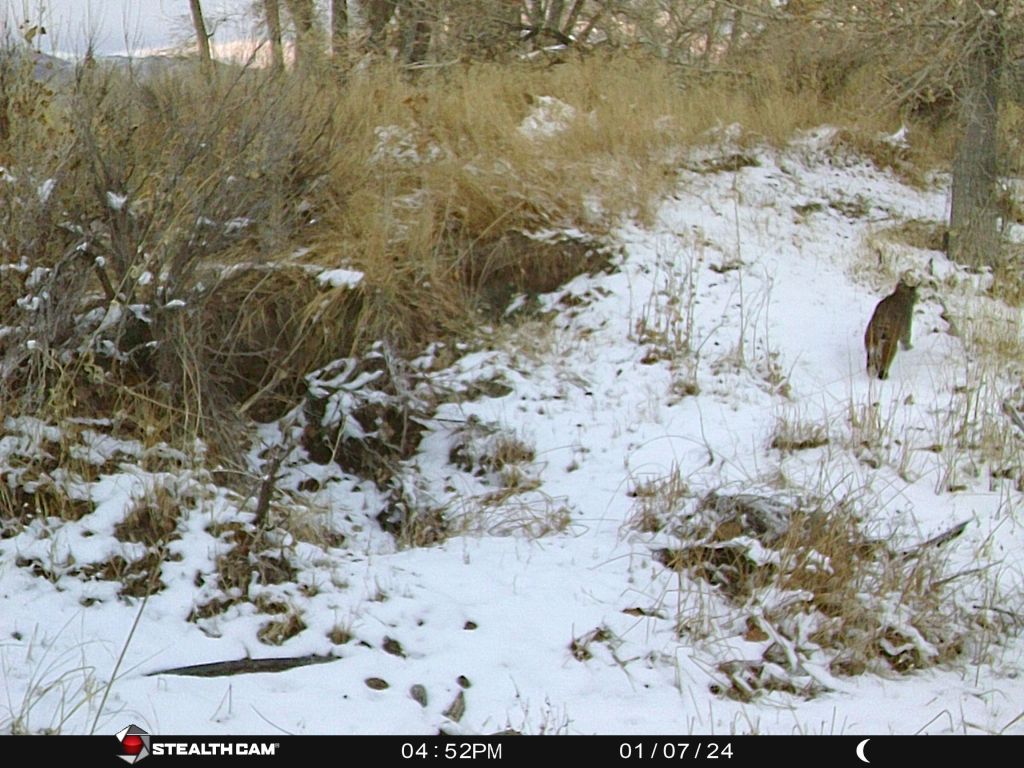
My trail camera sets picked up quite a few photos of Bobcats over the winter. The nice thing about the smaller cats is that they often show up during the daylight hours affording better pictures.
Checking the time stamp shows that these animals are not averse to wandering around in the middle of the day. I have sat out on some of their more traveled trails in camouflage as I would so like to capture them with my real camera. They are so beautiful! No luck so far. I’ll keep trying.
It’s always an extra bonus to get a photo of a predator with prey. The photo below shows a Bobcat with a cottontail rabbit in its mouth. This area has abundance of rabbits, both cottontails and jackrabbits. Bobcats also prey on birds, mice, voles and human’s small pets.
Lots of folks have told me that Bobcats will move out if Mountain Lions are in the area. I think the photos show that isn’t always true. The fact that the Lions seem to be primarily or possibly exclusively nocturnal may be why the smaller Bobcats are choosing to hunt during the day.
I’m most likely capturing the same Bobcat. I have no way of knowing or telling them apart. The one I’m seeing looks very healthy and well fed. Just like with the Mountain Lions I am looking forward to seeing and chronicling their summertime activities this year. Hopefully kittens will show up following mama Bobcat soon.
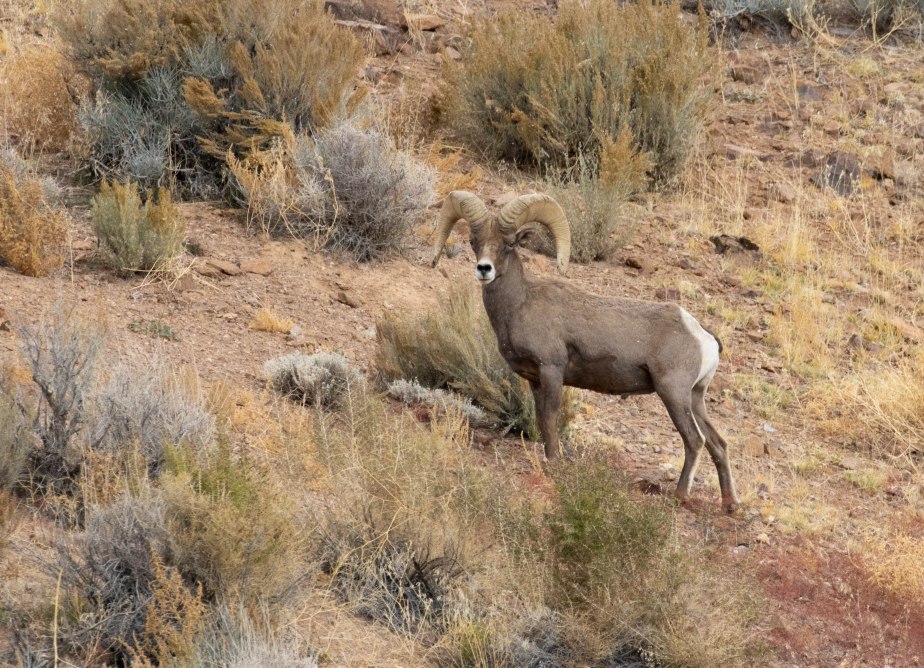
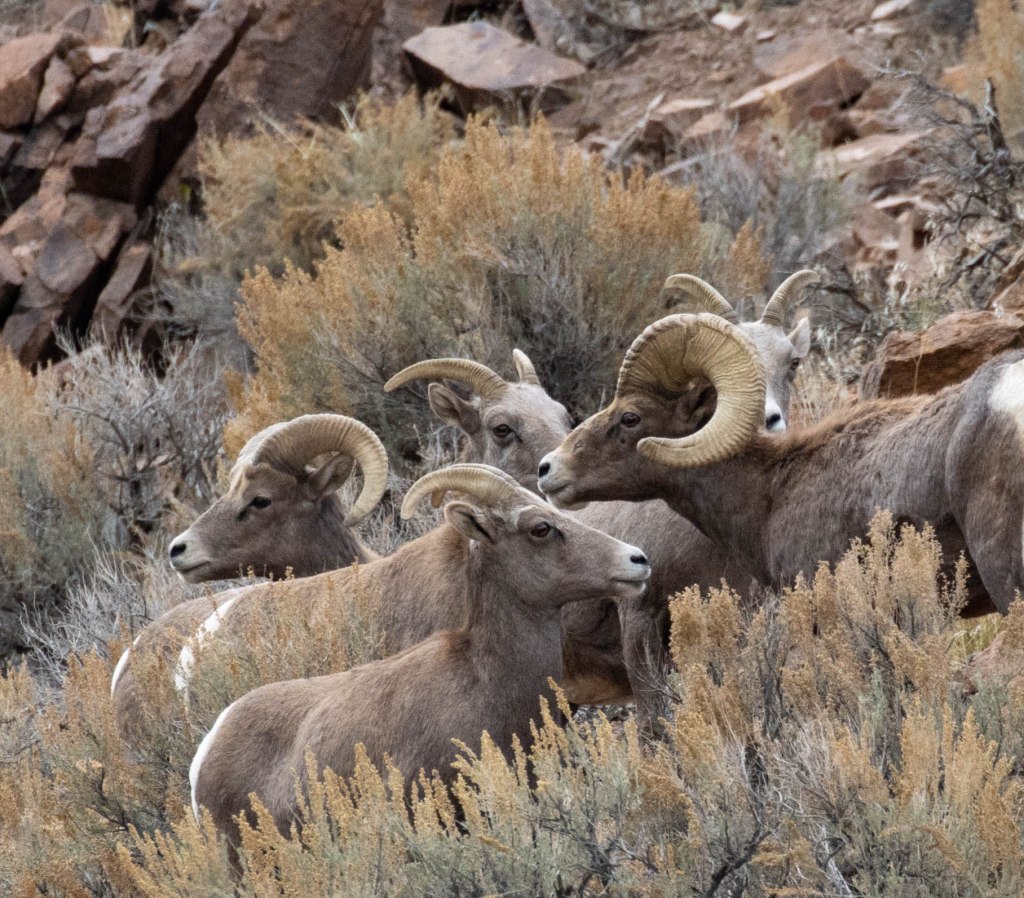
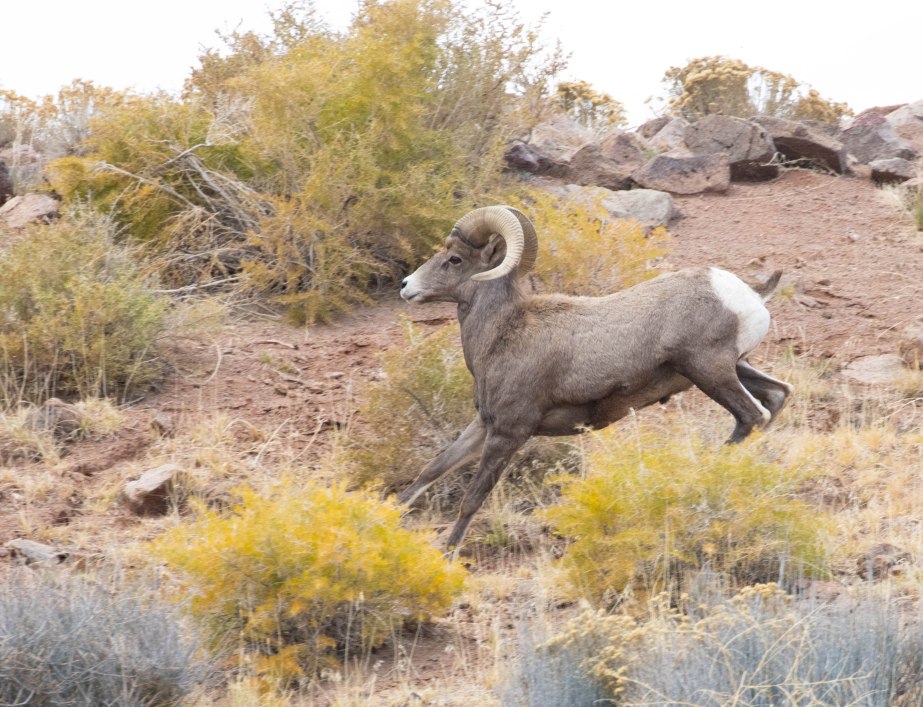
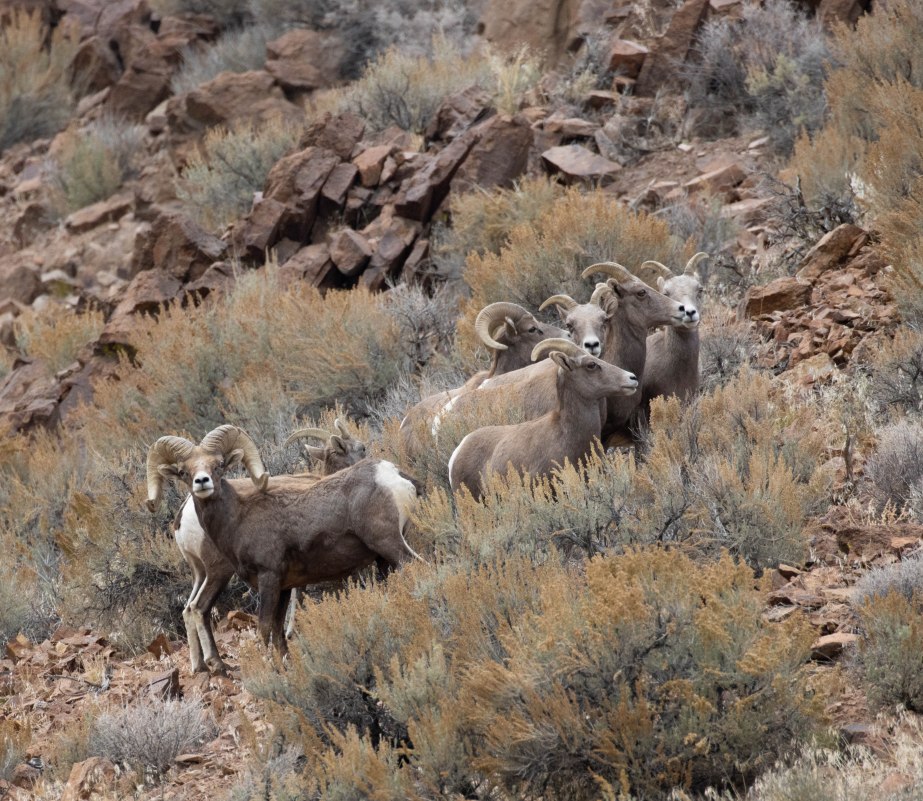
Desert Bighorn’s are a conservation success story in Nevada. From a low population estimate in 1960 of 1500 to 2000 animals they are estimated to be at 12,000 as of the summer of 2023. This is the direct result of careful management by the Nevada Department of Wildlife and the hard work of sportsman and sportswoman in organizations such as the Wild Sheep Foundation and Nevada Bighorns Unlimited. In the last 4 years populations have suffered from severe drought and disease but are still at healthy levels.
I took these photos in Central Nevada last November. Desert Bighorns have become a photographic obsession for me. They are majestic animals, marvelously adapted to their harsh environment. They can go for long periods of time without water, and they thrive in the steep, rocky mountains of the high desert. They blend into their surroundings quite well with their light gray coats. Even their white rumps, which most often give them away, are easily mistaken for rocks until they move.
Lack of water sources and diseases, most often passed on to them from domestic sheep, are limiting factors in the growth of Bighorn Sheep populations. The installation of guzzlers across the Sheep’s current and former ranges have been life saving for current bands and allowed for the expansion and maintenance of Sheep. Guzzlers are water collecting and storage devices of various designs that allow large and small animals and birds to have access to water across Nevada and other arid states. These guzzlers store rainwater and snow melt in cisterns so that during the dryer part of the year there is water available for animals and birds. Some of the larger guzzlers can be filled by helicopter drops of water in dire circumstances. Most of these are installed by volunteers from several sportsman, sportswomen groups in cooperation with the Nevada Department of Wildlife. All desert life benefits.
Hunting has little impact on the population as only around 180 tags are issued each year. These are highly coveted tags as it is a once in a lifetime opportunity for most hunters. I did receive a tag for the 2023 season and harvested a beautiful mature ram. I will tell that story another time.





























 Northern Desert Photography