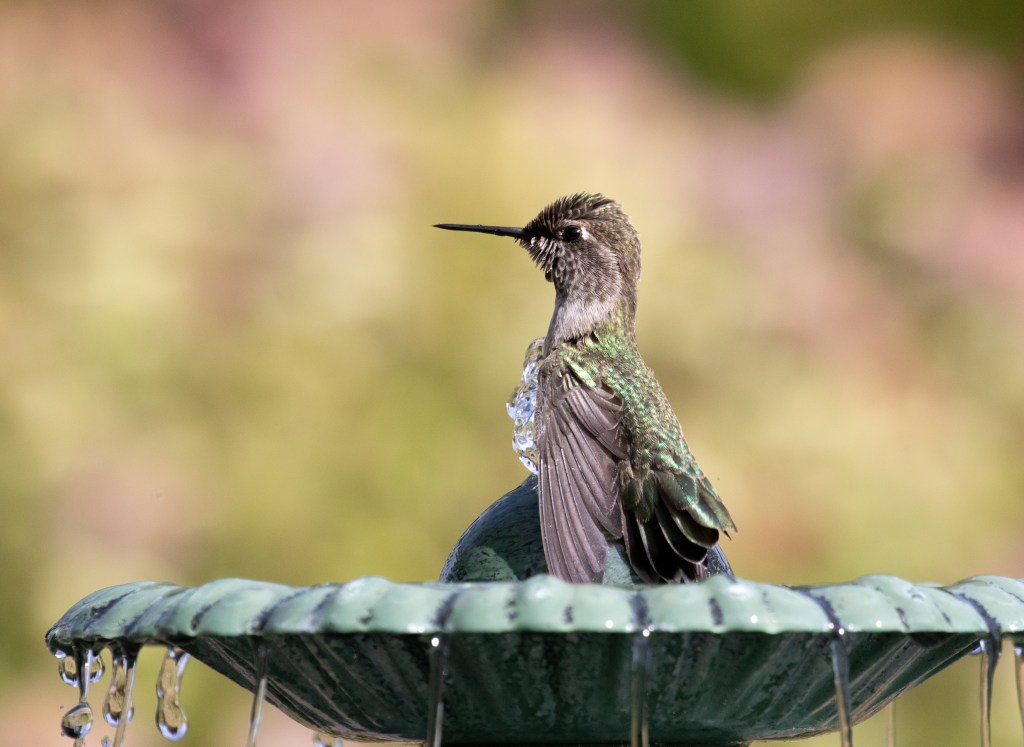
I had resigned myself to being satisfied with the photos I got of the drinking hummingbird when this happened!
This little guy spent a full 5 minutes buzzing around the fountain and it took several quick dips actually bathing. I’m going to post several photos in celebration. 🙂
I bought this fountain 3 years ago as people said hummingbirds found it attractive and would use it to bathe. Finches love it and use it often to drink and bathe in. I have only seen hummingbirds show rare interest in it and never when I had my camera. Finally I was sitting with my camera nearby when one drank from the bubbling top part of the fountain.
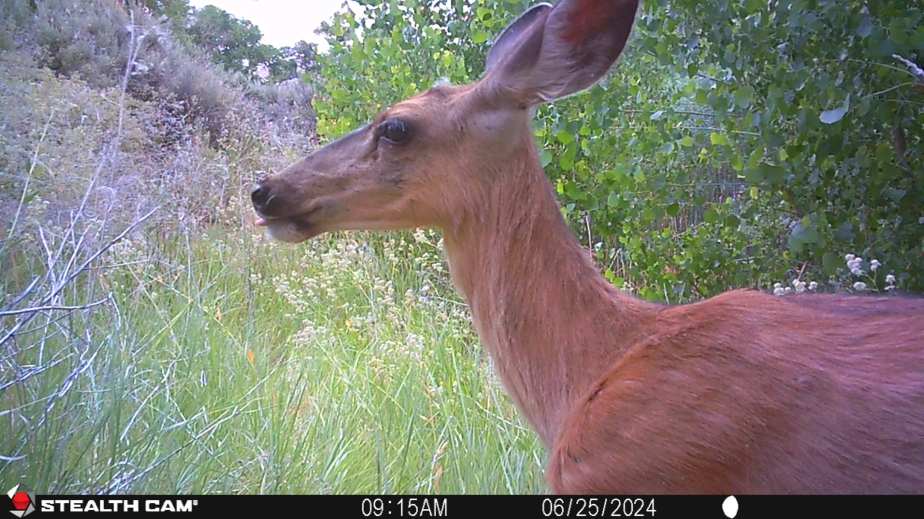
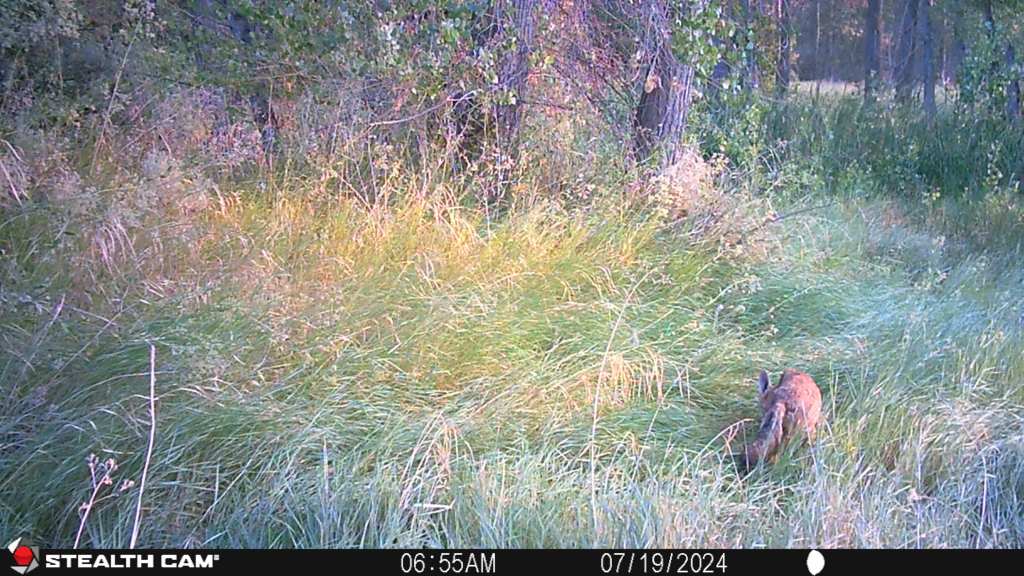
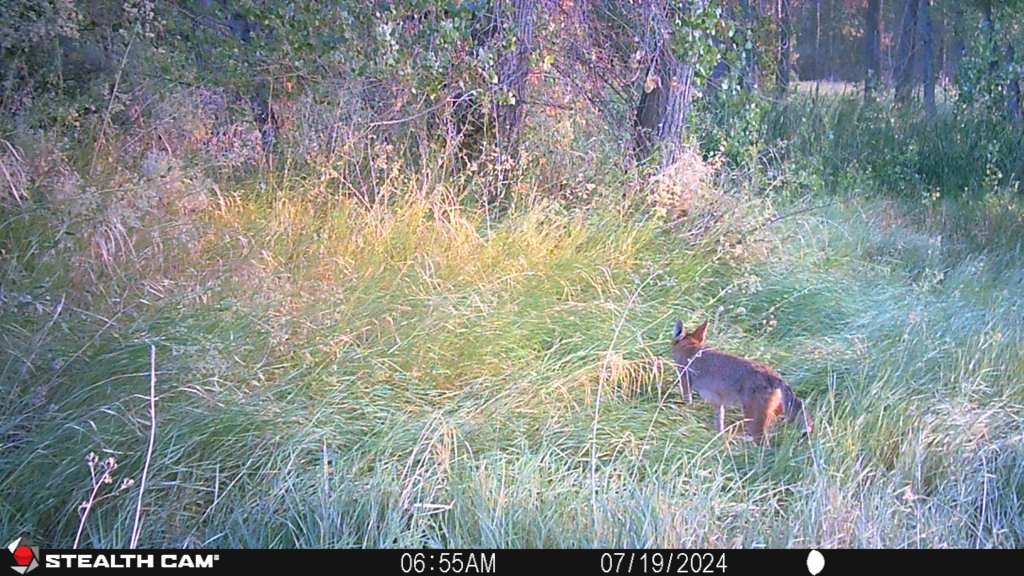
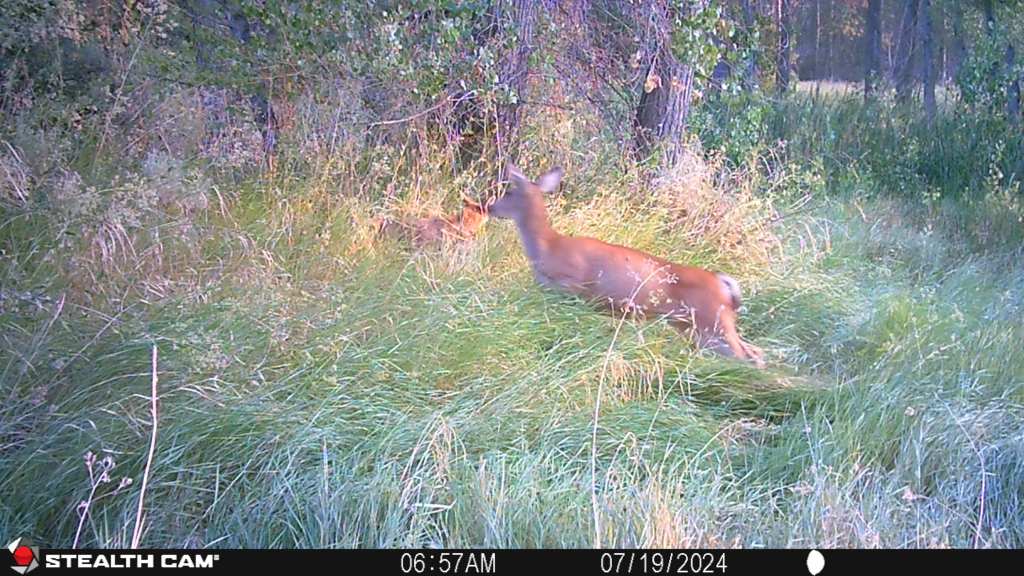
While going through the trail cam photos I noticed what I am going to say was a very close call. A coyote is stalking a mule deer fawn and the mom confronts him. I think this ended happily for the fawn. Lets look at the photos.
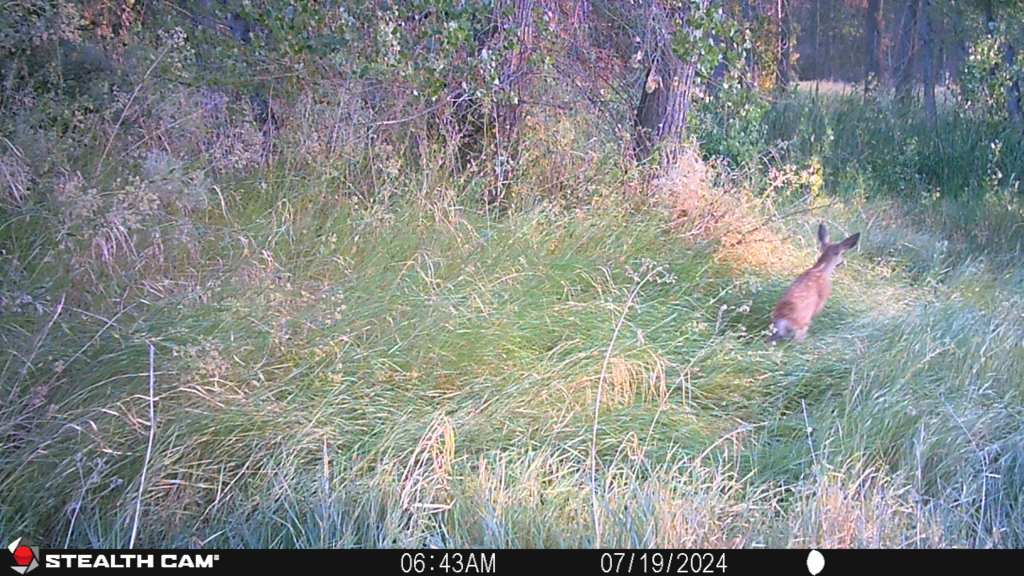
At 6:43 AM the fawn is passing through this grassy area. Mom must have passed through earlier. The camera never picked her up.
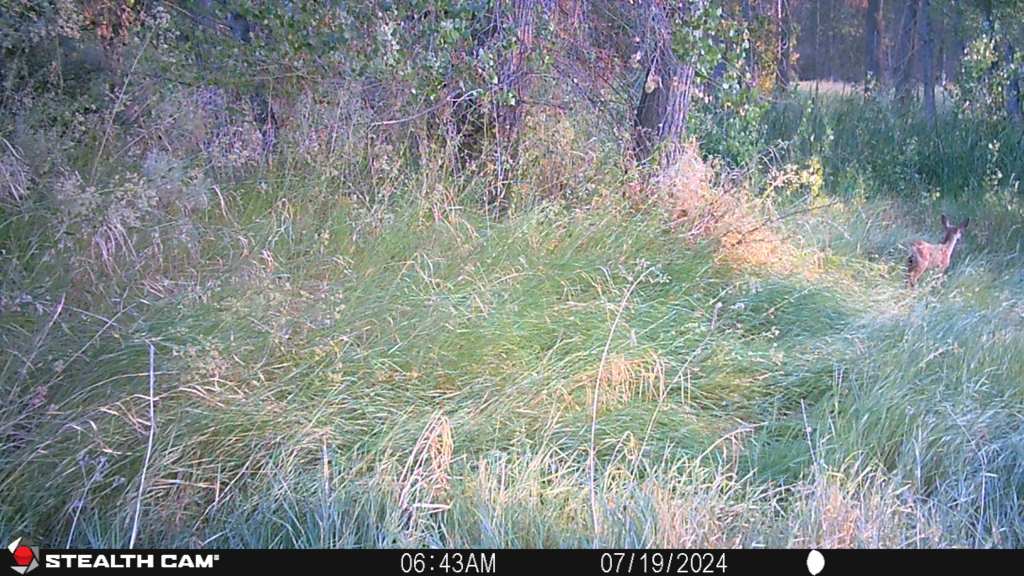
Same time and date the fawn is looking out front having moved a few steps forward.
Twelve minutes later a coyote is seen. He/she is sniffing the grass where the fawn paused and I think urinated.
Coyote is sniffing around and looking for the fawn I would guess.
Now you see the doe come back and apparently confront the coyote while the fawn I hope stayed hidden. I didn’t get anymore photos of this incident. I hope it turned out okay for the fawn. Coyotes do kill and eat fawns and yes, it is part of nature, but I have to root for the baby here. I think Mom saved the day.
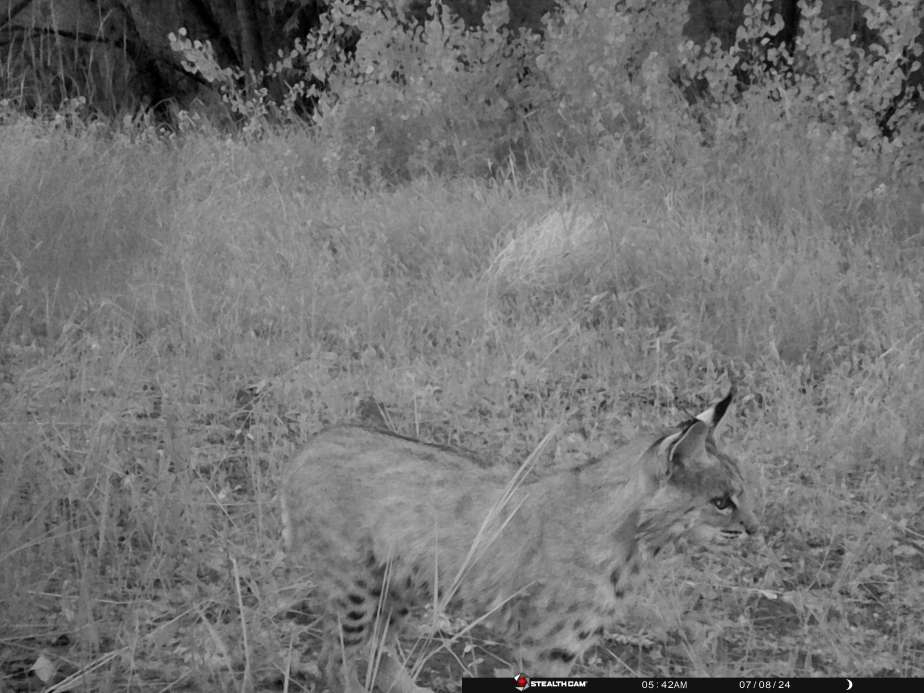
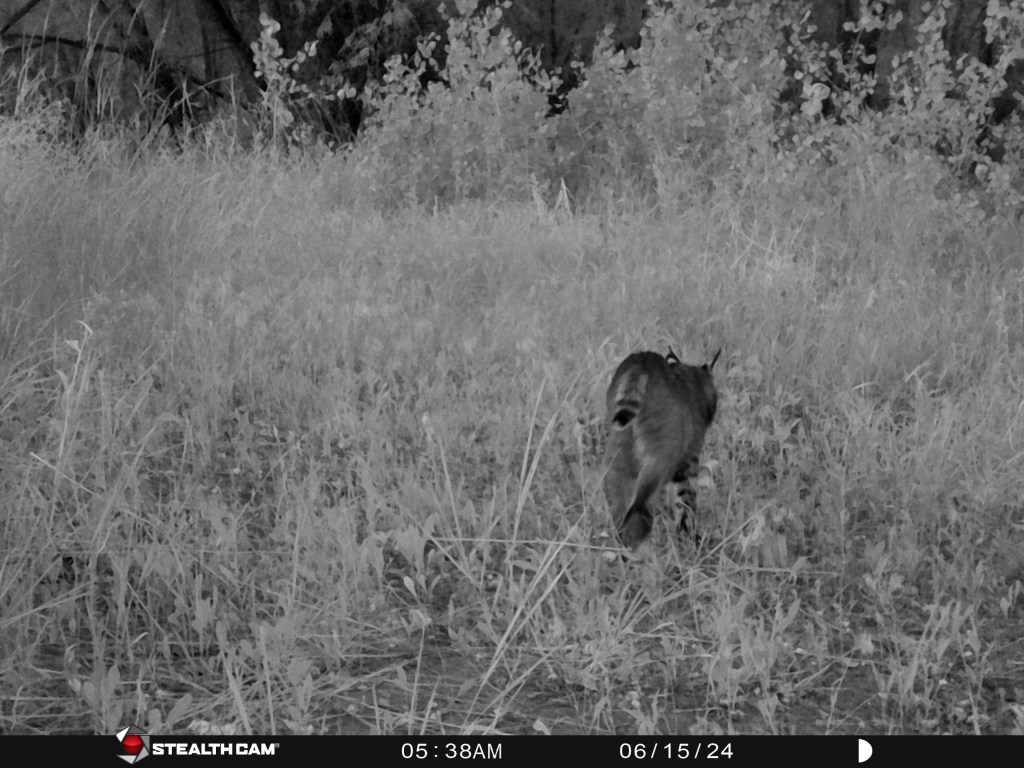
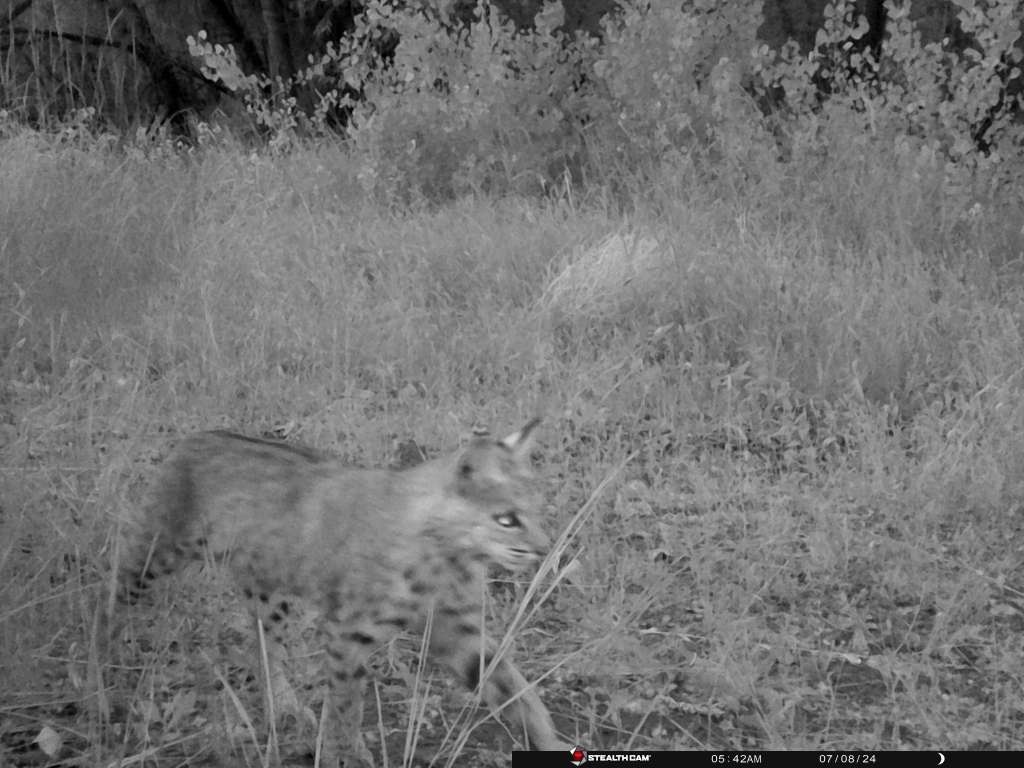
I seem to have one healthy Bobcat frequenting the area. I don’t know if it is male or female. I checked the cameras yesterday and in June. These are the photos I’ve collected over June and July. No kittens to be seen.
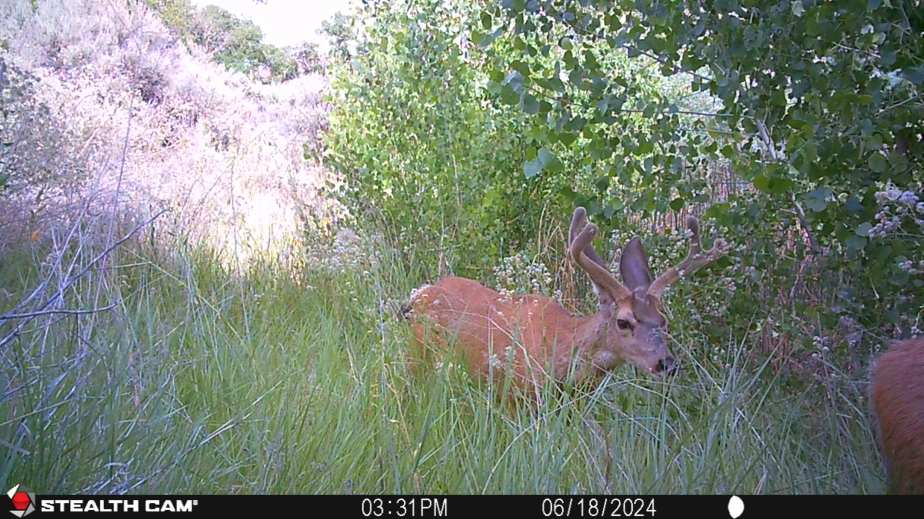
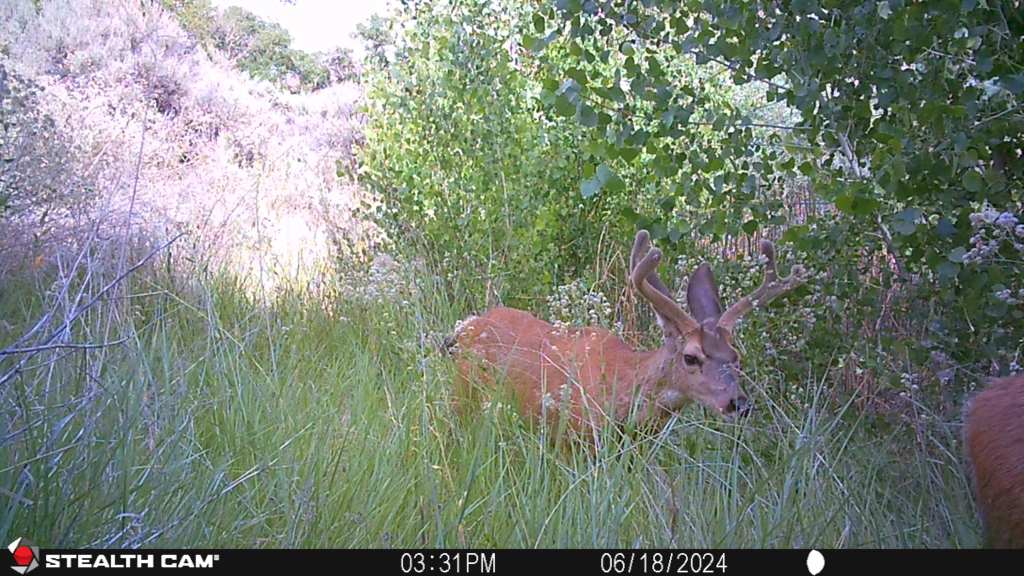
While the moms are busy nurturing and protecting their fawns the bucks are enjoying the idle life. This is an easy time of the year for them. The forage is good, it was a wet winter. It is quiet as people don’t venture out on the trails in the heat. In short, its summer and the living is easy. They are growing their horns and storing up energy for the battles and mating that will take place in autumn.
This looks like a small buck with what may be first year antler growth. He may end up with two spikes or may develop a split.
This one already has some height, and you can see the start of the split. Probably will be a tall two point. This buck is most likely a two year old.
This is a nice symmetrical set of horns growing. He won’t be huge, probably still just a two pointer with thick beams. He will have some size and I think he will be handsome come fall.
So far these last two photos of the same buck show the largest or highest horns. There are still 3 and a half months of growth time left. It will be interesting see how these guys develop as the time goes by.
Still no Mountain Lions showing up on the cameras. Last photos of them were taken in February. I am still seeing the Bobcat. No kittens with it but hoping to. Next post, photos of him or her.
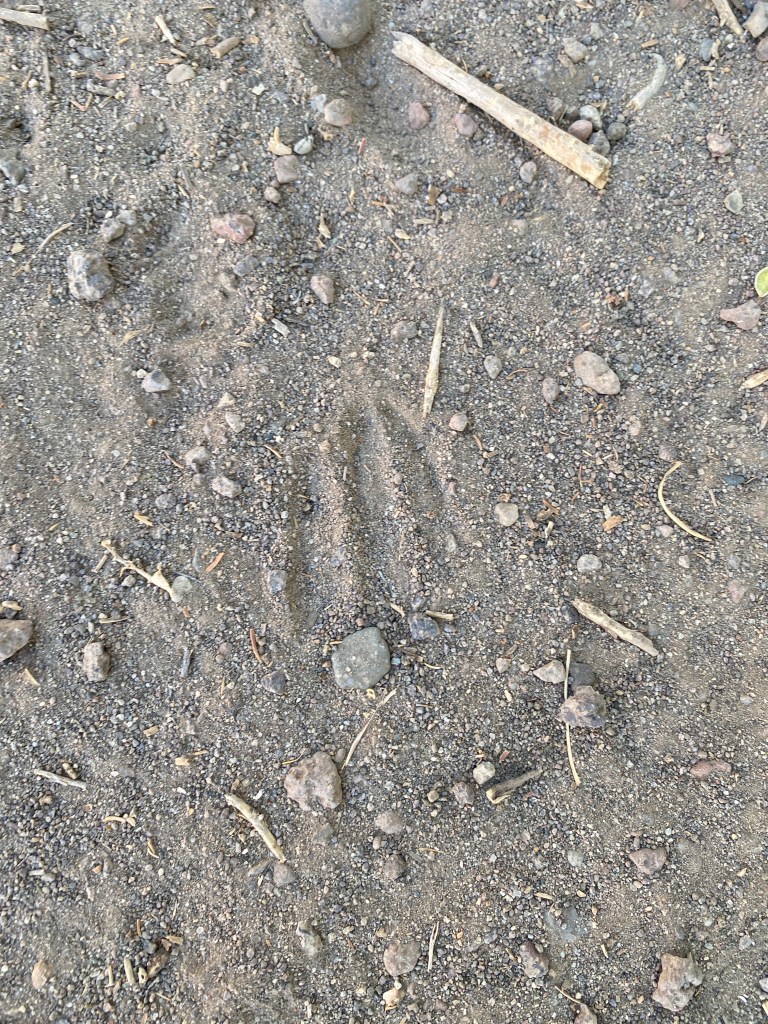
I am remembering why I didn’t leave the cameras out in the summer. It is unpleasant at 90+ degrees to walk out to them and retrieve the memory cards. Also, I forget how lush the grass growth is at the height of summer. Rattlesnakes are constantly on my mind as I tread carefully along the trails to get to the cameras. The sets across the river are going to have to wait as even with an early start its too hot to walk to them and back. Alright, enough complaining. As I walked along the trail yesterday morning I was watching for tracks as usual and spotted my first set of tiny deer hoofs in the dirt.
After seeing these I was excited to check the cameras and see if I had captured any newish fawns.
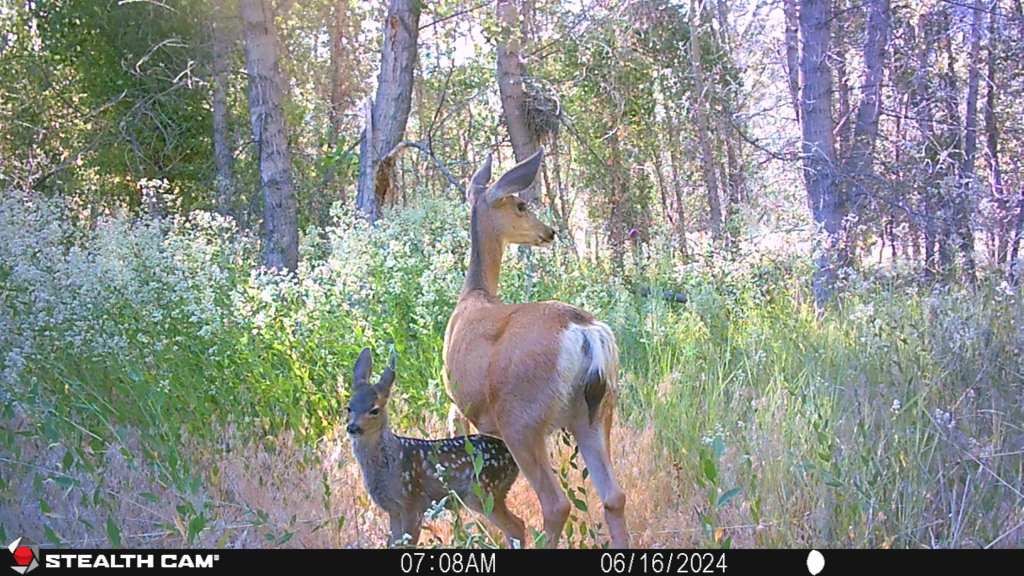
This little guy looks about two to three weeks old. I am using the cheapest trail cameras they make as I worry about them getting stolen. I think they take pretty good photos sometimes. This is a keeper.
I think these two may be twins. This is a common occurrence with Mule deer births.
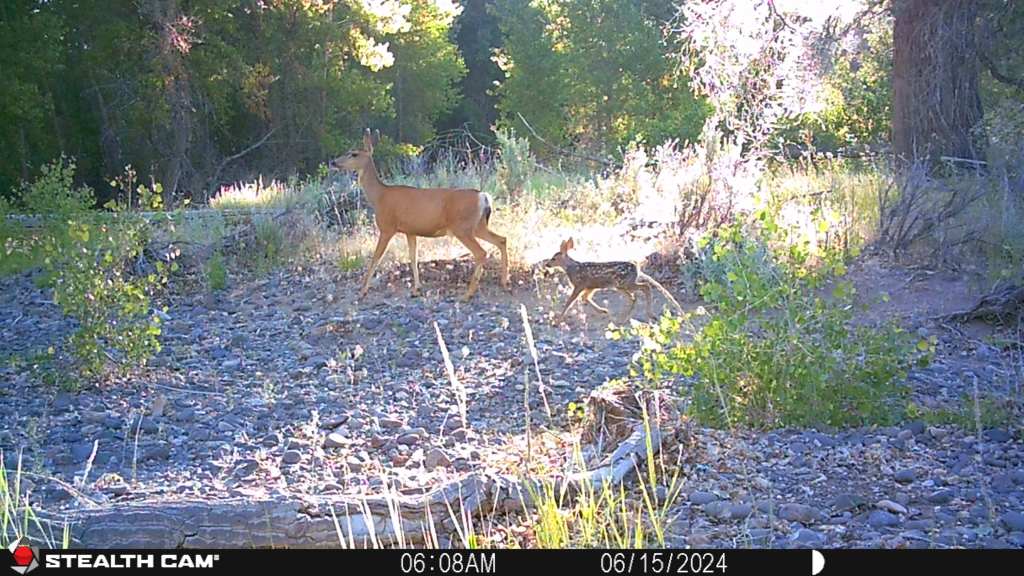
Mom and newish fawn headed to the river for a drink.
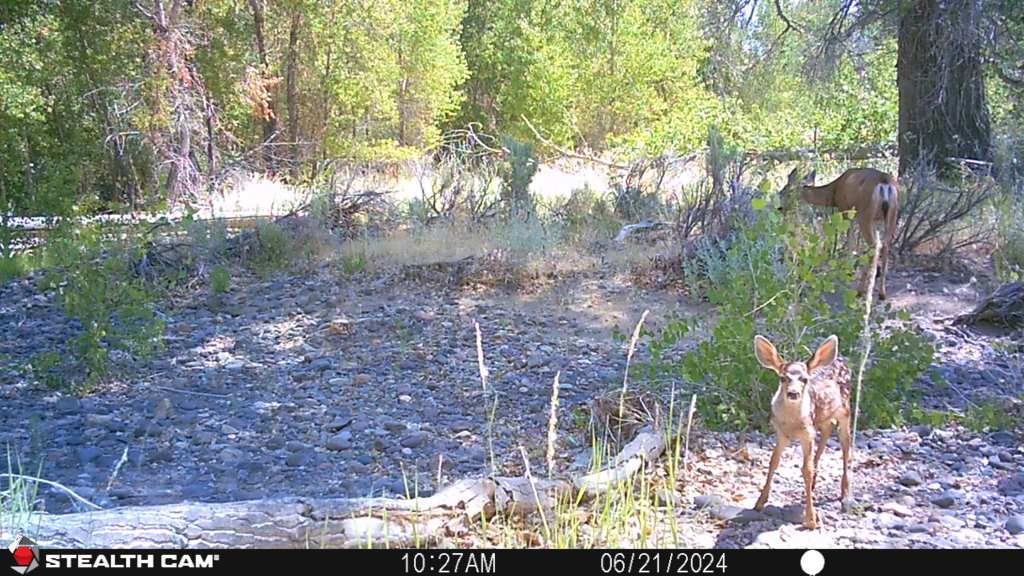
I think this little guy could hear the trail cam click. It is such a quiet sound, but even young animals have the wariness to pay attention to small details and sounds
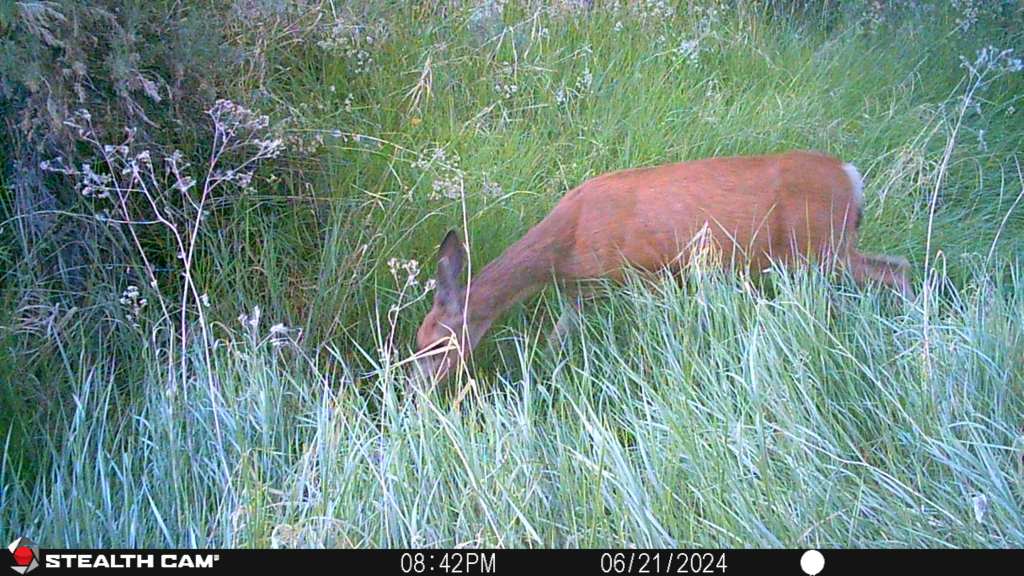
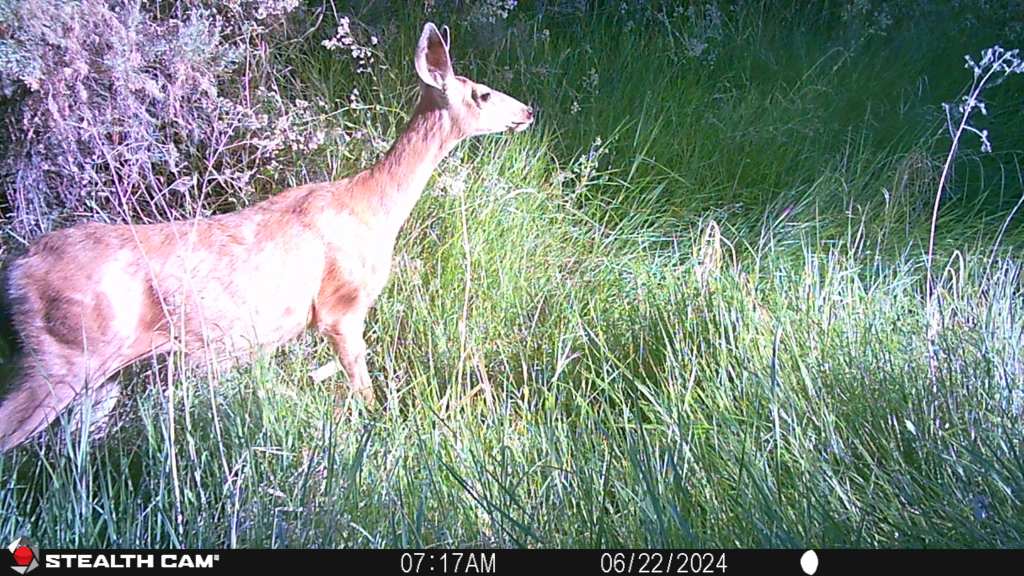
All the moms look healthy and well fed. They are sporting their reddish summer coats.
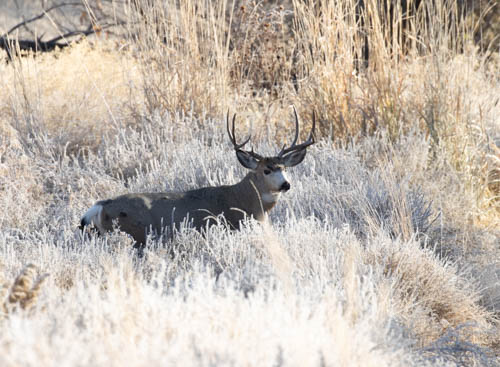
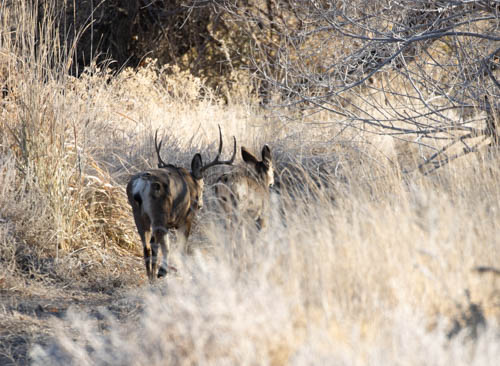
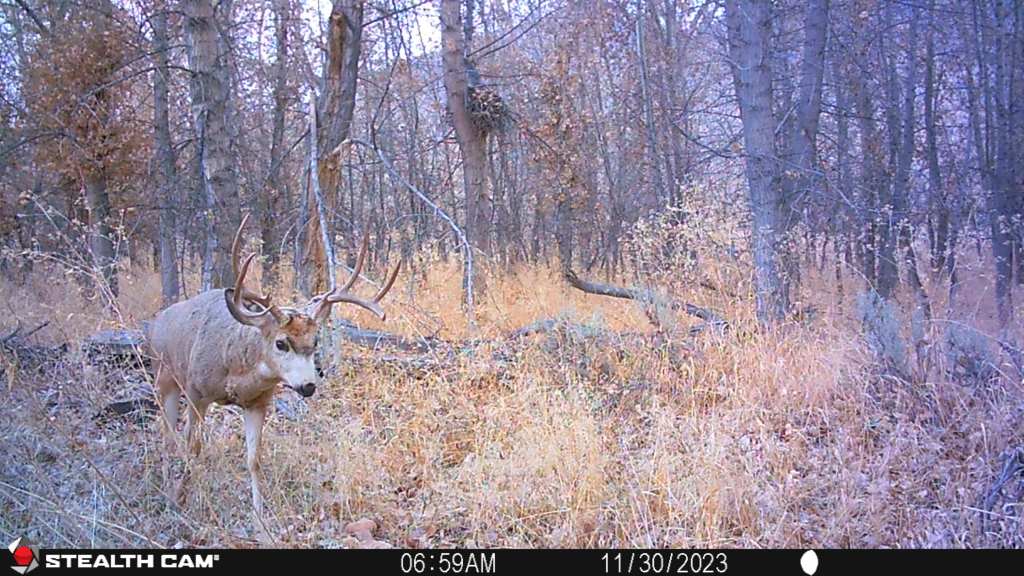
Last fall I started seeing this wide racked buck during the rut. He was one of the dominant bucks working the area. Not very creative, but I called him Wide as his rack was wider than any of the other bucks I saw. He was in great shape and he showed up on the trail cameras throughout the autumn. I also ran into him on several occasions while checking the cameras and got these two shots of him in November.
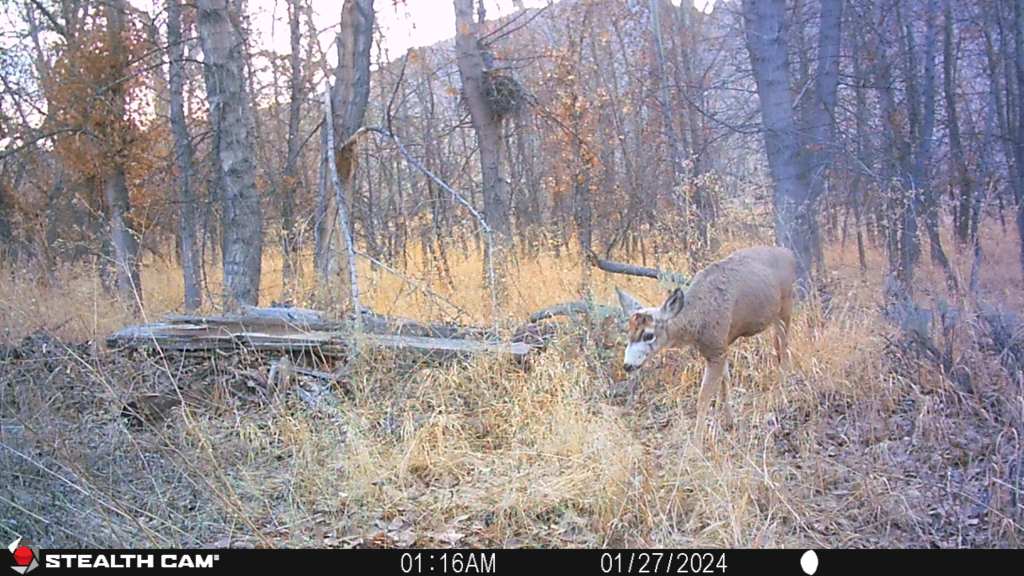
As the winter went on, the photos of him I saw became alarming. He was easy to recognize due to his distinctive horns and then after shedding his horns, because of his poor condition. Bucks often are exhausted and in less than tip top condition following the rut, but I had never seen one look so terrible.
In this picture taken in April he looks much better and seems to be recovering. I was convinced he was not going to survive into the spring. It will be interesting to see how he looks in the fall.
I decided to place more trail cameras yesterday and specifically I wanted to place them on the other side of the river. Because of access issues this means a long hike to a foot bridge. By the time it was all said and done it was a 10 mile hike out and back. I wish my pack had been lighter. I probably won’t be checking the cameras on the far bank as often.
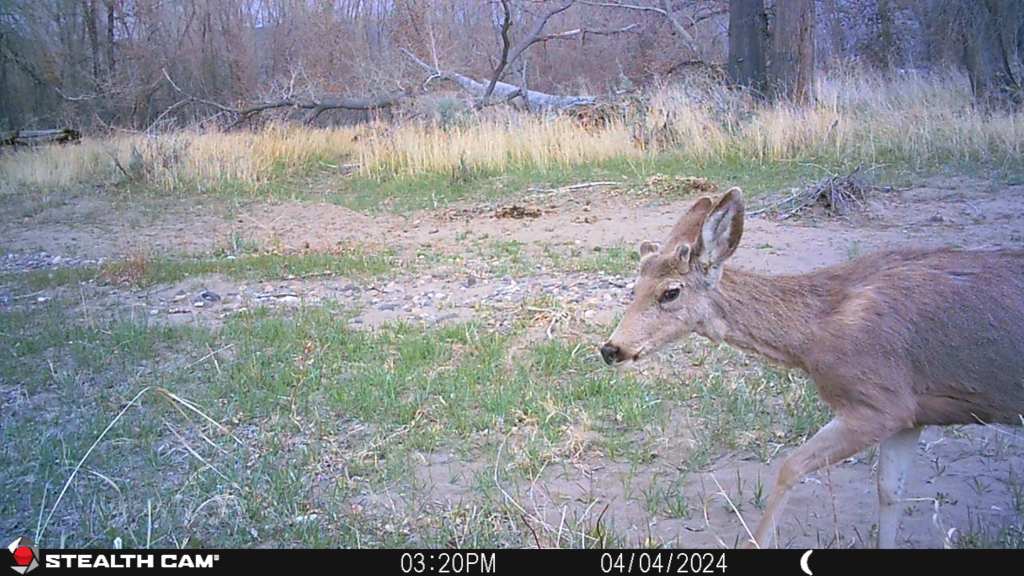
I saw a small herd of mule deer and noticed a buck that has been showing up often on the trail cameras. He is already displaying that natural shyness and hang back quality that bucks show more readily than the does. All the deer looked healthy and are starting to sport their summer reddish coats. In the fall and winter their coats are grey. No fawns yet as it is too early. Maybe in another month the little ones will be tagging along.
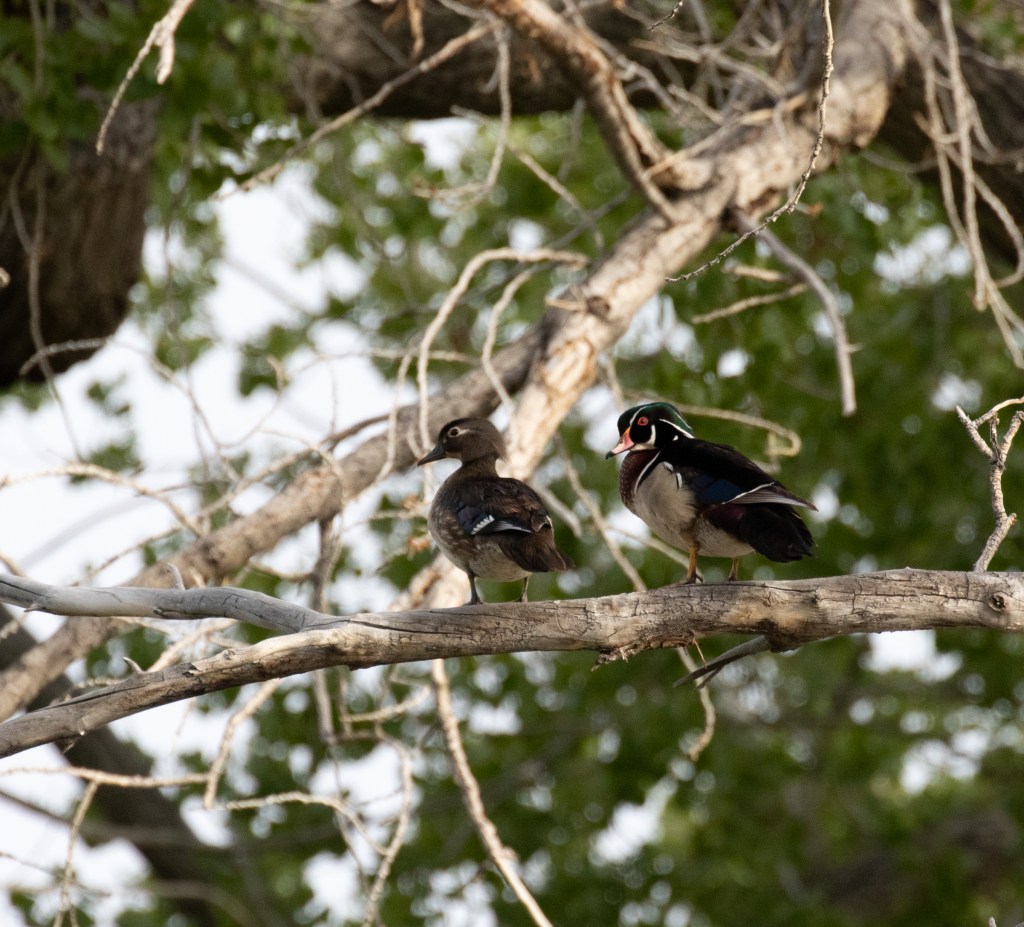
I was amazed to see two pair of Wood Ducks quite high up in a tree together. I hope they are nesting in the area. I would love to see them with ducklings on one of the several ponds.
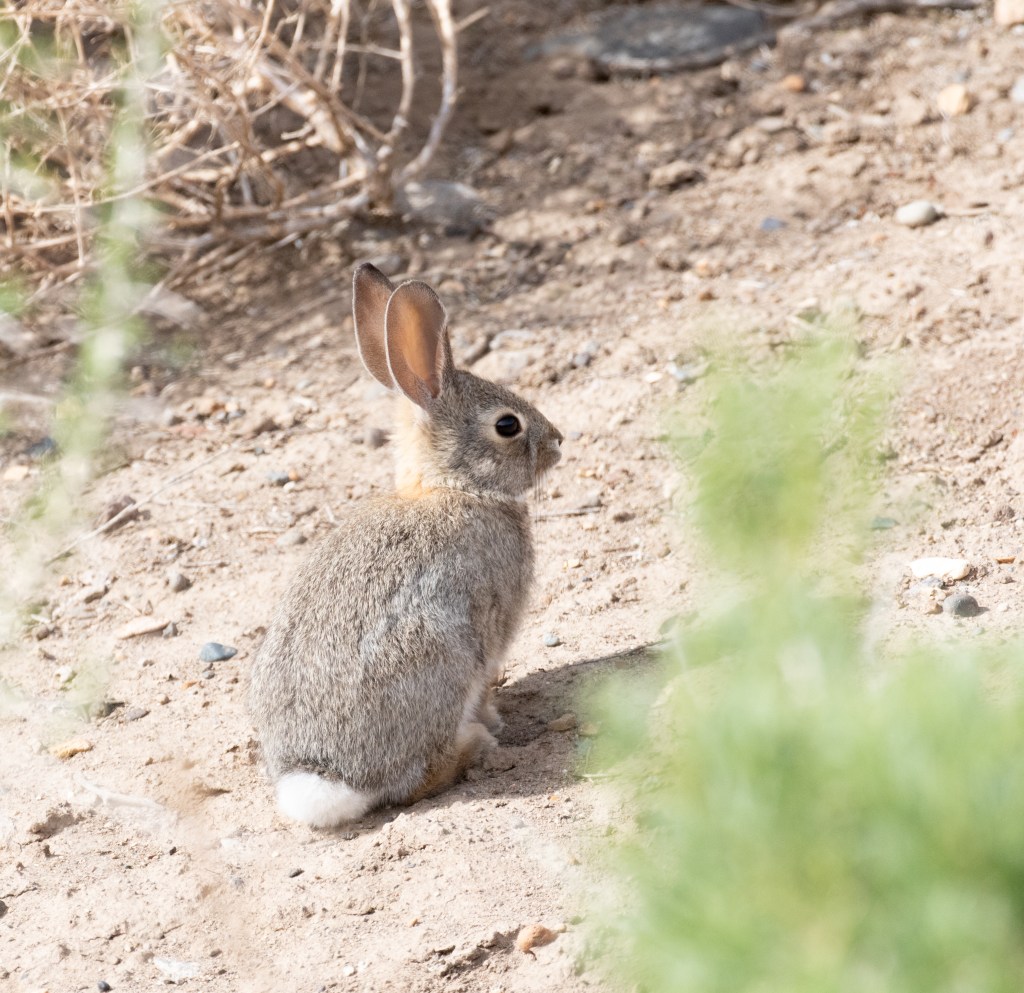
This little bunny accommodated me by sitting still long enough for a photo. The rabbit is displaying it’s cotton ball tail nicely demonstrating its apt name – Cottontail.
I walked the dog early this morning so I could get out to the river. I sat for a while along the path the Bobcat takes in hopes of seeing it in person and getting some photographs. No luck. It’s going to take a lot of patience to ever get an in-person sighting. No walk is ever a waste of time. It was lovely out there today.
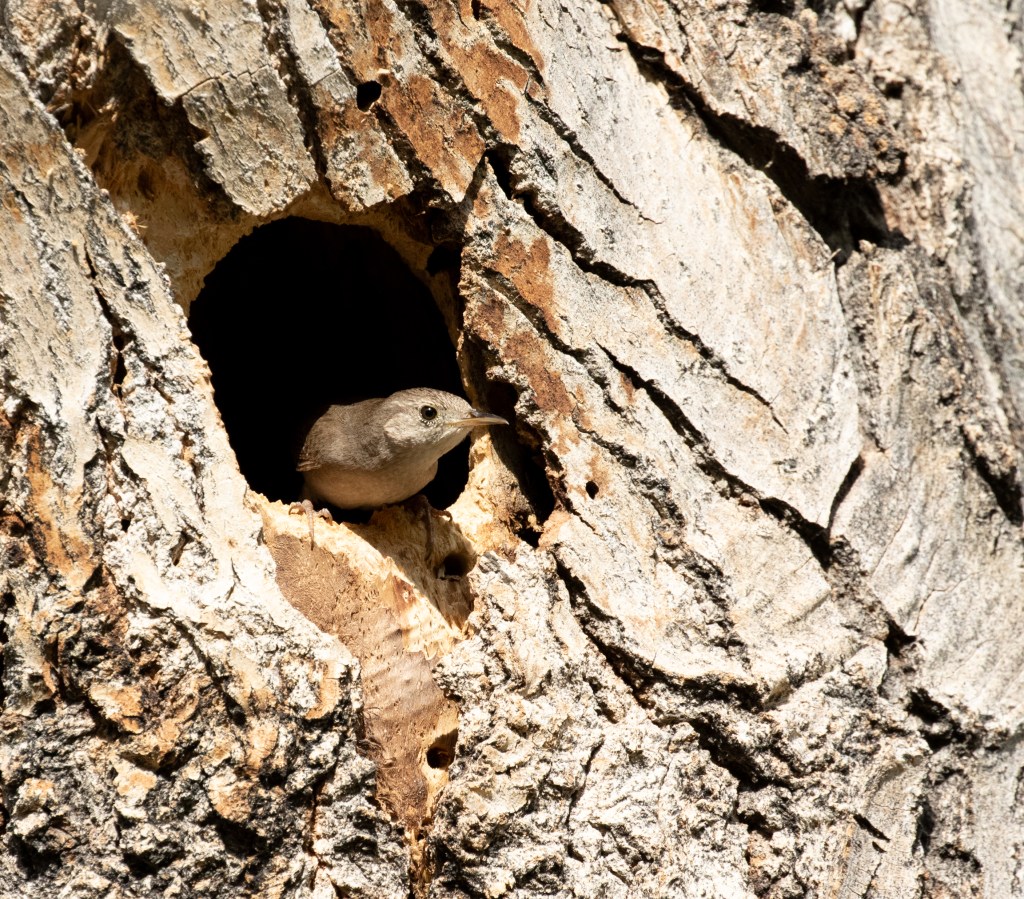
This House Wren and a Northern Flicker seemed to be competing for a hole in a large cottonwood tree. No doubt the Flicker made the hole and the wren was bug hunting inside.
It is difficult to get close to Flickers so I was pleased to get these photos.
On the way out I caught sight of this wild horse across the river. I have seen him a couple of times before in the distance. He is a mature stallion and looks quite healthy. It is unusual to see feral horses alone. Since he is older, I can only assume he has lost his mares to another stallion. Younger males without mares hang out in bachelor bands. Horses are so social that this kind of behavior is out of the ordinary.
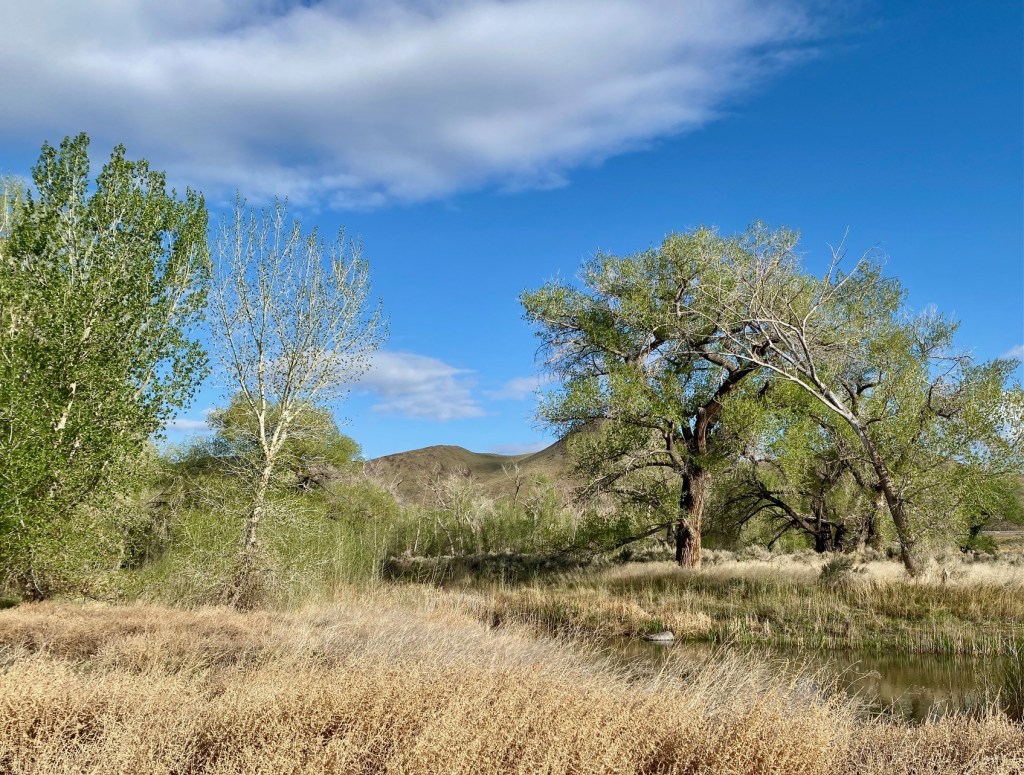
This is a typical landscape of the area I am walking in. The cottonwood trees are getting serious about leafing out now. Small ponds like the one in the foreground are starting to fill up. The river is running fast and full of snow melt from the Sierra Nevada west of here.
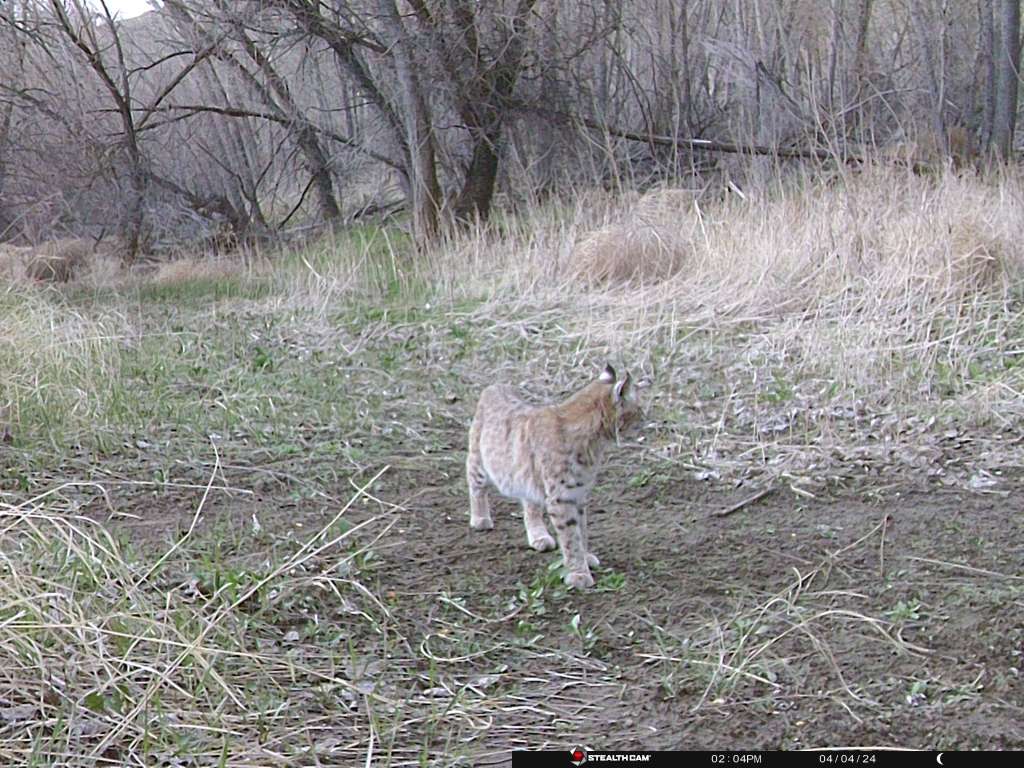
I checked my cameras yesterday after leaving them out three weeks longer than in years past. No Mountain Lion photos for approximately 6 weeks now. The Bobcat or Bobcats remain quite active. I think I am seeing two different Bobcats. One appears to be smaller and lighter colored.
The Bobcat in the first two photos appears to be a lighter color than the one posted below. Maybe its just the light. I don’t know how to tell them apart.
The Mule Deer bucks are already sprouting horn growth. The rate of growth will be another interesting observable visual over the next few months. I am looking forward to seeing fawns show up soon as well.
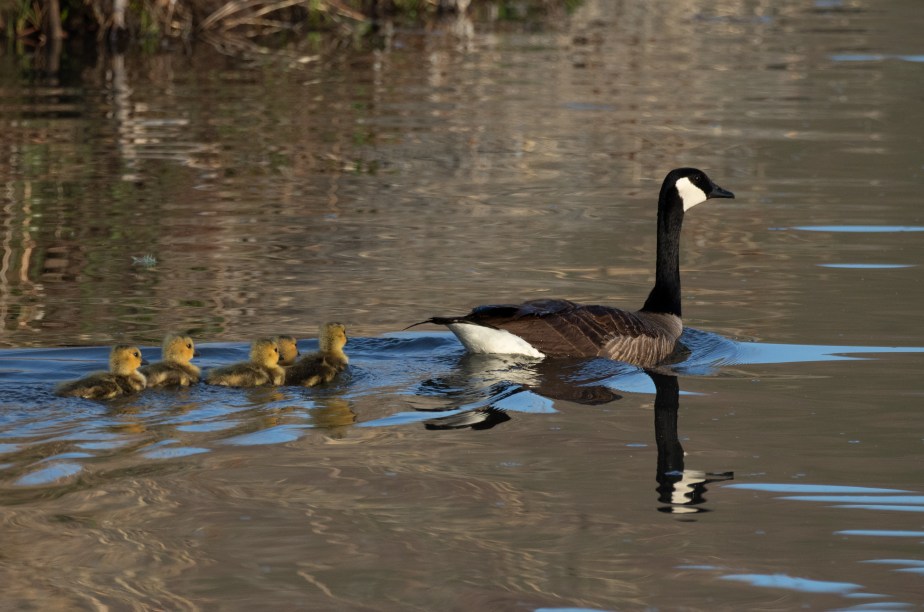
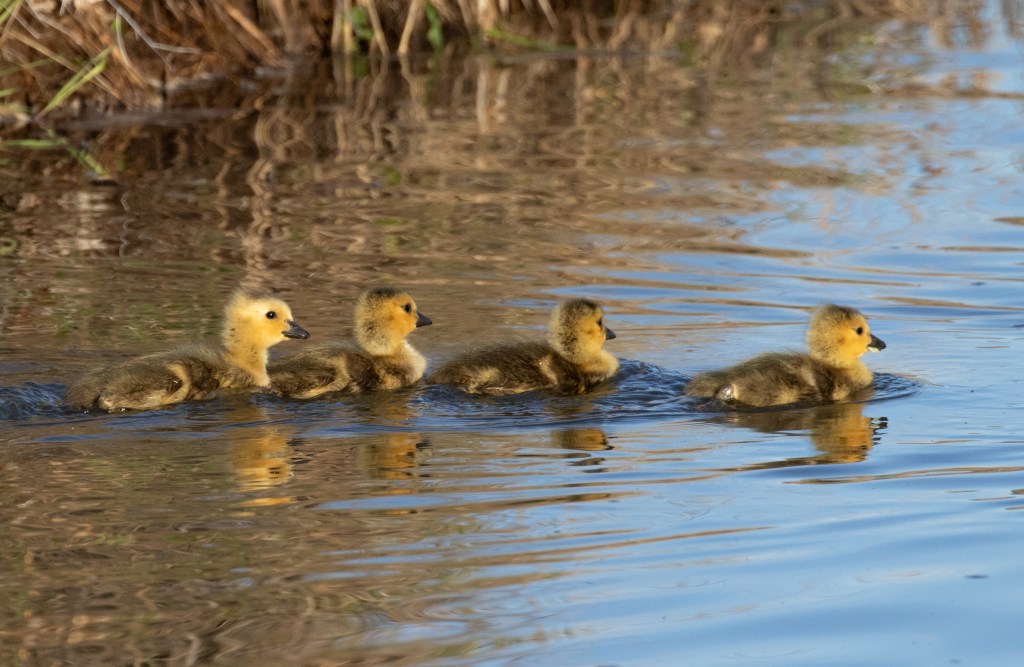
I always carry my camera with me when hiking into this area and I did get some geese photos. I saw a beaver as well but didn’t get any photos of it. One pair of geese already have a healthy brood following them while others are just setting up housekeeping.
What a difference a couple of weeks makes. The last few months it has been so quiet out there. Winter silence has passed. The bird song, quacking and honking was ever present yesterday as I made my way along the trails. Tending the cameras year-round will motivate me to make more trips and hikes along the river. It will be interesting to see what wildlife I spot in person over the summer.




























 Northern Desert Photography