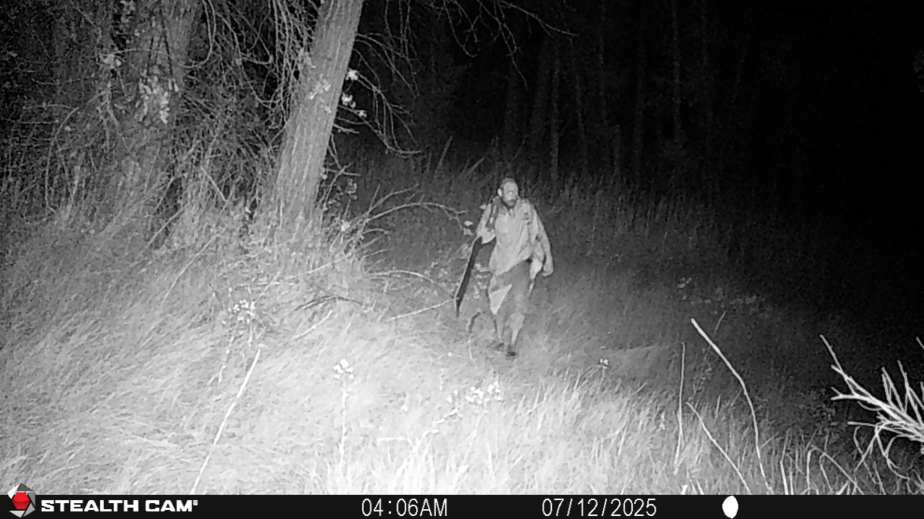
I believe that I have mentioned that I am scared of the dark. Even when looking at trail cam photos that are taken at night, I have a little dread of what I might see. So, imagine my feelings when this guy showed up on my cameras. What he was doing out there between 4:00 AM and 4:30 AM I will never know. I can’t imagine wandering around in the dark without benefit of any light source in this area. He doesn’t look like an avid outdoorsman and honestly looks pretty creepy. I am also sure he had no idea of that there are so many mountain lions in the area.
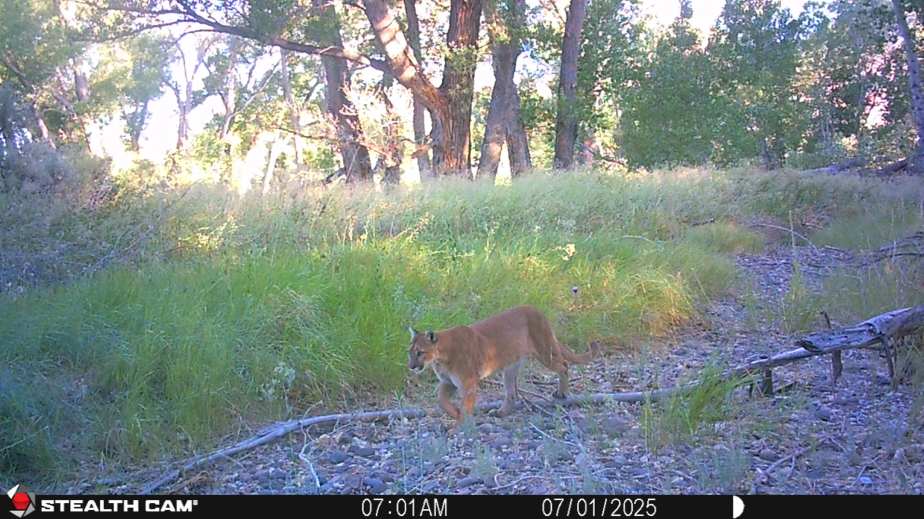
I used to go out to check cameras right at sunrise. No more. In addition to the suspicious activity with humans, there are now 6 mountain lions I have showing up on cameras. Momma lion with her half grown 3 kittens and two of her full-grown kittens from last year who are on their own now.
Monitoring the area for the last 5 years I have never gotten daytime photos of the lions until this summer. When the cats where entirely nocturnal I was more comfortable. Now they appear to be bold enough to be seen at any time of day. I am waiting until midday to retrieve my memory cards, staying hyper vigilant and upping my game from bear spray to wearing a sidearm. I think I will carry an airhorn as well as it could be a good deterrent.
Every summer my sisters, my mother, and a changing cast of friends and cousins gather in our hometown. We rent several cottages on the lake we grew up on and for a week we pretend we never left our community. We share meals and memories, catch up and chill out, reconnect and dream of moving back home. None of us ever will but we daydream about it. My sisters fly in from New York and Alaska while one makes the shorter journey from Spokane. I drive 900 miles one way because I like to drive the back roads and look at the country.
After several years of making the drive in an exhausting one-day drive, I decided to break it up into two days, make some short side trips and take some photos if opportunities arose. I’ve settled on my favorite route which takes me through some of my favorite areas in Eastern Oregon and northern Nevada. After saying goodbye to the Interstate at Winnemucca my path takes me through Denio, Fields, Frenchglen, the Malheur Wildlife Refuge, Burns, Seneca, John Day and Pilot Rock. Two lane highways and small towns all the way to the Canadian border.
Because of the more leisurely pace, I could stop and take photos of the wildlife along the way. What follows is an eclectic collection of some of the critters that wandered into my field of view.
After about 5 years of monitoring the area with my Trail Cameras, I finally got daytime photos of the Mountain Lions. It was a jackpot of photos so forgive me for sharing probably too many of them. It looks like Mama Lion has said farewell to last year’s mostly grown kittens. She now has 3 healthy half-grown kittens following her around. They actually lay down in front of one of the cameras and relaxed, played around and groomed themselves.
I was thrilled to see all the excellent daytime photos but was also alarmed to look at some of the times stamped. They are pretty much active in the area at some of the very times I am out grabbing the memory cards out of the cameras. It has been very hot and not so many people are venturing out there during the day which explains the Lions unusual daytime activity.
I hope the fawns can avoid the cats, but I am sure with three mouths to feed some will undoubtedly fall prey to the Lion family. One of the photos shows a kitten with a deer leg in its mouth. By the size it looks like a mature deer, but it is inevitable that the Lions will take a toll on the fawns.
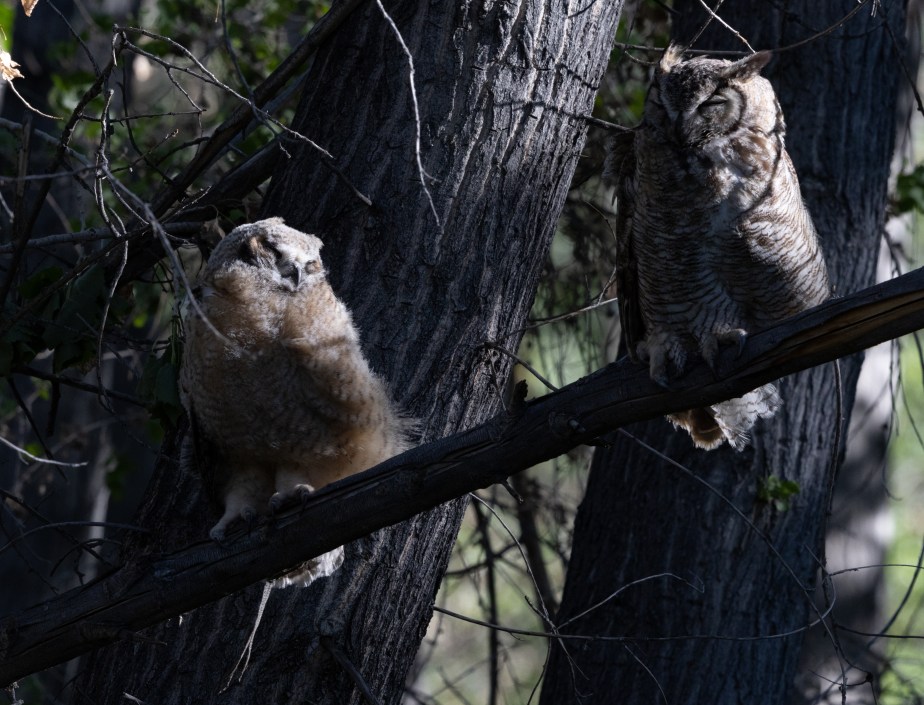
This spring I encountered Great Horned Owls both in person and on my trail cameras. An owl family set up housekeeping near my camera route. On a particularly windy day the mama owl and baby roosted low enough in the trees to avoid the gusts and I was able to get some photos though the lighting was bad.
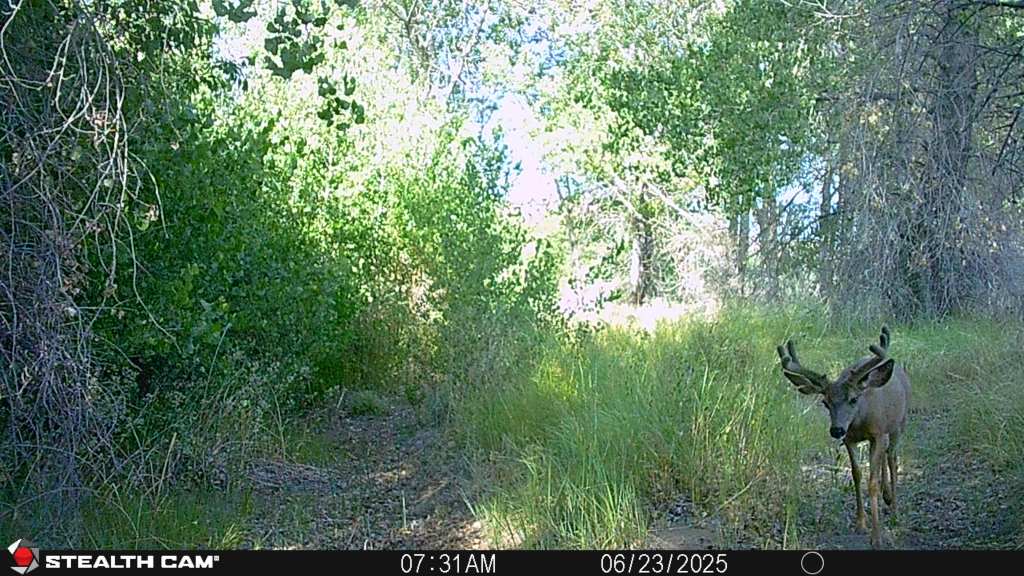
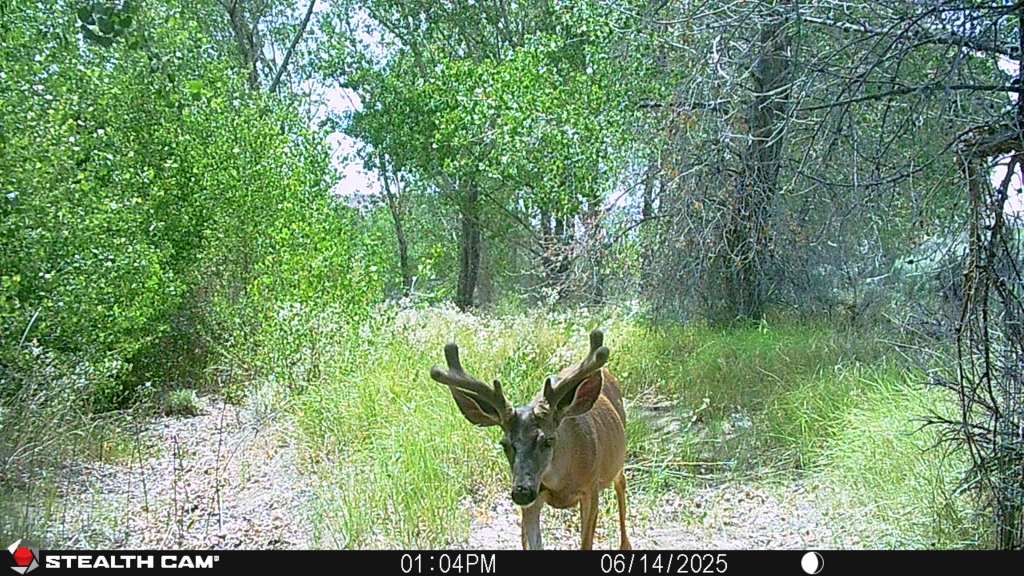
Lots of fawns showing up on the trail cameras this summer. It looks like the first week of June is when most of them are born. I am seeing at least one set of twins which is not unusual for Mule Deer. I caught some interaction between bucks and fawns which is interesting. More bucks are hanging out with does through the summer than I have seen in the past. They usually break away into bachelor groups until the fall. Animal behavior is always interesting.
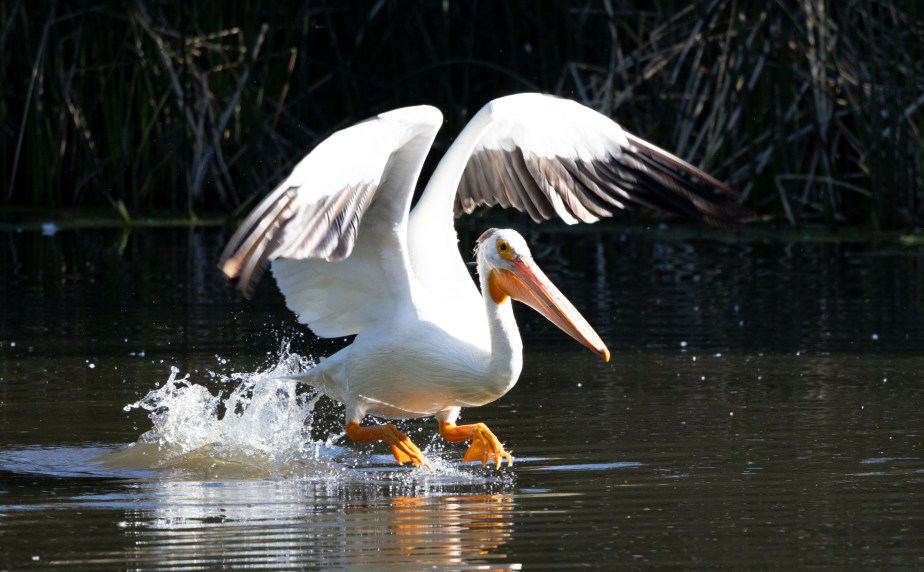
Living in the desert, a long way from the ocean, it is always a bit of a shock but a pleasant surprise to see American White Pelicans return in the Spring and Summer. I run into them on the river and lakes in the area. There is a large breeding colony on Anaho Island in Pyramid Lake.
I haven’t posted trail cam photos for a while as I have been busy with my new camera equipment. I have been checking them regularly and am excited to see more bucks showing up than at any other time this early in the season. I usually only have a few small bucks appear during the summer and the big ones seem to hide until autumn romance time. I am also seeing lots of fawns and at least one set of twins. Here are a few of the most recent trail cam pics of bucks. Some look like they may have some decent antlers going into the fall.
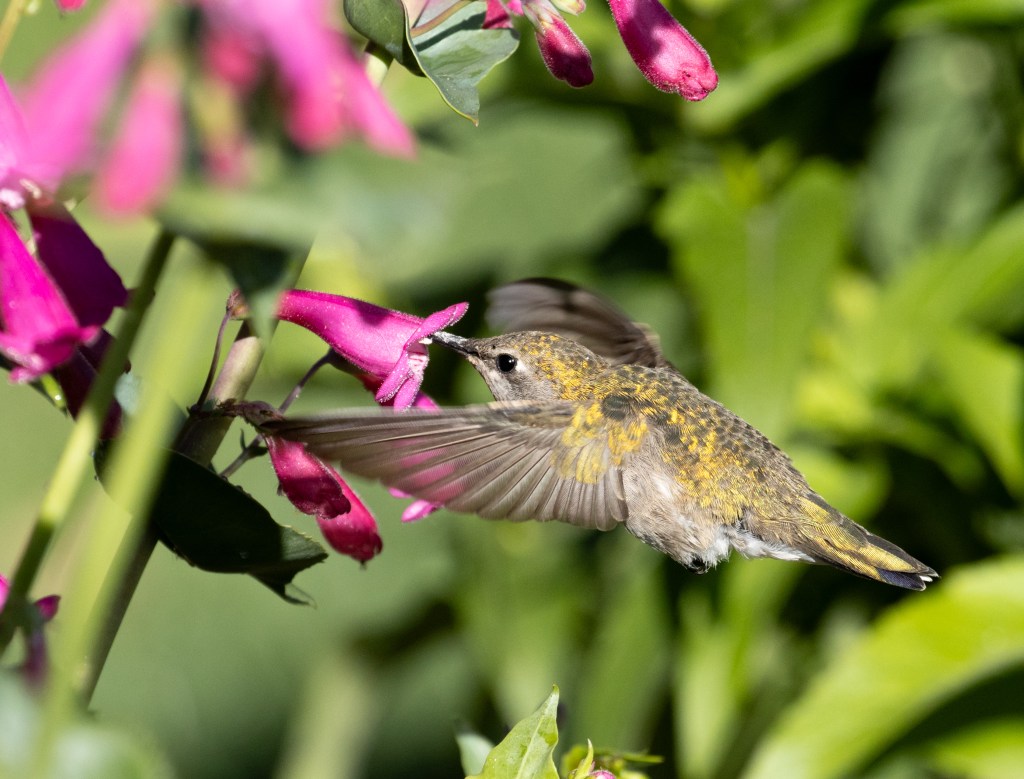
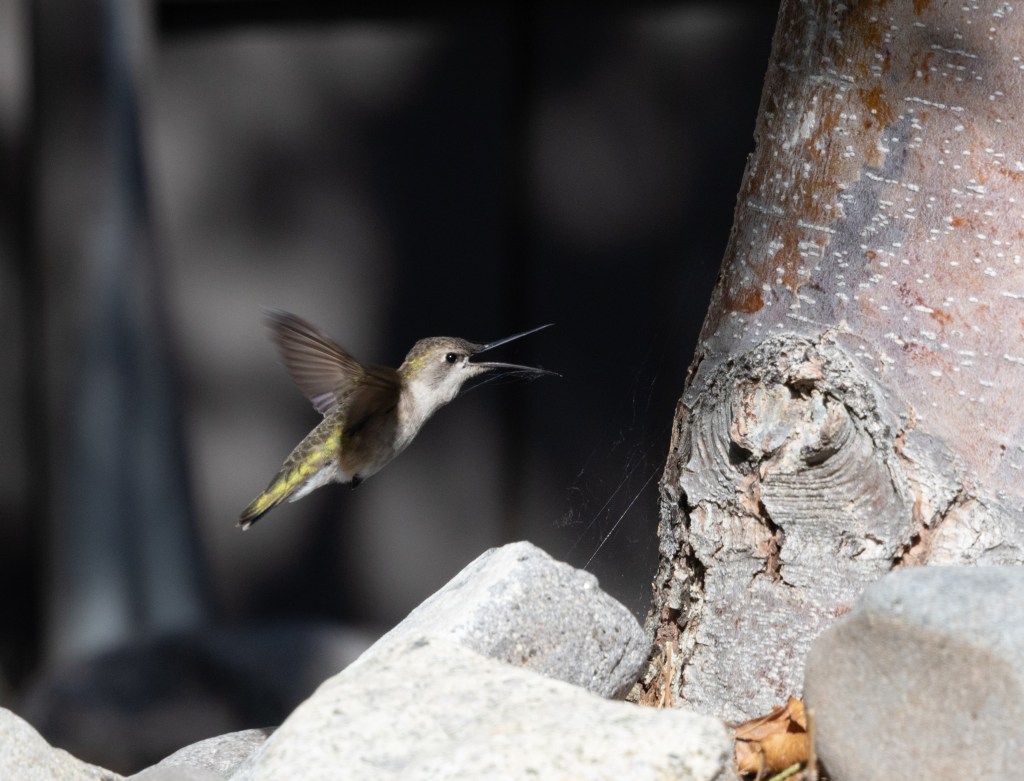
I am continuing to fine tune my hummingbird garden and have planted some early blooming flowers. This is the second year I have had this pink bloomer in the garden. I can’t remember what it is called but the Hummingbirds are loving it. Some of my plants didn’t make it through the winter so this one with plentiful pink bells is providing the only flower nectar at this time. I have feeders out to help the birds, but I am not keen on photos of birds and unnatural feeders.
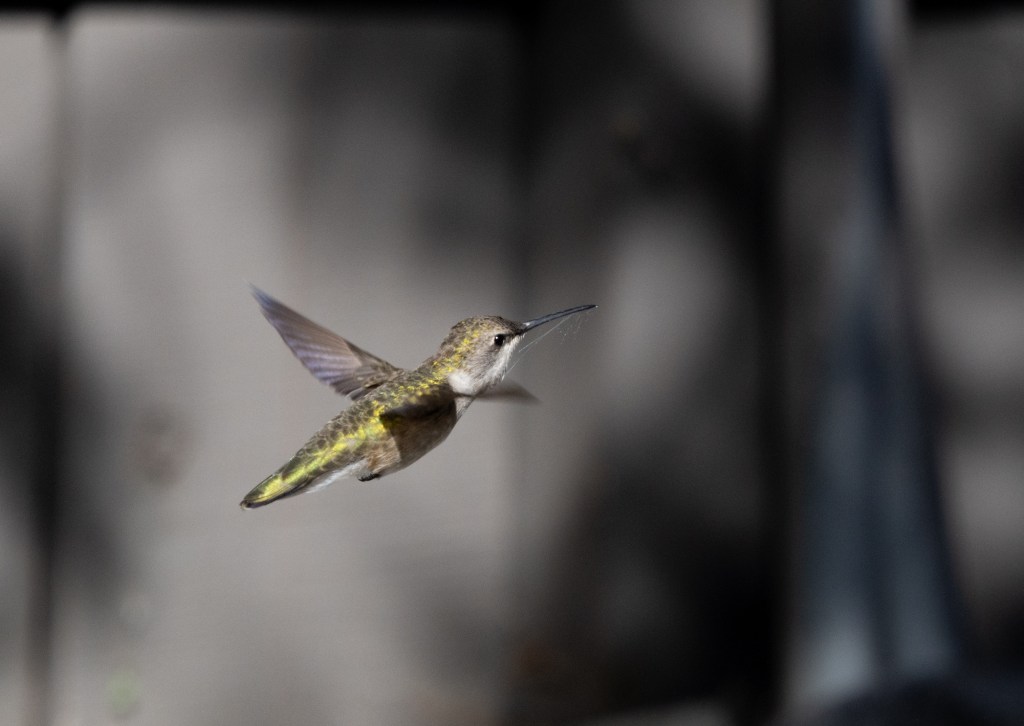
August is the best month with the multitude of the Rufous variety that migrate through here. At this time and into mid-summer I have to work harder and wait longer to get photos of the locals, Anna’s and Black-chinned hummers.
Hummingbirds use spider webs along with other material to build their nests. This is the first time I have caught them gathering the sticky web stuff.
What do insects have to do with wedding photography? Well, after years of turning down gigs using the kind of photography that I have no interest in, weddings, kids, family reunions etc. I have been asked to photograph a wedding that I could not turn down. My nephew and his bride to be, both of whom I love dearly, called me a month ago and asked if I would photograph their upcoming nuptials. They are a lovely couple and since they are having a very small wedding in my hometown in conjunction with our annual family reunion, I said yes.
I have been meaning to update my photography equipment for a while and this presented the perfect excuse. I finally bought a mirrorless camera and some new lenses to go with it. Wildlife lenses of course but also a macro lens I have been wanting for a long time. This lens will also work well for portraits and for most of what I will need at the wedding. I also got a speed lite for the interior of the church photos. Lots of hummingbird photographers use a flash so I am looking forward to trying this on hummingbirds this summer.
I have been playing with the camara lens combo and while I still have some kinks to work out it is exciting to see the level of detail you get with the macro application.
There is no shortage of controversy in the wildlife world right now. This spring wolves have invaded Sierra Valley, a large, flat well-watered agricultural valley 30 miles north of here. This valley is a rich farming area nestled in the eastern Sierra Nevada of California. Ranchers have made the valley home for 150 years raising hay crops and cattle.
Wolves have been absent from California for a hundred years. The last recorded wolf was shot in 1924. In the 2000s wolves have been spreading on their own from packs in eastern Oregon and reintroductions elsewhere. They have been far more successful in reestablishing themselves than anticipated. There are now 7 packs in northern California with approximately 65 pack members.
This spring in Modoc and Lassen County the carnage began. In the Warner Mountains a large cattle ranch lost at least 10 calves to a marauding wolf. In Lake County in southeastern Oregon a ranch suffered similar losses. The wolf responsible showed no fear of humans. The rancher’s family feared to leave the confines of their home due to the proximity of the killings. The rancher’s hands are tied in these situations. They are not allowed to protect their livestock with lethal methods. In the Oregon case, several hazing operations were employed to try to frighten the wolf off. Drones and mounted patrols to chase off the wolf were tried. None of these worked and eventually wildlife officials were forced to kill the wolf.
Now wolves are present in Sierra Valley and the cattle killing began with calving season this month. The ranchers are understandably angry. In addition to the substantial economic loss they suffer, they are the caretakers of these animals, and they anguish over each death and mauling. There are studies that show cows exposed to predation don’t lactate as much and pregnancies are down as a result of stress. Contrary to the rich rancher narrative animal rights people like to characterize cattle producers with margins are thin and making a living as a rancher is a hard scrabble existence in most cases. The loss of a few calves can be a make-or-break situation.
Black-necked stilt, Sierra Valley
Wolf enthusiasts will say that the government will compensate the ranchers, but it isn’t as easy as it sounds. They must prove the loss was due to wolves. Calls to wildlife officials must be made, law enforcement is involved, sometimes DNA tests have to be taken, in short, a lot of extra work for the rancher and the wolf is presumed innocent until it can be proven otherwise, and the onus is on the cattle producer. Compensation is not automatic, guaranteed or a fast solution for farmers.
When the killing started a few weeks ago in the valley, a Sacramento News station sent a film crew up to interview the ranchers involved. They spent about three hours with the ranchers touring the sites and speaking with them about the situation. In a not to be believed turn of events, the wolves showed up at the edge of the cow herd as the news crew was filming and they got footage of the wolves circling mother cows and calves before they were driven off.
Horned Lark, Sierra Valley
As a wildlife photographer and enthusiast these kinds of wildlife human conflicts are a mixed bag for me. I am on one hand thrilled at the return of a long-vanquished apex predator. On the other, the hardships that wolves present to livestock producers and the small communities that depend on agriculture for survival are very real. I ask myself if the return of wolves to central California, the Tahoe Basin can really work? Are we inevitably going to see a tragedy involving wolves and humans? We will definitely have pets killed and frightening encounters between humans and wolves. This is 2025 not 1825 and these areas are full of people now. They are not large tracts of unfractured wilderness that are sparsely populated. There is not enough wildlife to support large wolf populations, and the wolves will prey on livestock for survival as has already been shown.
In other news, the son of a friend of mind took some video of a large gray wolf east of town where I run my trail cameras, so the wolves are already in my immediate area. The Nevada Department of Wildlife confirmed the animal in the video as a wolf. When the young man got out his truck to take the video the wolf snarled at him and pinned back it’s ears and stood its ground showing no fear. That is concerning as these animals are not hunted, they seem to not have any natural fear of humans.
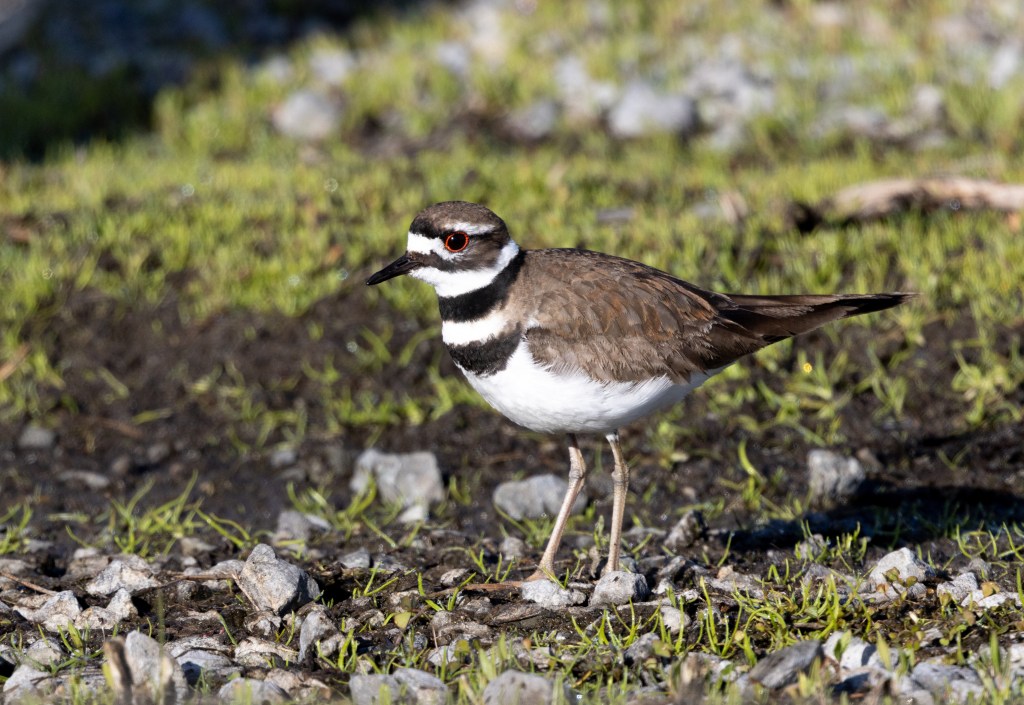
Killdeer, Sierra Valley
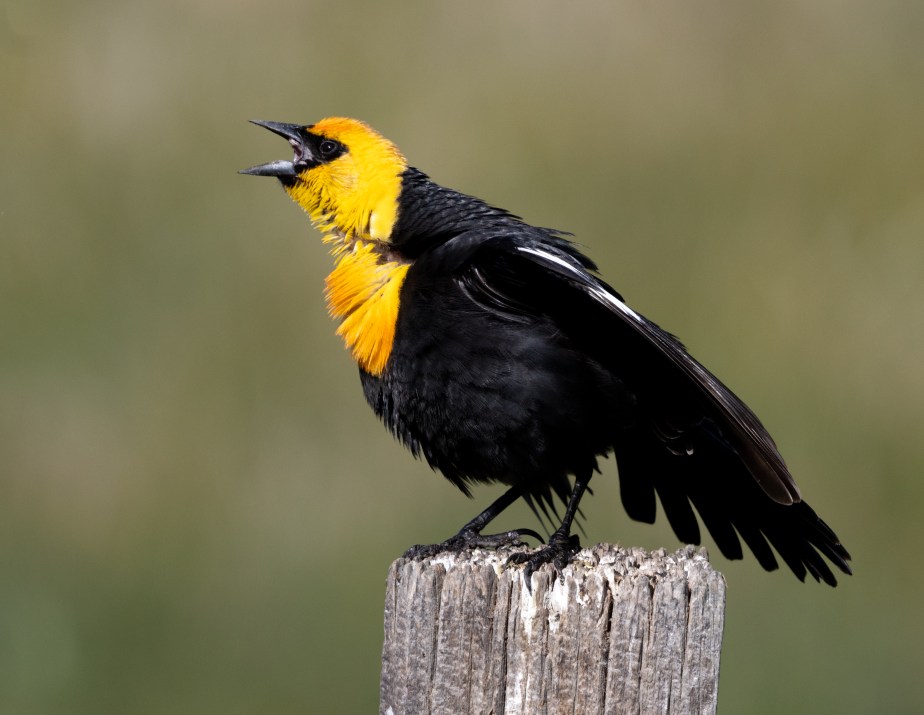
It remains to be seen how this will all fall out. I have driven up to Sierra Valley twice this week hoping to see the wolves. It is place I go to photograph birds and other wildlife. It is a birders heaven, and I am sharing some of the photos I took up there. I didn’t see any wolves but as I drove the ranch roads at dawn yesterday, I saw a cowboy sitting in an ATV in the middle of a herd of cows and calves trying to protect them from the wolves. I thought to myself what a difficult situation everyone is in. This isn’t sustainable for ranchers. Is it sustainable for the wolves?


















 Northern Desert Photography